
Blog Posts
Hazardous Gas Monitoring Systems: The 2026 Industrial Safety Guide
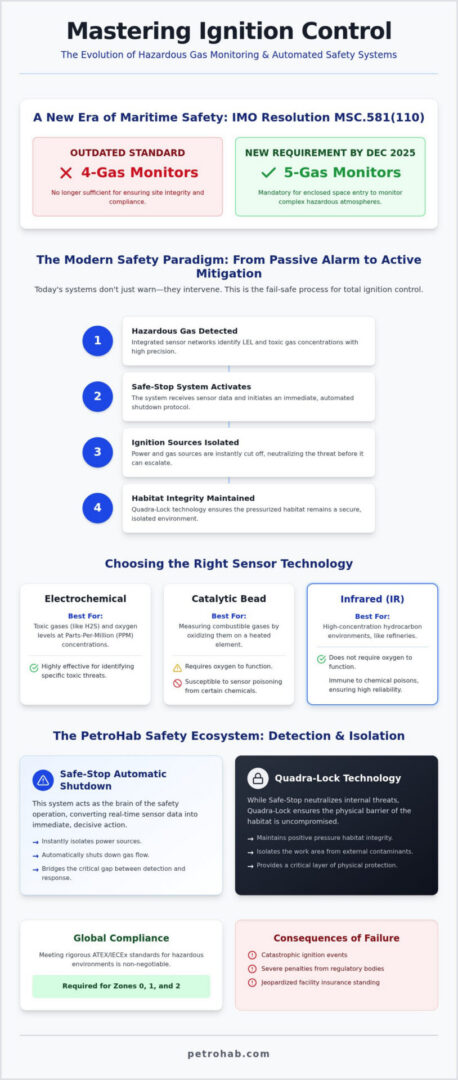
The International Maritime Organization’s Resolution MSC.581(110) now requires portable gas detectors to monitor at least five gases for enclosed space entry. This regulatory shift, effective since December 2025, underscores the increasing complexity of hazardous gas monitoring systems across the energy and maritime sectors. Relying on outdated four-gas monitors is no longer a viable option for maintaining site integrity. For safety managers, the challenge isn’t just detecting a leak. It’s managing the high-stakes integration of detection with immediate, automated responses to prevent ignition in volatile atmospheres.
You’re likely familiar with the operational strain caused by false alarms and the difficulty of syncing detection hardware with automatic shutdown protocols. These technical hurdles often lead to costly downtime or, worse, unmitigated risks. This guide will help you master the technical requirements and integration strategies for gas detection to ensure total ignition control. We’ll explore how the Safe-Stop Automatic Shutdown System acts as the industry benchmark for automated response. You’ll also learn how Quadra-Lock technology maintains habitat integrity during gas events. By the end of this guide, you’ll have a fail-safe strategy to achieve ATEX/IECEx compliance and mitigate risk effectively.
Key Takeaways
- Understand how hazardous gas monitoring systems utilize integrated sensor networks to provide early warnings and prevent ignition in explosive atmospheres.
- Evaluate the technical differences between electrochemical, catalytic bead, and infrared sensors to ensure your detection strategy matches your specific environmental hazards.
- Learn why physical isolation through pressurized welding habitats is a critical layer of protection that gas monitoring alone cannot provide.
- Ensure global compliance by matching equipment certification to the rigorous requirements of ATEX Zones 0, 1, and 2 under 2026 standards.
- Implement the Safe-Stop Automatic Shutdown System to convert sensor data into immediate ignition control by isolating power and gas sources.
The Critical Role of Hazardous Gas Monitoring Systems in 2026
Hazardous gas monitoring systems are no longer isolated alarm units. They are integrated sensor networks engineered to identify Lower Explosive Limit (LEL) and toxic gas concentrations with absolute precision. Their primary objective is to provide the earliest possible warning to prevent ignition in explosive atmospheres. In modern industrial safety, the paradigm has shifted from passive detection to active mitigation. It’s no longer sufficient to simply sound an alarm; safety protocols now demand immediate, automated intervention to neutralize threats before they escalate. This evolution ensures that detection leads directly to the isolation of ignition sources, creating a fail-safe environment for hazardous operations.
These systems are non-negotiable for offshore platforms and refineries, especially during hot work operations. They serve as the active guardian of high-value assets by bridging the gap between detection and response. By utilizing advanced gas detection technologies within hazardous gas monitoring systems, engineers can maintain real-time visibility over environmental hazards that are often invisible to the human eye. This visibility is the foundation of a proactive safety strategy that prioritizes the protection of personnel above all else. It’s about maintaining control in environments where the margin for error is non-existent.
Identifying Common Hazardous Gases in Industrial Zones
Effective monitoring requires an understanding of the specific chemical threats present on-site. Methane (CH4) remains the most prevalent combustible hydrocarbon in oil and gas environments, requiring constant vigilance to prevent accumulation. Hydrogen Sulfide (H2S) represents a different kind of danger; it’s a silent, highly toxic threat common in upstream operations that can overcome personnel in seconds. Additionally, oxygen depletion is a critical risk in confined spaces and pressurized habitats. Maintaining habitat integrity through Quadra-Lock technology ensures that these monitored environments remain isolated from external contaminants while sensors track atmospheric stability to protect workers inside.
Consequences of Monitoring Failure
The failure to maintain reliable detection protocols in Zone 1 areas can lead to catastrophic ignition events. In these high-risk environments, even a minor leak can trigger a massive explosion if ignition sources aren’t immediately isolated. Beyond the physical danger, regulatory bodies impose severe penalties for non-compliance with safety standards. Facility insurance standing is also tied directly to documented risk mitigation performance and the reliability of installed safety systems. LEL is the lowest concentration of a gas that can produce a flash of fire. Without precise data on these concentrations, safety managers cannot make the split-second decisions necessary to protect personnel and high-value equipment from irreversible damage.
Technical Mechanisms of Modern Gas Detection
Modern hazardous gas monitoring systems rely on specific sensor chemistry to maintain site safety. Choosing between electrochemical and catalytic bead technology depends entirely on the target hazard profile. Electrochemical sensors are highly effective for identifying toxic gases and oxygen levels at parts-per-million concentrations. Catalytic bead technology measures combustible gases by oxidizing them on a heated element. While these are industry standards, they require oxygen to function and can be susceptible to sensor poisoning. Infrared (IR) detection offers a definitive remedy for high-concentration hydrocarbon environments. IR sensors don’t require oxygen and are immune to chemical poisons, making them the preferred choice for continuous monitoring in refineries.
Reliability in the field is sustained through strict calibration and testing protocols. OSHA mandates a functional bump test before each day’s use to verify that sensors respond to known gas concentrations. This daily check confirms that alarms are operational and the system is ready to protect personnel. Modern sensors use digital connectivity standards to communicate with central control hubs. This integration allows for real-time data analysis and immediate automated response. To explore how these technologies integrate into a broader safety framework, you can evaluate the technical specifications of PetroHab safety solutions.
Fixed vs. Portable Detection Strategies
Fixed detection systems provide permanent, 24/7 protection for facility infrastructure. They’re designed for long-term leak detection near high-value assets. Portable detectors are essential for individual personnel protection during transient maintenance or enclosed space entry. Under the 2026 IMO Resolution MSC.581(110), portable units must now monitor at least five gases, including carbon dioxide. A hybrid strategy often involves using area monitors to create a safety perimeter around active welding sites. This creates multiple layers of detection that ensure no hazardous migration goes unnoticed.
Sensor Sensitivity and Response Times
Sensor sensitivity is often defined by T90 response times. This metric represents the seconds required for a sensor to reach 90 percent of the actual gas concentration during a release. In high-stakes environments, every second counts. Cross-sensitivity is another critical factor, where non-target gases can trigger false positives and cause unnecessary downtime. High-quality hazardous gas monitoring systems use filtered sensors to minimize these errors. For hot work, manometers are used alongside gas detection to verify habitat pressure. This ensures that Quadra-Lock panels are maintaining the necessary positive pressure to exclude external flammable gases.
Detection vs. Isolation: Integrating Monitoring with HWSE
While hazardous gas monitoring systems are essential for identifying atmospheric changes, they don’t provide a physical defense against gas migration. Relying solely on sensors leaves a critical vulnerability: the time between detection and the arrival of flammable vapors at an ignition source. True safety in high-stakes environments requires a dual-layered approach that combines active monitoring with absolute physical isolation. This is where the pressurized welding habitat becomes indispensable. It functions as a definitive gas exclusion barrier, ensuring that even if external sensors detect a leak, the hazardous gas cannot reach the hot work area. This integration represents the shift from simple detection to comprehensive ignition control.
The core mechanism of this isolation strategy is the maintenance of positive pressure. By keeping the internal pressure of the enclosure higher than the surrounding atmosphere, the system forces air outward. This prevents the ingress of hazardous gases through any potential openings or penetrations. Quadra-Lock technology is the engineering standard for maintaining this environmental containment. These patented panels interlock to create a high-integrity seal that resists seepage through seams, which is a common failure point in inferior enclosure designs. This structural reliability is what separates a professional safety enclosure from a simple tarp or temporary barrier.
The Synergy of Positive Pressure and Gas Sensing
Air ducting systems draw clean air from a verified remote source, ensuring the atmosphere inside the habitat remains stable and safe for technicians. Pressure sensors monitor this internal environment in real-time, working in tandem with LEL detectors located at the air intake. If the pressure drops or gas is detected at the source, the system responds instantly to isolate the work area. Quadra-Lock panels provide the structural rigidity necessary to maintain this pressure differential even in high-wind offshore environments. This calculated combination of physical barriers and electronic sensing creates a redundant safety net that protects both personnel and high-value assets.
Environmental Control in Pressurized Welding Habitats
Safety inside the enclosure is as vital as the barrier against external threats. Monitoring for oxygen enrichment or depletion is mandatory to protect personnel during long maintenance shifts. Proper fume extraction must be managed with technical precision; it has to remove welding byproducts without compromising the positive pressure barrier. This creates a controlled environment where hazardous gas monitoring systems can operate with maximum accuracy, free from the interference of external environmental fluctuations. Maintaining this balance ensures that the enclosure remains a secure, breathable space for the entire duration of the hot work mission.
Compliance and Standards for Hazardous Gas Environments
Adherence to hazardous gas monitoring systems standards is a mandatory requirement for operational legality and site safety. Engineers must align their protocols with the hazardous environment standards updated for 2026. These regulations dictate how sensors are deployed and maintained in volatile atmospheres. Compliance isn’t a suggestion. It’s a calculated strategy to eliminate ignition risks. Proper certification ensures that every piece of hardware can withstand the specific thermal and chemical stresses of the industrial site.
Classification of site risk relies on ATEX Zone definitions. Zone 0 represents areas where explosive gas is present continuously. Zone 1 identifies areas where gas is likely to occur during normal operations. Zone 2 covers regions where gas is not likely to occur, but may persist for a short period if it does. Matching equipment certification to these zones is critical. Using a Zone 2 rated detector in a Zone 1 environment is a failure of safety protocol. It exposes the facility to catastrophic risk and legal liability.
The NFPA 51B standard defines fire prevention requirements during welding and cutting operations. It mandates atmospheric testing and the presence of fire watches. For international offshore projects, IECEx certification provides a unified framework for global compliance. This allows safety managers to deploy the same high-integrity systems across different jurisdictions without redundant testing. To ensure your facility meets these rigorous benchmarks, you should consult with PetroHab for certified safety solutions.
ATEX vs. IECEx: Choosing Certified Systems
ATEX is a mandatory European requirement, while IECEx is an international certification scheme. Both focus on the safety of equipment used in explosive atmospheres. Testing protocols differ slightly, but both prioritize the prevention of sparks and surface heat. “Ex d” ratings signify flameproof enclosures designed to contain an internal explosion. “Ex i” ratings indicate intrinsically safe hardware that limits electrical energy to levels incapable of causing ignition. All components, including sensors and shutdown valves, must meet these unified standards to ensure system-wide reliability.
The Permit-to-Work (PTW) Integration
Gas monitoring data is a foundational component of the daily hot work permit process. No permit should be issued without verified atmospheric readings. Documentation must include recent sensor calibration records and site-specific gas tests. This data provides the evidence required for safety audits and insurance compliance. Emergency procedures must be clearly defined based on these readings. If a sensor identifies an LEL breach, technicians need established protocols for rapid habitat evacuation. This procedural discipline ensures that detection leads to the protection of personnel without hesitation.
Safe-Stop and Quadra-Lock: The PetroHab Safety Ecosystem
The effectiveness of hazardous gas monitoring systems is ultimately measured by the speed and reliability of the resulting safety action. Detection alone is a passive observation; true protection requires a system that converts sensor data into immediate, physical isolation. The Safe-Stop Automatic Shutdown System serves this purpose by acting as the central intelligence for the habitat. It continuously analyzes atmospheric data and pressure levels to maintain a secure environment. If the system detects gas at the intake or a loss of internal pressure, it executes an instantaneous shutdown of all ignition sources. This includes isolating electrical power and pneumatic gas lines to the work area, neutralizing the threat before an ignition can occur.
Engineering integrity is the foundation of this ecosystem. While the Safe-Stop unit manages the electronic response, Quadra-Lock panels provide the physical barrier necessary for pressurized enclosures. These modular, fire-resistant panels are designed for live facility maintenance where downtime isn’t an option. They allow for the creation of a controlled environment around hot work sites, ensuring that operations can proceed safely even in proximity to potentially volatile process areas. This dual approach of active electronic monitoring and passive physical isolation defines the PetroHab commitment to industrial safety.
Safe-Stop Logic: Automated Response to Gas Hazards
Safe-Stop logic allows for precise configuration of alarm setpoints. Safety managers can define thresholds for both cautionary alerts and mandatory automatic shutdowns based on site-specific risk assessments. The system’s design ensures seamless integration with facility-wide Emergency Shutdown (ESD) systems, allowing for a coordinated response during site-wide events. A critical feature is its fail-safe architecture. If the Safe-Stop unit loses its own power source, it defaults to a secure state, automatically terminating power to the habitat. This eliminates the risk of blind operation where work continues without active monitoring.
Quadra-Lock: Patented Integrity for Hazardous Zones
Physical isolation is only as reliable as the enclosure’s structural seals. Quadra-Lock panels represent the industry standard because they replace traditional, high-maintenance fastening methods with a patented interlocking system. This design ensures a high-integrity seal across every seam, which is vital for maintaining the positive pressure required to exclude flammable vapors. These panels have proven their durability in extreme environments, from the corrosive spray of North Sea offshore platforms to the intense heat of Middle Eastern onshore refineries. The interlocking mechanism simplifies setup while maximizing gas exclusion efficiency, making it the superior choice for high-stakes industrial zones.
Securing the Future of Industrial Hot Work
Industrial safety in 2026 demands more than passive observation. The integration of high-precision hazardous gas monitoring systems with automated shutdown logic is the only way to ensure total ignition control. By combining the physical barrier of patented Quadra-Lock Panel Technology with the immediate response of the Safe-Stop Automatic Shutdown System, safety managers can neutralize threats before they escalate. It’s a proactive strategy that ensures personnel and high-value assets remain protected under the most rigorous ATEX and IECEx standards.
Reliability is built through meticulous engineering and global on-site supervision and training. Maintaining site integrity requires a partner that understands the granular details of environmental containment. It isn’t enough to just meet minimum requirements; you must lead with superior risk mitigation. You can take the next step in optimizing your safety protocols today. Request a Technical Consultation for PetroHab Safe-Stop Systems to secure your facility’s operational future. Your commitment to safety excellence starts with the right technology and a disciplined approach to hazard management.
Frequently Asked Questions
What is the difference between an LEL detector and a toxic gas monitor?
An LEL detector measures the concentration of flammable vapors as a percentage of the Lower Explosive Limit to prevent catastrophic ignition. Toxic gas monitors measure specific substances like hydrogen sulfide in parts per million (ppm) to protect personnel from physiological harm. While both are critical components of hazardous gas monitoring systems, they address different risk profiles. One prevents fire and explosion, while the other prevents acute or chronic poisoning.
Can a gas monitoring system automatically shut down welding equipment?
The Safe-Stop Automatic Shutdown System is specifically designed to terminate power and gas flow to welding equipment upon detection of a hazard. This system converts passive detection into active mitigation by isolating all ignition sources within milliseconds. It eliminates the reliance on human reaction times during a gas release event. This automated response ensures that hot work is immediately suspended before flammable concentrations can reach a critical state.
How often should industrial gas detectors be calibrated in 2026?
OSHA mandates a functional bump test before each day’s use to verify sensor responsiveness and alarm functionality. Full calibration of hazardous gas monitoring systems should follow manufacturer specifications, typically occurring every three to six months. However, harsh environments or high-risk offshore applications often require more frequent intervals. Regular documentation of these tests is a non-negotiable requirement for maintaining facility insurance standing and ensuring compliance with international safety standards.
What is the required response time for a gas detector in a Zone 1 area?
In Zone 1 areas, the T90 response time is the critical benchmark for safety hardware. This represents the duration required for a sensor to reach 90 percent of the actual gas concentration. While specific requirements vary by sensor chemistry, most industrial standards demand a response within 15 to 30 seconds for combustible hydrocarbons. Rapid detection is essential because it allows the shutdown logic to isolate ignition sources before a plume reaches explosive proportions.
How does a pressurized habitat prevent gas ingress if a sensor fails?
Pressurized habitats utilize a physical barrier of Quadra-Lock panels to maintain an internal pressure higher than the external atmosphere. This positive pressure differential forces air outward, preventing the ingress of hazardous gases even if an external sensor fails to trigger. The system acts as a passive guardian that complements active sensing. If the pressure drops below a defined threshold, the Safe-Stop system will automatically terminate hot work to ensure the area remains secure.
Are PetroHab Safe-Stop systems ATEX and IECEx certified?
PetroHab Safe-Stop systems are engineered to meet both ATEX and IECEx certification requirements for global offshore and onshore projects. These certifications verify that the hardware is safe for use in explosive atmospheres, including Zone 1 and Zone 2 environments. By adhering to these international technical standards, the system provides a unified safety solution for multi-national operators. This ensures that every component, from the control hub to the individual sensors, performs reliably under stress.
What happens if a gas monitoring system detects a leak inside an HWSE?
If sensors detect a leak inside the Hot Work Safety Enclosure (HWSE), the Safe-Stop system initiates an immediate shutdown of all power and gas sources. This action neutralizes any potential ignition points within the habitat while personnel execute established evacuation procedures. The system also monitors for oxygen depletion or enrichment to protect workers from atmospheric hazards. This automated intervention prevents a localized leak from escalating into a fire event within the confined space.
Can hazardous gas monitoring systems be integrated with existing facility ESDs?
Modern systems are designed for seamless integration with existing facility Emergency Shutdown (ESD) systems. This connectivity allows the habitat’s safety logic to communicate with the central control room, ensuring a coordinated response to site-wide emergencies. If the facility ESD is triggered, the Safe-Stop system will mirror the shutdown command, isolating the habitat immediately. This layered communication architecture ensures that hot work operations are always aligned with the broader site safety status.