Blog Posts
Quadra-Lock Panels: The Engineering Standard for Ignition Source Isolation
In high-stakes offshore environments, a single breach in a pressurized habitat doesn’t just halt production; it jeopardizes every life on the platform. Safety managers recognize that the margin for error during hot work is non-existent. You’ve likely experienced the frustration of modular systems that fail to seal around complex pipework or require excessive deployment times that extend refinery downtime. This engineering failure is a risk no facility can afford to take, especially when industry data indicates that structural weaknesses in enclosures remain a primary cause of ignition incidents.
This article demonstrates how patented Quadra-Lock Panels provide the structural integrity and modularity required to maintain absolute ignition source isolation. By utilizing these panels, operators ensure compliance with ATEX and IECEx standards while benefiting from a system designed for high shear and tensile strength. We’ll examine the specific engineering behind the Quadra-Lock Panels and how they streamline assembly in high-wind environments, ensuring your site remains protected and operational. You’ll discover how this technology serves as the gold standard for hazardous area management and human life protection.
Key Takeaways
- Understand the mechanics of the patented four-way interlocking system that establishes the engineering standard for ignition source isolation.
- Analyze the technical specifications of silicone-coated fiberglass fabrics to ensure maximum shear and tensile strength in high-stakes environments.
- Discover how the modularity of Quadra-Lock Panels optimizes habitat assembly, effectively reducing refinery turnaround times and operational costs.
- Verify compliance with global safety mandates, including ATEX, IECEx, and NFPA 51B, to maintain the highest level of fire prevention.
- Evaluate procurement models and panel configurations to select the most reliable solution for long-term industrial maintenance projects.
Understanding Quadra-Lock Panels in Hot Work Safety
PetroHab’s Quadra-Lock Panels represent the pinnacle of ignition source control in high-risk environments. This patented four-way interlocking system provides the structural foundation for every hot work safety enclosure (HWSE) deployed by the company. Unlike standard construction-grade Insulated Concrete Form (ICF) products, which focus on thermal insulation for residential or commercial buildings, these panels are engineered specifically for industrial integrity. Their primary objective is the absolute isolation of ignition sources from flammable atmospheric gases found in volatile sectors.
Maintaining rigorous standards for Hot Work Safety requires equipment that can withstand extreme pressure and temperature differentials. PetroHab’s technology creates a controlled environment where welding, cutting, and grinding occur without endangering the facility. By utilizing these specialized Quadra-Lock Panels, operators mitigate the risk of catastrophic explosions in Zone 1 and Zone 2 hazardous areas. The system acts as a definitive technological remedy to the inherent dangers of thermal maintenance in the oil and gas industry.
The Anatomy of an Interlocking Panel
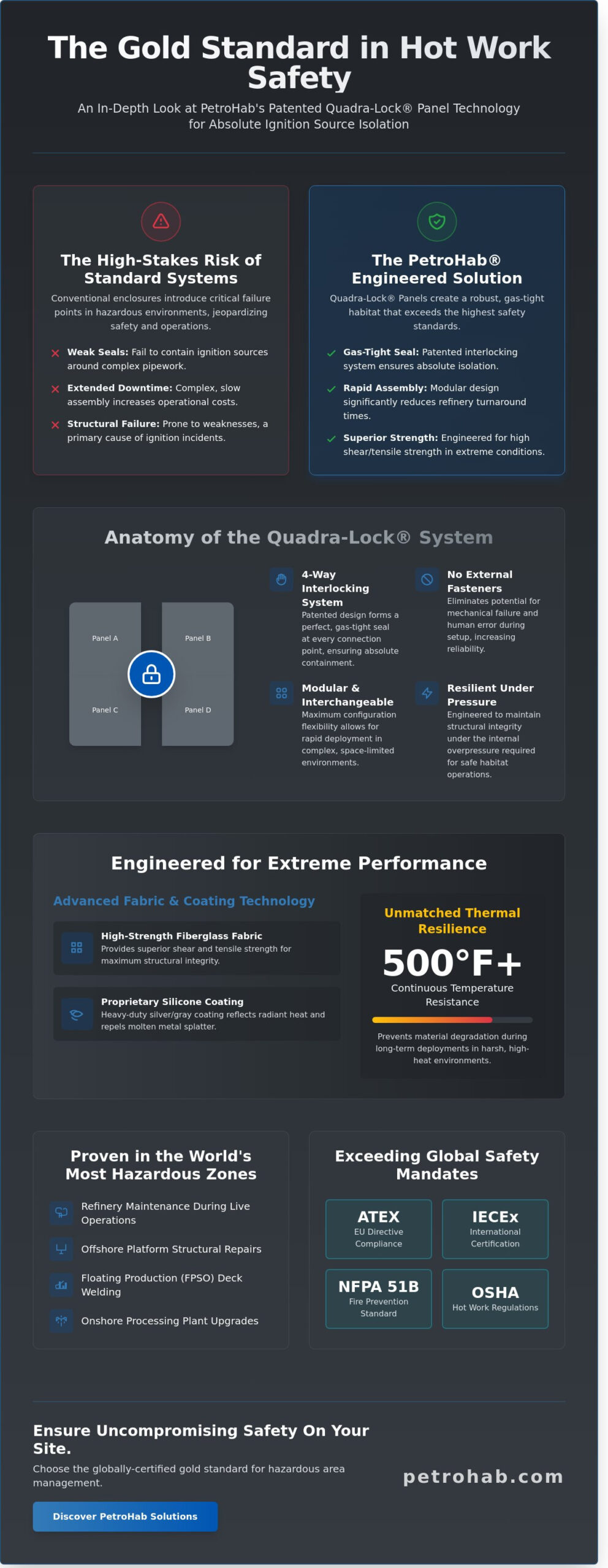
The design of each panel emphasizes maximum configuration flexibility through an interchangeable layout. This modularity is vital in complex offshore and onshore environments where space is limited and structural obstacles are frequent. Each panel features precision-engineered interlocking edges that form a gas-tight seal upon assembly. This system requires no external fasteners, which eliminates the potential for mechanical failure or human error during the setup phase. The resulting structure remains resilient under the internal overpressure necessary for habitat operations, ensuring the habitat’s integrity is never compromised. For a broader look at modular habitat panel materials, joints, and design considerations, see the panel selection guide.
Primary Applications in Hazardous Zones
Deployment occurs most frequently in refineries, offshore platforms, and Floating Production Storage and Offloading (FPSO) units. These environments demand reliable solutions for pressurized welding habitats and grinding enclosures where the presence of hydrocarbons is a constant threat. The Quadra-Lock mechanism serves as the primary barrier against spark escape, ensuring that all thermal energy remains confined within the protected workspace. By providing a robust physical shield, these systems allow production to continue safely while maintenance tasks are performed. The panels are the gold standard for protecting high-value assets and personnel in the most demanding conditions on earth.
- Refinery maintenance during live operations
- Offshore platform structural repairs
- FPSO deck welding and grinding
- Onshore processing plant upgrades
Engineering Specifications and Material Integrity
The structural integrity of PetroHab’s Quadra-Lock Panels relies on a synergy between advanced polymer science and precision mechanical engineering. These panels aren’t merely barriers; they’re engineered components designed to isolate ignition sources in high-stakes hazardous environments. Every panel undergoes rigorous quality control to ensure it meets the uncompromising demands of the energy sector. By prioritizing material density and joint stability, we provide a definitive technological remedy to the risks inherent in hot work operations. This calculated approach to engineering ensures that safety managers can deploy our systems with absolute confidence in their protective capabilities.
Advanced Fabric Technology
PetroHab utilizes high-strength fiberglass fabrics coated with a proprietary, heavy-duty silver/gray silicone. This specific coating reflects radiant heat and provides a non-stick surface that repels molten metal splatter and high-temperature slag. While standard fire-resistant safety enclosures often fail when exposed to sustained thermal stress, our fabric maintains its chemical and physical properties at continuous temperatures exceeding 500°F. This resilience ensures that the enclosure remains a reliable guardian against accidental ignition. Adherence to OSHA hot work regulations requires such robust material standards to prevent catastrophic containment failure. The UV-resistant properties of the silicone also prevent degradation during long-term outdoor deployments, extending the operational lifespan of the system in harsh maritime climates.
Structural Performance Under Pressure
Maintaining a consistent seal is critical when a positive pressure habitat is inflated. The Quadra-Lock Panels utilize a patented interlocking mechanism that distributes mechanical stress evenly across the joint. In testing protocols, these joints demonstrate unrivaled shear and tensile strength, remaining airtight even when internal pressures exceed standard operating parameters. Lightweight but rigid aluminum framed components support the panels, providing a modular skeleton that resists deformation under high wind loads of up to 60 mph. This structural rigidity prevents the “ballooning” effect common in inferior systems, which can lead to seal breaches. The integration of these frames ensures that the habitat maintains its geometric footprint, providing a stable environment for technicians. For complex site requirements, you can request a technical consultation to discuss specific structural load-bearing needs.
Operational Advantages: Modularity and Efficiency
Quadra-Lock Panels represent a technical paradigm shift in hot work safety enclosures. Their modular habitat panel design eliminates the rigid constraints of traditional, fixed-size habitats. Refineries lose millions during unscheduled downtime; therefore, efficient assembly is a baseline requirement. By utilizing a standardized 1m x 1m panel configuration, teams can erect a pressurized enclosure in a fraction of the time required for legacy systems. This efficiency directly impacts refinery turnaround schedules, often reducing assembly windows by 30% or more. Every hour saved in setup translates to an hour gained in active maintenance or production.
Adherence to the IEC 60079-13:2017 standard ensures that these modular systems meet global requirements for pressurized rooms in explosive atmospheres. Compliance isn’t a secondary concern; it’s a fundamental engineering requirement for effective risk mitigation. PetroHab’s technology focuses on creating a secure, monitored environment where ignition source control is absolute. The economic impact of minimizing hot work downtime is substantial, as it allows for simultaneous operations (SIMOPS) that would otherwise be prohibited by safety protocols.
Rapid Configuration for Complex Sites
PetroHab’s system adapts to the physical environment, not the other way around. Technicians configure panels around intricate pipework, valves, and structural beams with surgical precision. The interchangeable nature of the panels allows for on-the-fly adjustments. If an unexpected protrusion is identified during the build, the team swaps a standard panel for a specialized penetration panel immediately. In a 2022 offshore maintenance project, this modularity saved 48 hours of critical path time by allowing work to continue despite late-stage design changes. This versatility ensures that the habitat’s integrity remains uncompromised, regardless of the site’s structural complexity.
Logistics and Storage Benefits
Logistics often present a bottleneck in offshore operations where space is at a premium. Quadra-Lock Panels stack flat, requiring 40% less deck space than older, rigid enclosure systems. This compact profile simplifies transport via supply vessels or helicopters, reducing the carbon footprint and logistical cost of deployment. Maintenance is equally streamlined. The smooth, fire-retardant surfaces allow for rapid decontamination and cleaning between leasing cycles. PetroHab integrates these hardware advantages with expert on-site supervision. Our trained professionals oversee every installation, ensuring the habitat remains a reliable barrier against hazardous gases throughout the entire project lifecycle. This combination of durable hardware and expert oversight defines our commitment to operational excellence.
Compliance with Global Safety Standards
PetroHab prioritizes technical precision to meet the most rigorous international safety mandates. Quadra-Lock Panels align with ATEX and IECEx requirements for Zone 1 and Zone 2 hazardous areas. These standards dictate how equipment must behave in potentially explosive atmospheres where flammable gases or vapors are present. PetroHab ensures its enclosures exceed the NFPA 51B standard for fire prevention during welding, cutting, and other hot work activities. This compliance isn’t just a legal formality; it’s the technical foundation of industrial risk management in high-stakes energy sectors.
The engineering behind these panels focuses on total ignition source isolation. By creating a physical and thermal barrier, the system prevents sparks or molten slag from contacting volatile external environments. This level of protection is essential for maintaining the safety of offshore platforms and refineries where the margin for error is zero. Every component is designed to function as a reliable guardian of both personnel and high-value assets.
Certification and Quality Assurance
Every panel undergoes ISO 9001:2015 certified manufacturing processes to guarantee operational consistency. Third-party laboratories verify the gas-tight integrity and thermal protection ratings of the materials used. These certifications provide the empirical data required for a rigorous permit to work hot work system. Safety managers rely on this documentation to authorize operations in high-consequence environments. Using uncertified components compromises the entire PTW framework and increases operational liability. PetroHab maintains a strict quality control loop where 100% of panels are inspected for seam strength and hook-and-loop fastener performance before deployment.
Maintaining Enclosure Integrity
The physical barrier technology of Quadra-Lock Panels isolates ignition sources from flammable vapors with unrivaled efficiency. This system works in direct tandem with automatic shutdown systems like PetroHab’s Safe-Stop. If internal pressure drops below the 0.1 inch water gauge threshold or if gas is detected, the system terminates the hot work power source immediately. The interlocking panel integrity prevents the migration of hazardous gases into the work area. This active guardian approach eliminates the reliance on human intervention during a critical failure. It ensures that the protected environment remains isolated from external hazards throughout the duration of the task.
Ensure your site meets the highest international safety benchmarks by choosing certified technology. Contact PetroHab today to request technical specifications for your next project.
Procurement and Integration with PetroHab Systems
Procuring Quadra-Lock Panels requires a methodical evaluation of site-specific hazards and operational timelines. Engineering teams must first determine the optimal configuration based on the geometry of the work area and the nature of the hot work being performed. For short-term maintenance projects or offshore shutdowns lasting under 60 days, the rental model offers maximum flexibility. It eliminates long-term storage costs and ensures access to the latest hardware iterations. Conversely, for facilities requiring permanent hot work capabilities or multi-year decommissioning projects, purchasing the system establishes a fixed asset that provides immediate response readiness. It’s a strategic decision that balances capital expenditure against operational frequency.
Integration represents the final stage of establishing an uncompromising safety barrier. The Quadra-Lock Panels don’t operate in isolation; they function as the structural foundation for the Safe-Stop automatic shutdown system. This integration ensures that if the internal pressure drops below the mandated 0.1-inch water gauge threshold, or if the gas detection sensors identify a breach, the ignition source is terminated instantly. Air supply systems are synchronized to maintain a consistent flow of breathable, spark-free air, creating a controlled environment that isolates hazardous vapors from the welding arc. This technical synergy minimizes human error and automates risk mitigation in high-stakes zones.
Customizing Your Safety Enclosure
PetroHab provides specialized components to meet the unique demands of complex industrial layouts. You can specify configurations that include high-visibility window panels for external monitoring or specialized intrusion panels that seal around existing pipework. If your project involves confined spaces, air duct escapes provide critical ventilation paths. PetroHab engineers collaborate with your onsite team to design bespoke habitats that navigate structural obstructions. With operational hubs in Houston, Dundee, and other global energy centers, technical support remains available 24/7 to ensure your enclosure meets local regulatory standards and ISO requirements.
The PetroHab Partnership
Safety isn’t just about hardware; it’s about rigorous procedural execution. PetroHab deploys certified technicians to oversee the initial setup and provide onsite supervision during critical operations. These experts ensure the structural integrity of the interlocking seals and verify the calibration of the Safe-Stop logic controllers. For organizations looking to build internal expertise, PetroHab offers comprehensive training programs. These sessions certify your personnel in the assembly and maintenance of the modular system. To begin your project assessment, you can request a quote for pressurized welding habitat rental to secure your site today. This consultation process provides a technical roadmap for mitigating risk in the most volatile environments.
Advancing Industrial Safety Through Engineering Excellence
Maintaining operational continuity in high-stakes environments requires a rigorous approach to ignition source control. Quadra-Lock Panels represent the industry benchmark for this isolation, utilizing patented interlocking technology to ensure absolute enclosure integrity. These systems don’t just meet basic requirements; they’re fully ATEX and IECEx compliant, providing a documented layer of protection that safety managers can rely on during critical hot work operations. By integrating these modular components, facilities realize significant gains in deployment speed, allowing for faster integration into active worksites without sacrificing the safety of the workforce.
PetroHab’s global presence ensures that this technology is supported by technical experts in Houston, Dundee, and Brazil. This infrastructure guarantees that every installation adheres to the highest ISO standards for quality and performance. Choosing a system built on technical precision means you’re prioritizing risk mitigation and the long-term protection of your high-value assets. It’s time to replace outdated safety methods with a solution engineered for the rigors of the modern energy sector.
Secure your hazardous work site with patented Quadra-Lock technology from PetroHab
We look forward to helping you achieve a new standard of operational safety and technical reliability.
Frequently Asked Questions
What is the primary benefit of the Quadra-Lock interlocking system?
The primary benefit of the Quadra-Lock interlocking system is the total elimination of gaps between panels, which ensures a gas-tight seal for hot work safety enclosures. By utilizing a patented 100% interlocking design, these panels provide superior protection against sparks and molten slag compared to traditional hook-and-loop fasteners. This engineering choice maintains habitat integrity and prevents the ingress of flammable gases during critical operations.
Are Quadra-Lock panels compatible with other welding habitat brands?
Quadra-Lock Panels aren’t compatible with other welding habitat brands because they use a proprietary interlocking mechanism designed for maximum security. Mixing different manufacturers’ components compromises the structural integrity and safety certifications of the pressurized habitat. PetroHab engineered this system to function as a cohesive, high-performance unit that meets rigorous ISO 9001 quality standards.
How do these panels perform in high-wind offshore environments?
Quadra-Lock panels are engineered to withstand wind speeds up to 60 miles per hour in offshore environments. The interlocking overlap creates a rigid structure that prevents panel separation or flapping during gale-force conditions. This stability is critical for maintaining a controlled environment on oil platforms where wind gusts frequently exceed 40 knots, ensuring the habitat remains secure and functional.
What fire-resistance certifications do PetroHab panels hold?
PetroHab panels hold certifications including the BS 8475 standard and meet the requirements of the NFPA 701 fire test. The silicone-coated fiberglass fabric is rated for continuous temperatures of 500 degrees Fahrenheit and can withstand intermittent exposure to 1,500 degrees Fahrenheit. These technical benchmarks ensure the habitat remains a barrier against ignition sources during intensive welding tasks.
Can I rent Quadra-Lock panels for short-term refinery turnarounds?
Yes, PetroHab provides rental options for Quadra-Lock Panels to support refinery turnarounds and short-term maintenance projects. Our global distribution network allows for rapid deployment of equipment to sites within 48 hours of an order. This flexibility ensures that safety managers can implement the gold standard in hot work safety without the capital expenditure of a full purchase.
How many people are required to assemble a standard Quadra-Lock enclosure?
A standard 2-meter by 2-meter Quadra-Lock enclosure requires only 2 trained technicians for assembly. The modular design and intuitive interlocking system allow a team to complete the setup in approximately 30 to 45 minutes. This efficiency reduces labor costs and minimizes the time that hot work permits remain in a pending status, streamlining the entire maintenance schedule.
What happens if a panel is damaged during hot work operations?
If a panel sustains damage during hot work, it must be replaced immediately to maintain the pressurized environment’s integrity. The modular nature of the system allows a single panel to be swapped out in less than 5 minutes without dismantling the entire structure. Operators should inspect panels every 12 hours for thermal degradation or mechanical tears to ensure compliance with strict safety protocols.
Do these panels support the maintenance of positive pressure within the habitat?
Quadra-Lock panels are specifically designed to support and maintain positive pressure within the habitat by minimizing air leakage. When integrated with the Safe-Stop system, these panels help sustain a minimum overpressure of 0.1 inches of water column. This constant pressure acts as a barrier, preventing external hydrocarbons from entering the enclosure while work is performed, protecting both personnel and assets.