Blog Posts
Troubleshooting Pressure Loss in Welding Habitats: A Technical Safety Guide
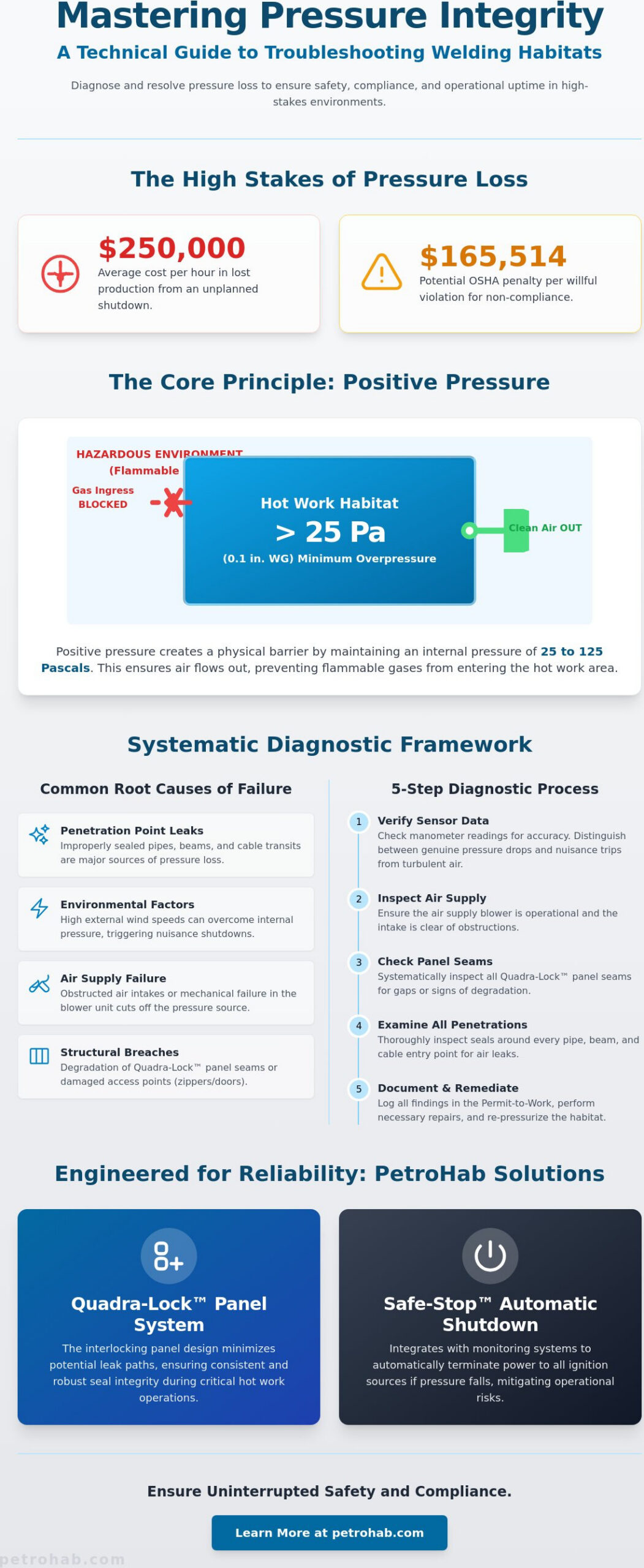
In high-stakes offshore environments, an unplanned shutdown triggered by an automatic gas detection system can cost an average of $250,000 per hour in lost production. Maintaining a minimum positive pressure of 25 Pascals is a non-negotiable safety requirement to prevent the ingress of flammable gases into your hot work area. You understand that troubleshooting pressure loss in welding habitat systems is often a race against the clock to avoid OSHA penalties that can reach $165,514 per willful violation.
This technical guide provides the rigorous framework necessary to master the systematic diagnosis and resolution of pressure loss. By implementing these protocols, you’ll ensure your Petro-Habitats remain compliant with BSEE and ATEX standards while protecting both personnel and high-value assets. We will examine critical failure points, from microscopic leaks in Quadra-Lock panel seams to the integrity of cable penetrations, providing a logical path to restore habitat integrity and maintain continuous safety in hazardous zones. Mastering these diagnostic steps is essential for any safety manager dedicated to operational excellence and risk mitigation.
Key Takeaways
- Analyze the overpressure principle to understand how air displacement functions as a physical barrier against flammable gases.
- Master the diagnostic steps for troubleshooting pressure loss in welding habitat systems to ensure continuous compliance and personnel safety.
- Identify common root causes of differential pressure failure, such as air intake obstructions and degradation of interlocking panel seams.
- Discover how the Quadra-Lock panel system minimizes potential leak paths to ensure consistent seal integrity during high-stakes hot work.
- Examine how Safe-Stop monitoring integrates with PetroHab HWSE units to automate safety shutdowns and mitigate operational risks in hazardous zones.
The Critical Role of Positive Pressure in Hot Work Safety
Positive pressure serves as the primary engineering control in hazardous industrial environments. It creates a physical barrier by maintaining an internal atmosphere at a higher pressure than the external environment. This overpressure principle dictates that air will always flow from high to low pressure. Consequently, if a breach occurs, air escapes the enclosure rather than allowing flammable hydrocarbons to enter. This mechanism transforms a positive pressure enclosure into a controlled environment where hot work can safely proceed without the risk of ignition.
To maintain this barrier, operators must keep the habitat between 0.1 and 0.5 inches of water gauge, which is approximately 25 to 125 Pascals. If the pressure drops below the 25 Pascal minimum, the risk of gas ingress increases exponentially. This threshold is the baseline for safety compliance in offshore platforms and refinery settings. When the pressure falls, the system’s integrity is compromised, requiring an immediate response to mitigate the threat of an explosion.
Observe the practical application of habitat containment and air disturbance management in this technical overview:
Pressure Loss and the Automatic Shutdown Mechanism
The PetroHab Safe-Stop Automatic Shutdown System relies on continuous data from high-precision manometers. These sensors monitor the differential pressure in real time to ensure the habitat remains pressurized. When troubleshooting pressure loss in welding habitat operations, the first step involves analyzing the communication between the sensor and the shutdown logic. The system uses a fail-safe architecture; if the pressure falls below the designated setpoint, the Safe-Stop immediately terminates power to all welding machines and ignition sources. This prevents human error or slow reaction times from resulting in a catastrophe. Operators must distinguish between nuisance trips, often caused by turbulent air near the sensing line, and genuine containment failures. A genuine failure usually indicates a breach in the Quadra-Lock panels or a mechanical failure in the air supply blower.
Regulatory Implications of Pressure Maintenance
Regulatory bodies like the Bureau of Safety and Environmental Enforcement (BSEE) enforce strict guidelines regarding hot work proximity. Federal rules often prohibit welding within 10 feet of pressurized process equipment unless the work is performed inside a pressurized welding enclosure. Compliance with NFPA 51B is equally vital, requiring constant vigilance over the habitat’s integrity. Safety managers must maintain detailed pressure logs within their Permit-to-Work (PTW) systems. These logs serve as documented proof that the PetroHab HWSE maintained the required overpressure throughout the entire operation. Failure to provide these records during an audit can lead to significant fines and the immediate suspension of work permits. Consistency in monitoring is a legal obligation that ensures the protection of personnel and high-value assets.
Common Root Causes of Differential Pressure Failure
Identifying the source of a pressure drop requires a methodical assessment of the entire enclosure system. When you’re troubleshooting pressure loss in welding habitat environments, you must look beyond obvious tears in the fabric. Differential pressure failure typically stems from a combination of mechanical inefficiencies and structural breaches. Maintaining compliance with OSHA hot work precautions necessitates that these systems operate without interruption. Any deviation from the required overpressure indicates a failure in the containment strategy.
The most frequent culprits include:
- Penetration Point Leaks: Improperly sealed pipes, beams, or weldments often create significant bypass paths for pressurized air.
- Environmental Factors: High external wind speeds on offshore platforms can overcome the internal 25 Pascal pressure, causing the Safe-Stop to trigger.
- Improper Door Management: Personnel entering or exiting without adhering to strict airlock protocols causes instantaneous pressure fluctuations.
Structural Weaknesses in Modular Panels
Standard modular enclosures often suffer from micro-leaks at the corners and along vertical seams. These small apertures are difficult to detect but collectively degrade the habitat’s ability to retain pressure. Many non-patented interlocking systems fail under high-vibration industrial conditions. Constant mechanical movement on a rig can loosen standard fasteners, leading to seal separation. Heat-induced expansion also plays a role; as welding increases internal temperatures, certain fabrics and seals may expand at different rates, creating new leak paths. Utilizing advanced Quadra-Lock Panels mitigates these risks by providing a more resilient, vibration-resistant connection between components.
Air Supply and Ducting Obstructions
Mechanical failure in the air supply is a primary driver of pressure loss. You must regularly monitor blower motor RPM and inspect air intake filters for clogs. Dust and industrial debris can quickly reduce a blower’s efficiency, dropping the volume of air delivered to the enclosure. Kinks or tears in the air ducting are equally problematic. Even a minor puncture in the flexible ducting can lead to a significant drop in delivered pressure. It’s critical to calculate whether the blower capacity matches the total habitat volume. If the enclosure was expanded without upgrading the air supply, the system won’t maintain the necessary 25 Pascal threshold. Troubleshooting pressure loss in welding habitat setups involves verifying that the blower isn’t just running, but performing at its rated specification.
A Step-by-Step Diagnostic Framework for Restoring Pressure
Restoring habitat integrity requires a methodical sequence of actions. When technicians begin troubleshooting pressure loss in welding habitat systems, they must follow a logical path from the source of air to the final containment seal. This structured approach ensures that no critical component is overlooked, maintaining compliance with the IEC 60079-13 international standard for pressurized rooms in explosive atmospheres. A systematic diagnosis prevents the trial-and-error approach that often leads to prolonged downtime and increased risk.
Phase 1: External System Verification
The diagnostic process starts outside the enclosure. Technicians must first verify the power supply to the Safe-Stop control unit and the blowers. A fluctuating power source can lead to intermittent pressure drops that trigger nuisance shutdowns. Next, inspect the intake ducting. It’s essential to confirm a 100% airtight seal from the clean-air intake point to the habitat entry. Any breach in this ducting introduces unpressurized air or potential contaminants before they even reach the enclosure. Finally, ensure that gas detector placement isn’t obstructing the air intake. Obstructions here reduce the volumetric flow rate, making it impossible to reach the required overpressure setpoint. The manometer itself requires verification; ensure the sensor is calibrated and the sensing line is clear of condensation or debris.
Phase 2: Internal Integrity Audit
Once external factors are ruled out, the focus shifts to the habitat itself. A systematic audit of all Quadra-Lock panel connections is mandatory. These interlocking seams are designed for maximum retention, but improper assembly can create bypass paths. Technicians should perform a tactile seal check by feeling for escaping air at every panel junction and penetration. For more complex areas, such as where the habitat meets structural beams or pipes, tighten all velcro and zipper seals. Ensure the airlock doors close fully. Magnetic seals must be free of debris to maintain a tight closure during frequent ingress and egress.
For persistent or microscopic leaks, advanced visualization tools are necessary. Use smoke pens to observe air currents or thermal imaging cameras to identify temperature differentials where internal air escapes. Once leaks are identified and sealed, the final step involves adjusting the exhaust dampers. Balancing the outflow is critical; too much exhaust will drop the pressure, while too little can lead to inadequate ventilation. This diagnostic framework ensures that troubleshooting pressure loss in welding habitat operations is handled with technical precision, minimizing downtime and ensuring the absolute safety of personnel.
Advanced Preventive Measures for Habitat Seal Integrity
Preventing pressure loss is more efficient than reacting to a shutdown. While the diagnostic framework helps restore operations, advanced preventive measures ensure those operations aren’t interrupted in the first place. Effective troubleshooting pressure loss in welding habitat environments begins with preventing the loss before it occurs. This requires a combination of superior hardware and disciplined operational protocols. By treating seal integrity as a continuous process rather than a one-time setup, safety managers can maintain the 25 Pascal minimum requirement with much higher reliability.
Engineering Out the Leak Paths
The core of habitat integrity lies in the panel design. The Quadra-Lock panel system is engineered to minimize leak paths through a four-way interlocking mechanism. This design provides a significant advantage over traditional enclosures by creating a redundant seal at every junction. These panels utilize ANSI/FM 4950 certified, silicone-coated fiberglass cloth, which remains resilient under the thermal stresses of hot work. This material stability prevents the heat-induced expansion that often creates gaps in inferior fabrics. For environments with grated decks or uneven surfaces, technicians must deploy custom-built floor seals. These specialized components bridge the gap between the modular panels and the deck, ensuring that air doesn’t bypass the enclosure through the floor structure.
Supervision and Technician Training
Human factors contribute significantly to habitat performance. Personnel training on airlock etiquette is essential to prevent the sudden pressure dips that trigger Safe-Stop sensors. Every individual entering the enclosure must understand that keeping both airlock doors open simultaneously compromises the entire containment strategy. On-site supervision by a qualified technician can reduce pressure-related downtime by approximately 40% by catching minor seal degradations before they escalate. Welders should also be trained to recognize early warning signs, such as changes in the sound of the air supply or visible movement in the enclosure fabric.
A daily inspection log is a mandatory component of this preventive strategy. Technicians must document the condition of high-wear areas, specifically door thresholds and magnetic seals. If a seal shows signs of wear, it must be replaced immediately to maintain the required overpressure. The fire watch plays a critical role here, as they’re tasked with monitoring the manometer constantly during active hot work. This vigilance ensures that troubleshooting pressure loss in welding habitat setups remains a proactive discipline. To ensure your facility meets the highest safety benchmarks, explore the engineering behind the PetroHab Hot Work Safety Enclosure (HWSE).
Engineering Reliability with PetroHab Pressurized Solutions
Operational excellence in hazardous zones requires equipment that functions as a definitive technological remedy. The PetroHab Hot Work Safety Enclosure (HWSE) is engineered for maximum containment and pressure retention, specifically addressing the mechanical failure points identified in previous sections. While troubleshooting pressure loss in welding habitat systems is a necessary skill for on-site technicians, utilizing a system designed for high-stakes reliability significantly reduces the frequency of these interventions. PetroHab’s commitment to safety is reflected in every component, ensuring that your facility remains compliant with BSEE and OSHA standards without sacrificing productivity.
The Safe-Stop Automatic Shutdown System provides an essential layer of protection by integrating advanced gas detection with real-time pressure monitoring. These modular shutdown systems, including the S1, S2, and S3 devices, feature a response time as fast as 0.5 seconds. If flammable gas levels exceed 10% of the Lower Explosive Limit (LEL) or if internal pressure drops below the 25 Pascal threshold, the system immediately terminates power to all ignition sources. This automated guardian eliminates the risk of human error during critical containment failures. Our solutions are customizable for the most complex environments, including offshore rigs, refineries, and chemical plants, where high external wind speeds and vibration are constant challenges.
The PetroHab Difference: Quadra-Lock Technology
The mechanical advantage of the Quadra-Lock panel system lies in its four-way interlocking design. This proprietary technology ensures that modularity doesn’t result in a sacrifice of seal integrity. Standard habitats often struggle with corner leaks and seam separation, but Quadra-Lock panels create a redundant, vibration-resistant barrier. On live offshore platforms, where a single hour of unplanned downtime can cost $250,000, this reliability is paramount. PetroHab systems have successfully maintained pressure in these high-vibration environments, allowing hot work to continue safely while nearby production remains active. The use of ANSI/FM 4950 certified materials further ensures that the enclosure withstands the rigorous demands of industrial welding.
Next Steps: Rental, Purchase, and Training
Integrating PetroHab into your facility’s safety management system is a straightforward process supported by our global network. We provide certified training and on-site technicians to manage pressure protocols and safety monitoring, ensuring your team is fully equipped to handle any diagnostic requirements. If you’re ready to upgrade your safety infrastructure, you can request a quote for a pressurized welding habitat through our procurement portal. Beyond hardware, we offer the technical expertise needed to minimize risk and protect your high-value assets. Troubleshooting pressure loss in welding habitat operations becomes a manageable, routine task when backed by the industry’s most resilient engineering. Trust PetroHab to act as the active guardian of your industrial site.
Securing Operational Continuity in Hazardous Environments
Maintaining a resilient positive pressure barrier is the definitive safeguard for high-stakes hot work in the energy sector. You’ve seen that success relies on more than just identifying a leak; it requires a rigorous diagnostic framework and high-performance hardware. Troubleshooting pressure loss in welding habitat systems should be a systematic protocol that leverages both technical precision and engineering reliability.
By integrating patented Quadra-Lock Panel Technology and ATEX and IECEx certified Safe-Stop systems, you eliminate common failure points and ensure absolute compliance with international standards. PetroHab brings over 15 years of global offshore safety experience to your facility, providing the expertise necessary to protect your personnel and high-value assets from ignition hazards. This methodical approach transforms safety from a reactive challenge into a controlled, proactive operational standard. Secure your next project with technology designed to withstand the most demanding industrial conditions. You’re now equipped to maintain a higher standard of safety and reliability on every shift.
Request a Technical Consultation for Your Next Hot Work Project to fortify your site’s containment strategy and achieve total operational confidence.
Frequently Asked Questions
What is the minimum pressure required for a welding habitat?
A minimum positive pressure of 25 Pascals, or 0.1 inches of water gauge, is mandatory for any welding habitat. This specific threshold creates the necessary overpressure to prevent the ingress of flammable gases from the surrounding hazardous zone. Maintaining this differential is a core requirement for compliance with BSEE regulations and international safety standards. Troubleshooting pressure loss in welding habitat setups typically begins by verifying this baseline value on the calibrated manometer.
Can a habitat lose pressure due to high external winds?
High external wind speeds can overcome the internal pressure of a habitat, especially on offshore platforms. Wind creates localized low-pressure zones or physical turbulence that challenges the enclosure’s seal integrity. In these conditions, operators must often increase blower output or deploy additional units to maintain the 25 Pascal setpoint. Ensuring all Quadra-Lock panel connections are secure is vital to prevent environmental factors from triggering an automatic shutdown.
How do I fix a leak around a pipe penetration in the habitat?
To resolve a leak at a pipe penetration, you must utilize specialized fire-resistant collars or adjustable penetration seals. These components wrap tightly around irregular shapes and complex structural members to eliminate bypass paths. Technicians should verify that all Velcro or zipper closures are fully engaged and that the seal is flush against the pipe surface. If a leak persists, additional certified fire-retardant fabric should be used to reinforce the containment area.
Why does my Safe-Stop system keep tripping when the doors are closed?
If the Safe-Stop system triggers while doors are closed, the issue often stems from technical sensing errors or hidden structural breaches. Check for moisture or debris in the sensing lines that may be causing inaccurate manometer readings. Alternatively, significant air loss may be occurring through floor gratings or improperly fastened panel seams. Troubleshooting pressure loss in welding habitat environments requires a systematic audit of all Quadra-Lock connections to identify these microscopic failure points.
Does the number of blowers affect the ability to maintain positive pressure?
The number of blowers directly impacts the system’s ability to maintain overpressure, particularly in larger enclosures. Each blower has a rated volumetric flow capacity that must exceed the total leakage rate of the habitat. If the enclosure volume is expanded, the air supply must scale accordingly to compensate for the increased surface area. Using multiple blowers also provides essential redundancy; if one unit fails, the remaining blowers can maintain the required pressure.
How often should manometers be calibrated for HWSE use?
Manometers must be calibrated at least once every 12 months or before each major project deployment to ensure technical precision. High-precision instruments used in heavy industry can drift due to constant vibration and environmental exposure. Regular calibration ensures the Safe-Stop system receives accurate data, preventing dangerous delays in shutdown response or unnecessary downtime. Operators should also perform daily function tests to verify that sensing lines remain clear during active shifts.
What is the best way to test a habitat for leaks before hot work begins?
The most effective method for identifying breaches is a formal pre-work pressure test using smoke pens or ultrasonic leak detectors. By visualizing airflow, technicians can identify leaks in the Quadra-Lock seams or at floor junctions that are not visible to the naked eye. This test should be performed immediately after assembly and before any ignition sources are introduced. It confirms the enclosure can hold the required overpressure under actual operational conditions.
Can I use standard duct tape to seal habitat panel leaks?
Standard duct tape must never be used to seal habitat leaks because it lacks the necessary fire-resistance and thermal stability. All sealing materials in a PetroHab HWSE must be ANSI/FM 4950 certified to withstand the high temperatures associated with welding and grinding. Using non-compliant materials creates a significant fire hazard and violates safety protocols. Instead, use proprietary repair kits or high-temperature silicone seals designed specifically for the Quadra-Lock panel system to maintain long-term integrity.