Blog Posts
Welding Habitat Equipment: The 2026 Technical Guide to HWSE Systems
A single day of production shutdown on an offshore platform can cost your operation approximately $1.5 million in lost revenue. You know that balancing high-stakes productivity with the absolute necessity of fire prevention is a non-negotiable aspect of heavy industry. Safety managers shouldn’t have to choose between maintaining the bottom line and risking a catastrophic ignition event. Integrating high-performance welding habitat equipment into your safety protocol is the definitive method to de-classify hazardous environments without halting production.
This guide provides the technical framework you need to achieve 100% safety compliance while maintaining active operations. You’ll learn how to implement a reliable, automated shutdown system that responds to environmental threats in real time. We’ll analyze the modular engineering of Quadra-Lock panels, the functional logic of the Safe-Stop Automatic Shutdown System, and the latest IEC 60079-13:2017 regulatory requirements. By mastering these components, you’ll ensure that your pressurized enclosures provide an impenetrable barrier against flammable gases and sparks that can reach 1000°F. This rigorous approach protects both your personnel and your high-value assets in the most demanding industrial conditions of 2026.
Key Takeaways
- You’ll understand how positive pressure effectively de-classifies hazardous zones, allowing hot work to proceed without costly facility shutdowns.
- Identify the critical components of high-performance welding habitat equipment, from fire-resistant modular panels to automated gas detection systems.
- Ensure 100% safety compliance by mastering international engineering standards like IEC 60079-13 and ATEX/IECEx certification requirements.
- Learn the exact assembly protocols for Quadra-Lock panels to maintain a reliable, airtight seal in explosive atmospheres.
- Determine whether leasing or purchasing HWSE systems is the most cost-effective strategy for your specific project requirements.
Defining Welding Habitat Equipment and HWSE Systems
A Hot Work Safety Enclosure (HWSE) is a specialized engineering solution designed to isolate ignition sources from potentially explosive atmospheres. Unlike basic fire blankets that only provide passive protection against sparks, high-performance welding habitat equipment functions as an active safety barrier. It creates a controlled environment where hot work, such as welding or grinding, can occur safely even when flammable gases may be present in the surrounding area. This technology is essential for maintaining operational continuity in high-risk industrial sites where safety cannot be compromised.
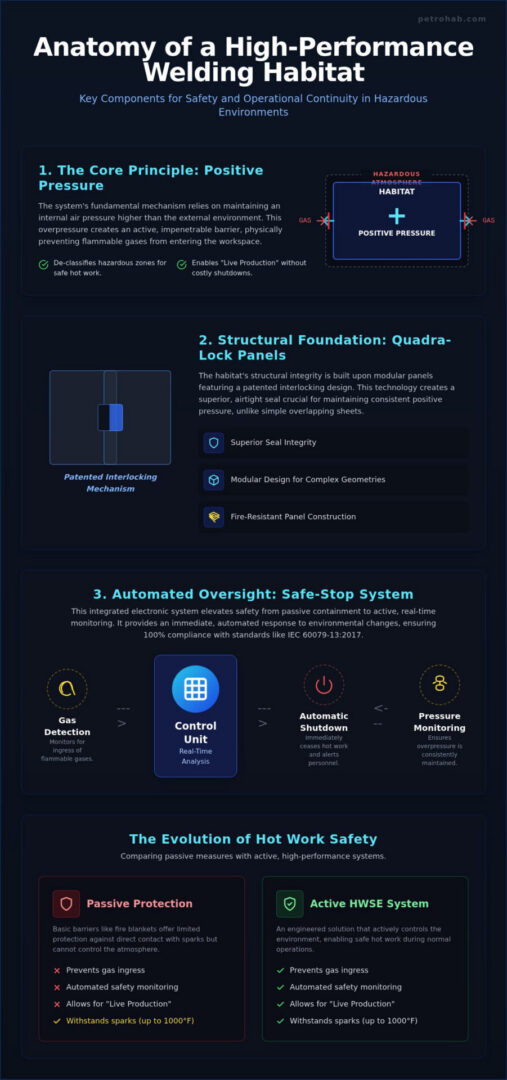
The fundamental mechanism of these systems relies on the principle of a Positive pressure enclosure. By maintaining an internal air pressure higher than the external environment, the system ensures that ambient combustible gases are physically blocked from entering the workspace. This active overpressure is critical for “Live Production” environments where facility shutdowns are economically unfeasible. While passive blankets might withstand sparks up to 1000°F, they lack the capacity to prevent gas ingress. Pressurized habitats provide the necessary technological remedy to manage these hazardous conditions without halting revenue-generating activities.
To better understand the core principles behind these systems, watch this helpful video:
The Evolution of Pressurized Habitats
Industrial safety has moved far beyond simple welding tents. Early iterations were often rudimentary structures with limited monitoring capabilities. Modern HWSE technology has evolved into highly engineered systems that integrate modular structural integrity with sophisticated electronics. The shift toward automated monitoring and shutdown systems represents the most significant advancement in the sector. These systems don’t just contain the work; they actively monitor for pressure drops or gas detection, providing an immediate response to environmental changes. This evolution has directly contributed to reducing industrial downtime, as operations can continue safely without the need for total plant isolation.
Primary Applications in Oil, Gas, and Petrochemicals
The deployment of welding habitat equipment is essential across various high-stakes sectors. On offshore platforms and Floating Production Storage and Offloading (FPSO) vessels, space is limited and the risk of gas accumulation is high. Bureau of Safety and Environmental Enforcement (BSEE) regulations often necessitate these enclosures to bypass strict shut-in requirements during maintenance. Onshore, these systems are indispensable during refinery turnarounds and midstream facility repairs. They allow engineers to execute critical repairs on active pipelines or processing units. Using modular components like Quadra-Lock panels ensures the enclosure can be tailored to complex geometries. These systems are the primary tool for safety managers to meet their Permit-to-Work (PTW) obligations, ensuring every hot work task is backed by a rigorous risk mitigation strategy.
The Core Components of High-Performance Welding Habitats
High-performance welding habitat equipment functions as a unified system where structural containment and electronic oversight work in tandem. It’s not enough to surround a work area with fire-resistant fabric. The entire assembly must actively maintain its integrity through precisely engineered components that prevent the ingress of flammable gases. This requires a transition from passive containment to an active, monitored safety environment.
Quadra-Lock Panel Technology
The structural foundation of the PetroHab HWSE is the modular panel system. Unlike standard fiberglass sheets that rely on simple overlapping, Quadra-Lock panels utilize a patented interlocking mechanism. This design creates a superior seal that is essential for maintaining internal overpressure. Modularity is a critical advantage in offshore environments or dense refineries where space is at a premium. These panels consist of fire-resistant materials capable of withstanding sparks and slag up to 1000°F. This level of thermal resistance ensures compliance with OSHA 1910.252 standards for fire prevention during hot work operations.
Safe-Stop Automatic Shutdown Systems
While the panels provide the physical barrier, the Safe-Stop Automatic Shutdown System acts as the technological brain of the enclosure. It continuously monitors the differential pressure between the habitat and the external environment. The system also tracks gas concentrations using integrated sensors. If internal pressure drops below the safety threshold or if flammable gases are detected, the system triggers an immediate shutdown. It terminates power to all welding machines and grinders instantly to eliminate any potential ignition source. This system is designed to integrate with site-wide alarm protocols, ensuring that safety managers have absolute control over the work environment at all times.
Air Ducting and Ventilation Solutions
A reliable air management system is essential for maintaining positive pressure and worker health. PetroHab air ducting facilitates the constant exchange of air, removing hazardous welding fumes while providing a fresh, breathable atmosphere for personnel. Strategic blower placement ensures that the overpressure remains consistent even when doors are opened or closed. For installations involving complex structural penetrations, such as pipes or I-beams, specialized sealing accessories are used to close gaps. These sleeves and penetrations ensure the enclosure remains airtight. You can review the technical specifications of these pressurized habitats to see how they fit your project needs.
Engineering Standards: Compliance for Hazardous Environments
Operating hot work equipment in explosive atmospheres requires absolute adherence to international engineering standards. These regulations provide the technical framework for risk mitigation in environments where flammable gases or vapors are present. For a Positive pressure enclosure to be considered effective, it must meet specific criteria regarding air flow, gas detection, and structural containment. The primary benchmark for these pressurized systems is IEC 60079-13, which governs the protection of equipment by pressurized rooms in explosive atmospheres. Compliance with this standard ensures that the habitat can maintain its internal overpressure even under varying external conditions.
Beyond pressurization, fire prevention standards like NFPA 51B dictate the requirements for managing sparks and slag during welding. This standard requires that all materials used in the construction of the habitat, such as the Quadra-Lock panels, possess high thermal resistance. In the United States, OSHA guidelines further regulate hot work within confined spaces, mandating continuous monitoring and specific permit-to-work protocols. These overlapping layers of compliance ensure that welding habitat equipment functions as a reliable safety barrier rather than a mere temporary shelter. Adherence to these protocols is what separates an engineered safety system from a rudimentary enclosure.
ATEX Zone 1 and Zone 2 Requirements
Hazardous areas are classified based on the frequency and duration of the occurrence of an explosive atmosphere. Zone 1 areas represent locations where an explosive atmosphere is likely to occur in normal operation, while Zone 2 covers areas where it’s unlikely to occur. The technical requirements for equipment in Zone 1 are significantly more stringent. Gas detection sensors and the Safe-Stop Automatic Shutdown System must carry specific ATEX or IECEx certifications to operate in these high-risk zones. Third-party certification is non-negotiable for safety managers; it provides independent verification that the system will perform as engineered during a critical event. You don’t guess with ignition prevention; you rely on certified technology that has been rigorously tested for the specific hazards of your site.
Global Regulatory Alignment
Maintaining safety across international borders requires equipment that aligns with diverse regulatory landscapes. PetroHab HWSE systems are engineered to meet or exceed ATEX, IECEx, and ANSI standards simultaneously. This global compatibility allows operators to deploy the same high-standard equipment on offshore platforms in the North Sea or refineries in the Gulf of Mexico. Detailed documentation and certification logs are essential components of this process, providing the necessary proof of compliance during safety audits. For a deeper analysis of these requirements, safety engineers should consult the guide on Hazardous Environment Standards to understand the nuances of global hot work safety. This commitment to transparency and engineering excellence ensures that every project meets its legal and ethical safety obligations without compromising production schedules.
Operational Best Practices for Pressurized Habitats
Operational excellence begins long before the first arc is struck. A rigorous pre-deployment inspection ensures that all components of the welding habitat equipment are in peak condition. Technicians must verify the structural integrity of each Quadra-Lock panel and ensure that gas detection sensors are calibrated against known reference gases. Site preparation involves identifying all structural penetrations, such as piping or support beams, that will require specialized sealing to prevent pressure loss. A clear footprint must be established to allow for the safe routing of air ducting and power cables.
Assembly of the HWSE must follow a logical, documented sequence. Quadra-Lock panels are interlocked to form the walls and ceiling, creating a rigid structure that resists deformation under internal pressure. Once the physical containment is secure, the Safe-Stop Automatic Shutdown System is integrated into the workflow. Thresholds for gas detection and differential pressure must be set according to the specific risks identified in the site’s permit-to-work. This calibration ensures the system acts as a precise guardian, terminating power only when actual hazardous thresholds are breached.
Establishing and Maintaining Positive Pressure
Maintaining a stable internal environment requires constant vigilance and technical precision. Manometers provide the primary data for verifying enclosure integrity; any sudden drop in pressure indicates a potential breach in the seal. Air loss typically occurs at cable or pipe penetrations, making the use of high-quality sleeves and fire-resistant sealants essential. In offshore conditions, high winds can create external pressure fluctuations that challenge the blower system’s output. Technicians must proactively monitor these levels and adjust air intake to compensate for environmental variables, ensuring the habitat remains a safe workspace throughout the shift.
Personnel Training and Supervision
Technology alone cannot guarantee safety in high-stakes environments. Certified technicians must supervise the habitat throughout the duration of the hot work to manage the Safe-Stop interface. These individuals are responsible for conducting emergency drills that simulate habitat failure or gas ingress. All welders and grinders operating within the enclosure must understand the system’s operational logic. They need to recognize the visual and audible alarms that precede an automated shutdown. This human element ensures that technological remedies are supported by disciplined operational protocols. You can explore our PetroHab Hot Work Safety Enclosures to see how these systems integrate into your existing safety training programs.
Strategic Procurement: Selecting the Right HWSE Supplier
Selecting a supplier for welding habitat equipment requires a rigorous evaluation of technical capabilities and logistical infrastructure. PetroHab’s Houston-engineered systems set the industry benchmark because they integrate field-proven technology with uncompromising safety standards. Procurement managers must look beyond the initial invoice to assess the total cost of ownership. This calculation includes the availability of certified technicians, the frequency of required maintenance, and the quality of operator training. A supplier with global reach ensures that ATEX/IECEx compliant equipment is available at the project site, regardless of geographic isolation. Reliable technical support acts as a critical safety partner, providing the expertise needed to manage complex industrial hazards.
Leasing vs. Buying: A Comparison for Major Projects
The financial logic behind procurement depends largely on project duration and frequency. For short-term maintenance turnarounds or one-off offshore repairs, leasing provides a cost-effective solution without the burden of long-term asset management. Rental models allow operators to access the latest Safe-Stop technology and Quadra-Lock panels without a significant capital expenditure. Conversely, for long-term facility assets where hot work is a recurring requirement, direct purchase offers superior financial returns over time. Owning the equipment ensures immediate availability and allows for deep integration into the site’s permanent safety protocols. You can review detailed sourcing strategies in our Procurement Guide.
Customization and Scalability with Quadra-Lock
Industrial sites rarely offer uniform spaces for enclosure deployment. The modularity of Quadra-Lock panels allows safety engineers to design enclosures that accommodate complex geometries, such as protruding valves, structural beams, or piping clusters. This adaptability eliminates the need for multiple fixed-size systems, which streamlines the procurement process. Modular components also reduce logistics costs. Compact, stackable panels are easier to transport via standard global freight, reducing the shipping lead times. Finalizing your safety plan with a Pressurized Welding Habitat ensures that your site remains protected by the highest standard of HWSE technology available in 2026. This strategic approach to procurement prioritizes risk mitigation while optimizing operational expenditure.
Securing Your Operations with Advanced HWSE Integration
Implementing high-performance welding habitat equipment is the definitive step toward eliminating ignition risks in hazardous environments. You’ve seen how the integration of positive pressure technology and rigorous engineering standards like IEC 60079-13 de-classifies potential explosive zones. This approach ensures that hot work doesn’t dictate your production schedule or compromise the safety of your high-value assets. By combining the structural integrity of patented Quadra-Lock modular technology with the responsive intelligence of certified Safe-Stop automatic shutdown systems, you create an impenetrable barrier for your personnel. These systems transform a dangerous necessity into a controlled, predictable operation.
PetroHab maintains a legacy of safety excellence through its Houston-based engineering and manufacturing roots. Our systems are designed to exceed global regulatory requirements while offering the modularity needed for the world’s most complex industrial sites. You don’t have to sacrifice operational uptime to achieve absolute compliance and risk mitigation. Request a Technical Consultation and Quote for PetroHab HWSE Systems today to secure your facility’s future. We look forward to partnering with you to reach your goal of zero-ignition hot work.
Frequently Asked Questions
What is the primary function of welding habitat equipment?
The primary function of welding habitat equipment is to isolate ignition sources from potentially explosive atmospheres by creating a controlled, pressurized workspace. It functions as an active safety barrier that de-classifies hazardous areas, allowing hot work to proceed without facility shutdowns. By maintaining internal overpressure, the enclosure physically prevents the ingress of combustible gases. This technology is essential for high-stakes environments where operational continuity and personnel protection are non-negotiable.
How does an automatic shutdown system like Safe-Stop work?
The Safe-Stop Automatic Shutdown System acts as the technological brain of the safety enclosure. It continuously monitors differential pressure and detects gas concentrations via integrated sensors. If internal pressure drops below a pre-set safety threshold or if flammable gases are detected, the system triggers an immediate shutdown. It terminates power to all welding machines and grinders instantly. This automated response eliminates potential ignition sources before a hazardous event can occur in the surrounding environment.
Is welding habitat equipment required for all offshore hot work?
While not required for every task, welding habitat equipment is often mandatory for offshore hot work near pressurized equipment. Bureau of Safety and Environmental Enforcement (BSEE) regulations generally prohibit hot work within 10 feet of such equipment unless the platform is shut-in. Operators can obtain a waiver by using a certified, pressurized welding enclosure. This allows for critical maintenance to occur while production continues, provided the system maintains positive pressure and automated monitoring.
What are Quadra-Lock panels and why are they used?
Quadra-Lock panels are patented, interlocking components that form the structural walls and ceiling of the PetroHab HWSE. Unlike standard fiberglass sheets, these panels utilize a specialized locking mechanism to create a superior, airtight seal. This modularity is essential for building enclosures around complex piping or within tight industrial spaces. These panels consist of fire-resistant materials that withstand sparks up to 1000°F, ensuring the habitat maintains its integrity during intensive operations.
Can a welding habitat be used in ATEX Zone 1 environments?
Yes, a pressurized habitat can be utilized in ATEX Zone 1 environments if the equipment is specifically certified for that classification. The system must meet the IEC 60079-13 standard for pressurized rooms to ensure it can manage the higher risks present in Zone 1 areas. All electronic monitoring components, including the Safe-Stop system and gas sensors, must carry current ATEX or IECEx certifications to ensure reliable performance in explosive atmospheres.
How do you maintain positive pressure inside a welding habitat?
Maintaining positive pressure requires a synchronized system of blowers, air ducting, and real-time monitoring. Blowers force a constant flow of fresh air into the enclosure while manometers track the differential pressure levels. Technicians must use specialized sealing accessories to close gaps around cable and pipe penetrations where air loss is most likely to occur. This active air management ensures that internal pressure stays higher than the external environment, effectively blocking the ingress of flammable gases.
What fire-resistance standards must welding habitat equipment meet?
Welding habitat equipment must comply with rigorous fire-resistance standards to ensure the protection of personnel and assets. In the United States, materials should meet NFPA 51B and ANSI Z49.1-2021 requirements. High-performance panels are engineered to withstand sparks and molten slag reaching temperatures up to 1000°F. These standards provide safety managers with the technical assurance that the enclosure will not ignite or degrade when exposed to the intense heat generated during industrial hot work.
Should I rent or purchase a hot work safety enclosure for my facility?
Choosing between renting or purchasing a hot work safety enclosure depends on your facility’s long-term maintenance strategy. Leasing is often the preferred choice for short-term maintenance turnarounds or one-off offshore projects, as it provides access to the latest technology without significant capital expenditure. Direct purchase is more logical for major facilities with recurring hot work needs. Ownership allows for deep integration into permanent safety protocols and provides a better return on investment over time.