
Posts Tagged ‘Industrial Safety’
Safehouse Habitat vs PetroHab Quadra-Lock for Hot Work
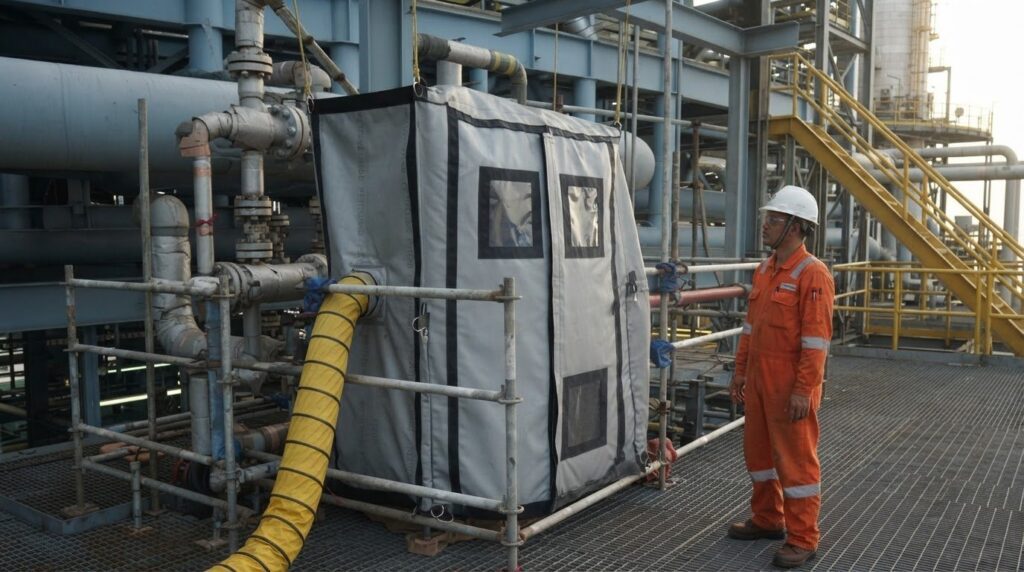
The fastest habitat to assemble isn’t automatically the right choice for hot work. When evaluating a Safehouse habitat versus the PetroHab LLC…
Read MoreHow to Gain Shift Superintendent Approval for Live Process Area Grinding
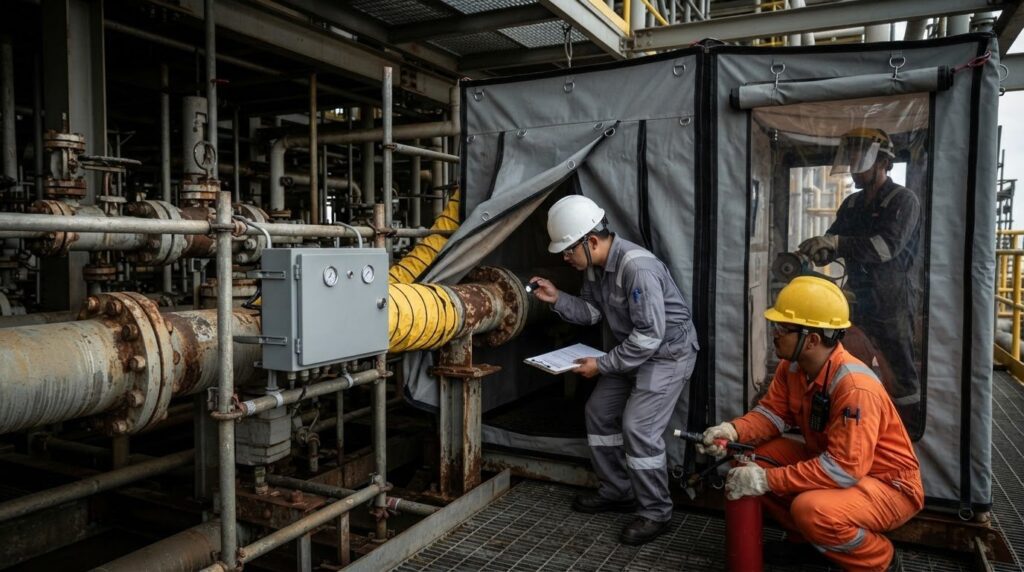
A clear work plan, not urgency, is what makes a grinding request ready for review. Gaining shift superintendent approval for live process area…
Read MoreHot Work Habitat Technician Supervision for Safer Work
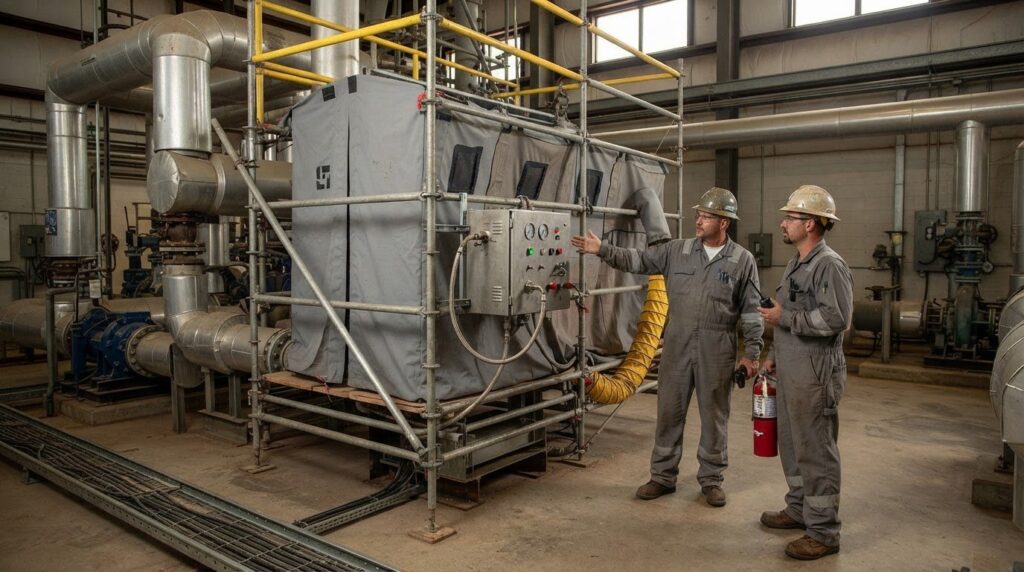
A permit alone cannot supervise a hot-work habitat. Effective hot work habitat technician supervision pairs a competent supervisor with clear work…
Read MoreH2S Gas: Hazards, OSHA Exposure Limits and Industrial Uses
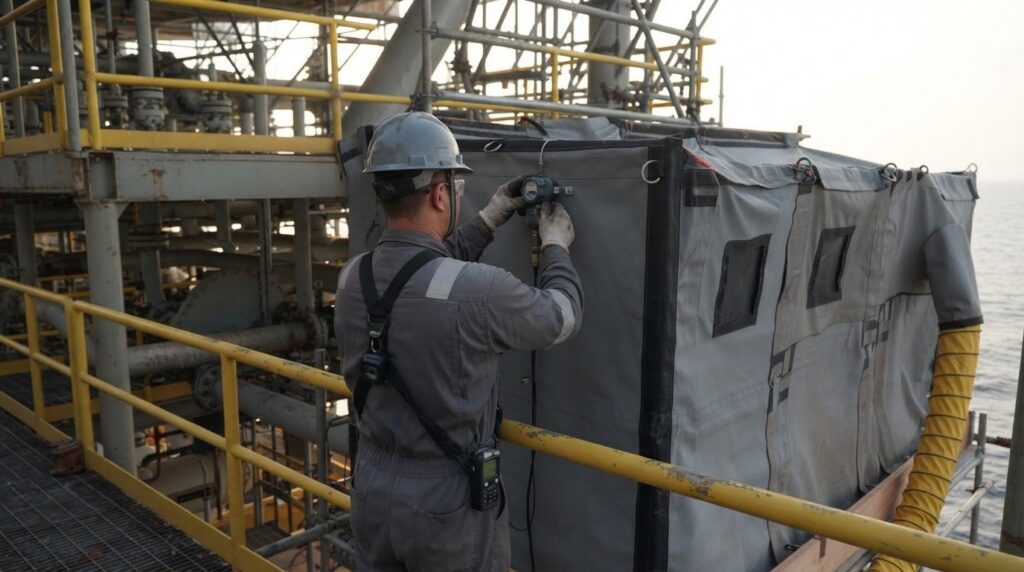
A gas used to produce sulfur can also become a life-threatening workplace hazard. H2S, or hydrogen sulfide, is a colorless, flammable gas that can…
Read MoreTemporary pipeline hot work habitats for hazardous gas exclusion
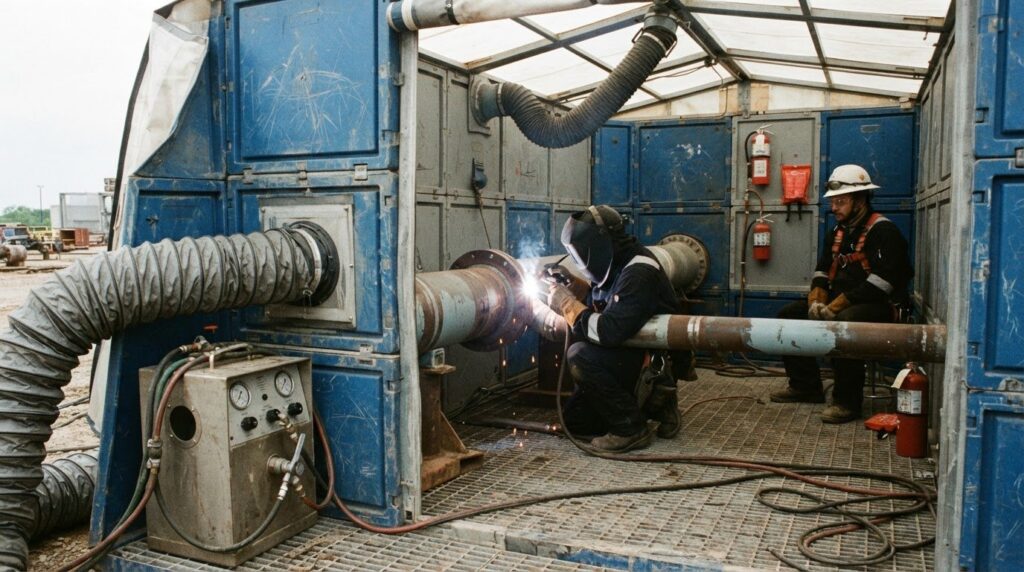
A temporary habitat for pipeline hot work must do more than surround a weld. It should help exclude hazardous gas while supporting controlled welding…
Read MoreHot work safety enclosure rental options for access and shade
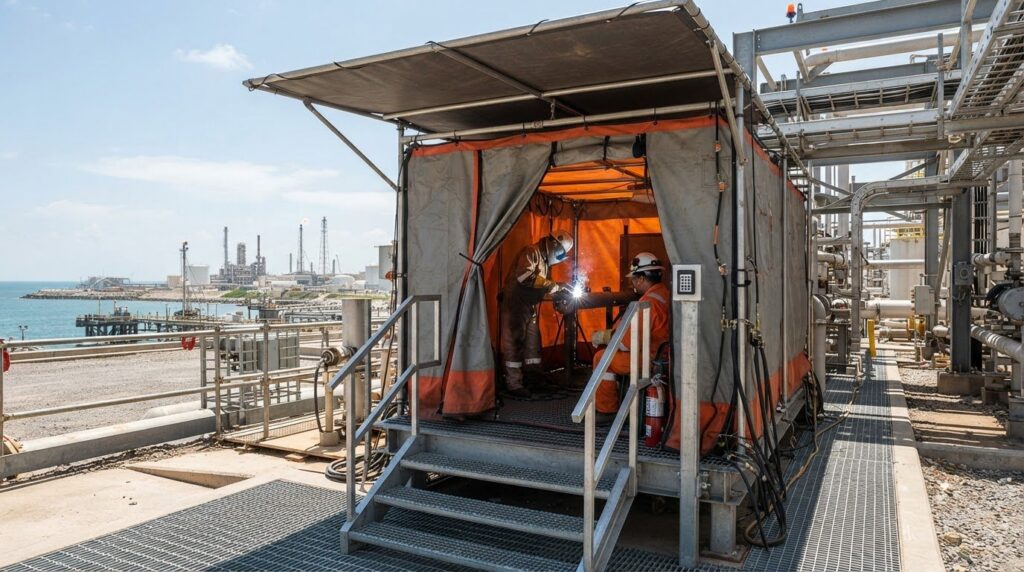
Access control and shade are practical features to consider when arranging a hot work safety enclosure rental. Keypads can control entry to the…
Read MoreHot Work Habitat Safety: Fire Risks and Gas Exclusion
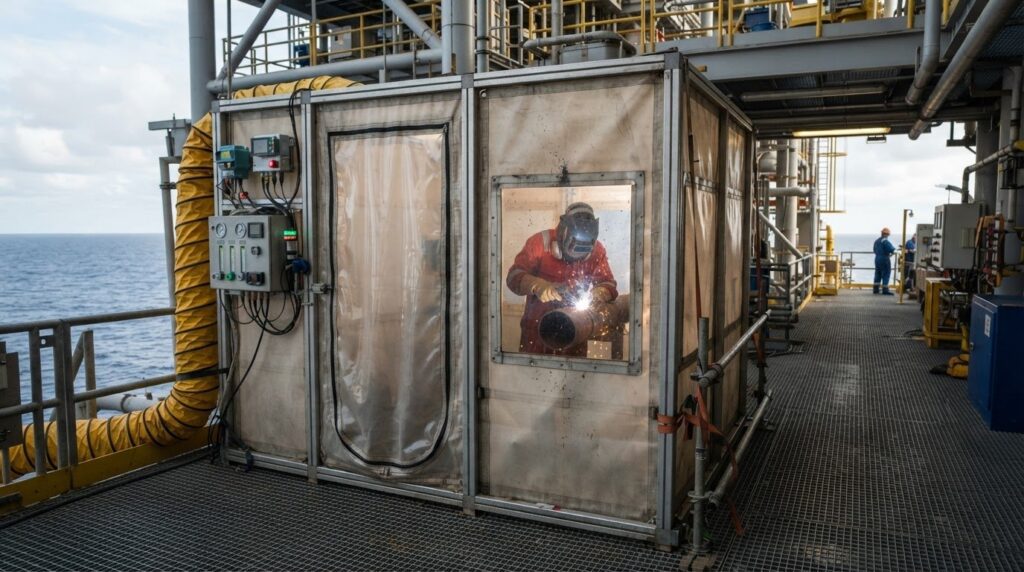
A spark can ignite an unnoticed flammable atmosphere, causing a fire or explosion. Effective hot work habitat safety protocols combine hazard…
Read MoreSafety Enclosures for Safer Vessel and Tank Entry
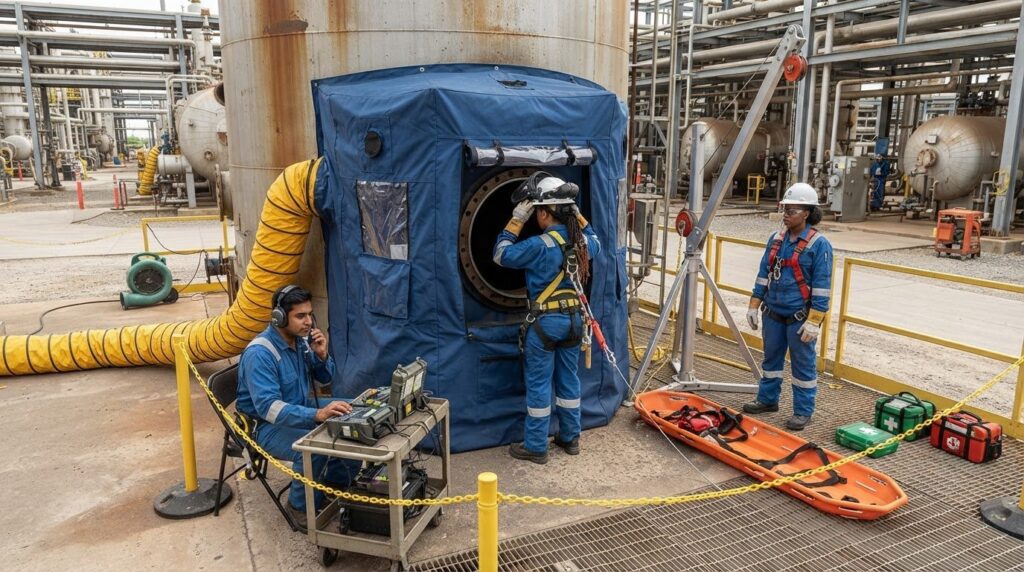
A safety enclosure for vessel and tank entry helps control the work area around an opening and supports air-quality management, communication,…
Read MoreHabitat Flooring and Non-Slip Requirements: A 2026 Selection Guide
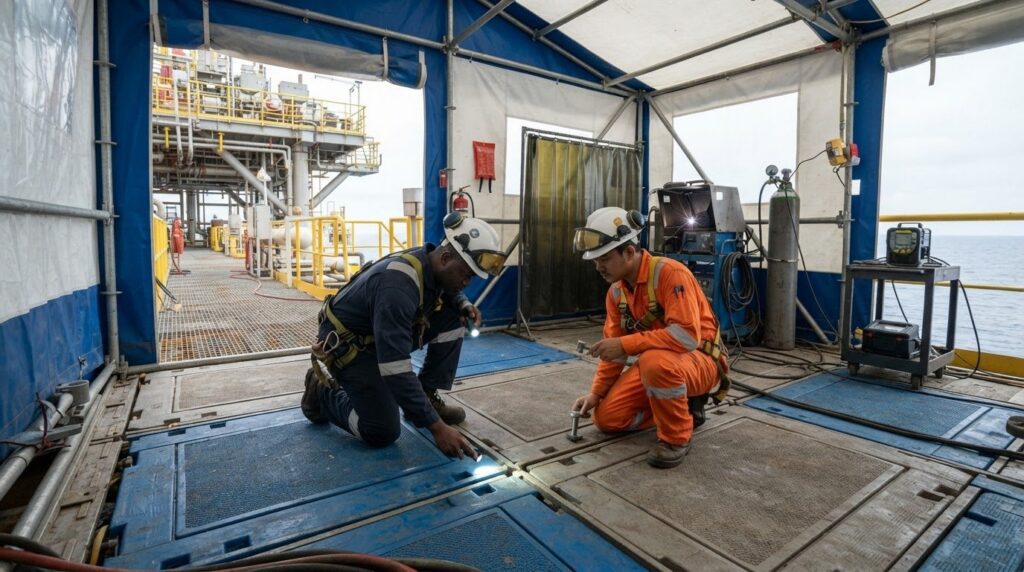
One flooring specification can’t address every hot-work habitat risk. A surface that provides traction when dry may behave differently when wet or…
Read MoreHot Work Habitat Gas Detection: The 2026 Technical Safety and Calibration Guide
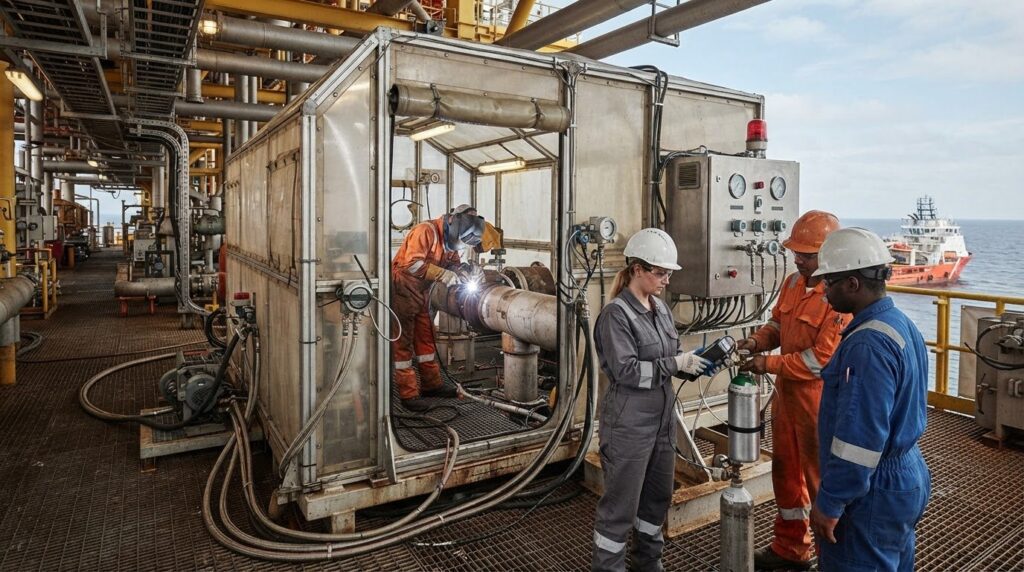
Hot work causes roughly 30% to 34% of construction-related industrial fires, yet many facilities still treat atmospheric monitoring as a passive…
Read More