The Ultimate Hot Work Safety Checklist for Hazardous Environments (2026)
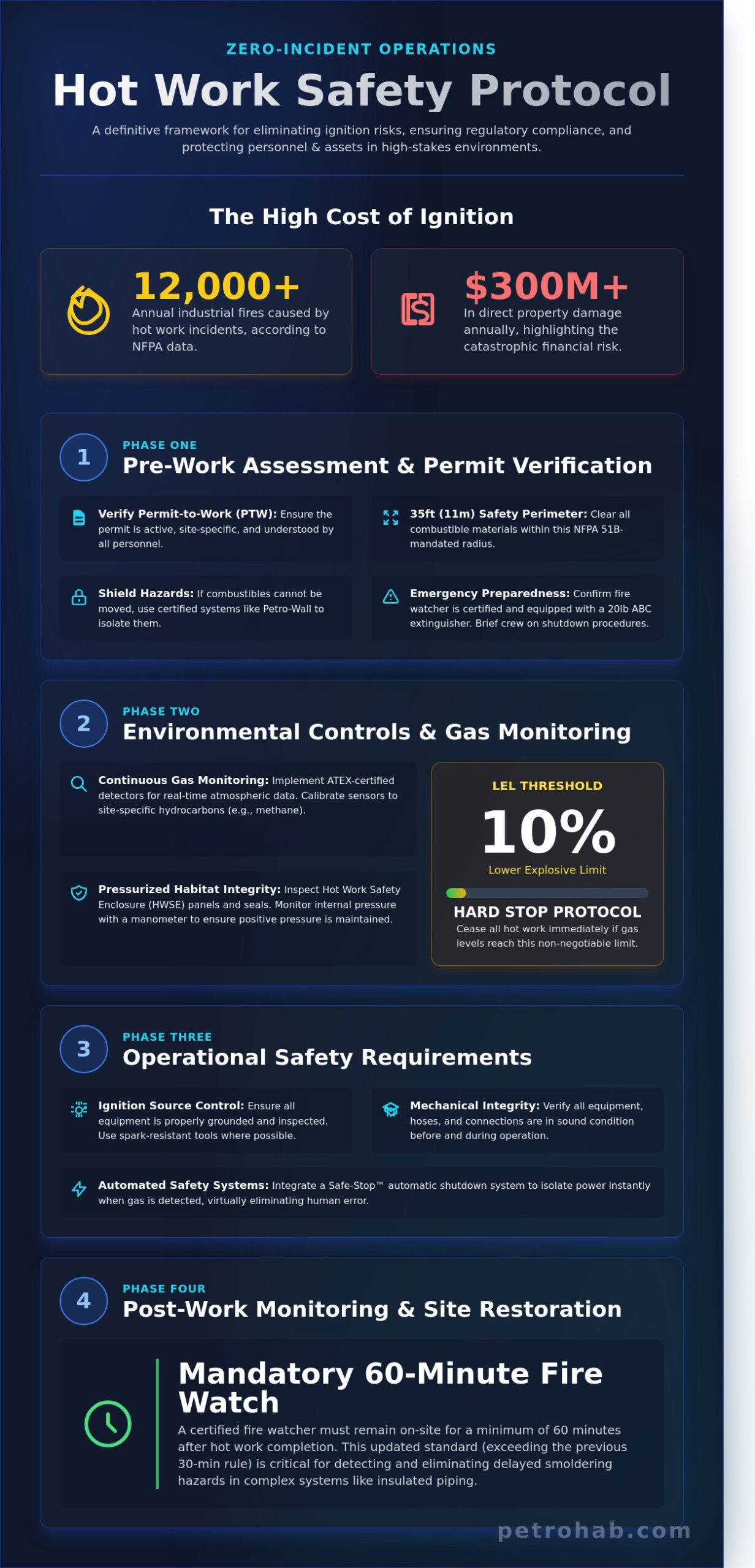
According to recent NFPA data, hot work incidents account for over 12,000 annual industrial fires, leading to more than $300 million in direct property damage. This statistic underscores the thin margin between routine maintenance and catastrophic failure in high-stakes environments. You recognize that balancing OSHA, NFPA, and ATEX compliance isn’t just a regulatory burden; it’s a critical defense against the fear of ignition during live plant operations. Managing these complexities often results in inefficient permit-to-work delays that stall production and compromise site integrity.
While this guide focuses on operational controls, a comprehensive risk mitigation strategy also involves robust financial and liability protection. Partnering with specialist firms such as Paterson Insurance Brokers can help ensure your business is covered against unforeseen catastrophic events.
This article provides a professional-grade hot work safety checklist designed to eliminate these bottlenecks and ensure zero-incident operations. By following this framework, you’ll gain a definitive strategy for identifying risks and implementing advanced pressurized habitats. We will detail the technical requirements for ignition source control and demonstrate how patented systems like the Petro-Wall maintain safety. This guide serves as your roadmap to reducing downtime through safe live-work protocols while achieving total regulatory compliance in 2026. Our focus remains on the protection of human life and high-value assets through unrivaled engineering and methodical risk mitigation.
Key Takeaways
- Master a rigorous four-phase framework for identifying ignition sources and verifying Permit-to-Work compliance in high-stakes industrial environments.
- Implement professional-grade environmental controls, including ATEX-certified gas monitoring and LEL testing, to maintain a safe work atmosphere.
- Utilize this comprehensive hot work safety checklist to standardize operational safety requirements and ensure the mechanical integrity of all equipment.
- Establish uncompromising post-work restoration protocols, including a mandatory 60-minute fire watch to detect and eliminate smoldering hazards.
- Discover how integrating patented Safe-Stop technology and pressurized habitats automates ignition source isolation to virtually eliminate human error.
Phase 1: Pre-Work Assessment and Permit Verification
Safe execution begins with rigorous documentation. No technician strikes an arc until the Permit-to-Work (PTW) is verified as active and site-specific. This document serves as the primary control mechanism for ignition source control in high-risk zones. Before commencing operations, safety managers must consult their hot work safety checklist to confirm that all personnel understand What is Hot Work? and the specific hazards it introduces to the facility. A permit issued for a platform’s cellar deck isn’t valid for the drill floor. Precision in location tagging is mandatory.
NFPA 51B mandates a 35-foot (11m) fire safety perimeter. You’ve got to clear this radius of all combustible materials, including oily rags, debris, and flammable vapors. If you can’t move the hazard, you’ve got to shield it using certified solutions like our Petro-Wall system. Every member of the crew must receive a briefing on emergency shutdown procedures. If you don’t verify the local gas levels, you don’t start the job. This includes the immediate activation of Safe-Stop systems if gas detection levels exceed 10% of the Lower Explosive Limit (LEL). Confirm the presence of a certified fire watcher equipped with a fully charged, inspected 20lb ABC dry chemical extinguisher.
Regulatory Compliance: OSHA and NFPA 51B Standards
Compliance with OSHA 1910.252 is the baseline for industrial integrity. Safety officers must first document why the work is necessary. If a cold-work alternative exists, the permit should be denied. You’re required to classify the location as either a ‘Designated Area’ or a ‘Permit-Required Area.’ In 2026, regulatory scrutiny on these classifications has intensified. This requires 100% documentation of fire prevention measures before any tool is energized. This hot work safety checklist ensures every regulatory box is checked with technical precision.
Offshore vs. Onshore Site Preparation
Offshore environments demand specialized vigilance. Inspect all deck drains and scuppers within the 35-foot zone. These are common conduits for gas migration that can lead to catastrophic ignition. Onshore, the focus shifts to the proximity of pressure vessels and flammable storage tanks. Verify the current wind direction using local anemometers. Establish at least two secondary evacuation routes that lead upwind of the potential leak source. Certified fire watchers must remain on-site for at least 60 minutes after the work concludes to monitor for smoldering fires. This standard exceeds the older 30-minute requirement to account for delayed ignition in insulated piping.
Phase 2: Environmental Controls and Gas Monitoring
Environmental control is the technical foundation of any robust hot work safety checklist. Before a single piece of ignition-prone equipment reaches the work site, a certified gas tester must perform an initial sweep to confirm the atmosphere contains 0% Lower Explosive Limit (LEL). This baseline ensures that the introduction of tools does not coincide with a pre-existing combustible hazard. Compliance with OSHA Hot Work Regulations requires these rigorous fire prevention steps to protect personnel in high-risk zones.
Static testing is insufficient for dynamic environments like offshore platforms or refineries. Safety managers must implement continuous gas monitoring using ATEX-certified detectors. These devices provide real-time data on atmospheric shifts. If gas migration occurs, the system must trigger an immediate cessation of all sparking activities. Integrating a Safe-Stop automatic shutdown system provides a definitive technological remedy by isolating power the moment a threat is detected.
LEL Limits and Ignition Source Control
Precision in gas detection relies on accurate calibration. Technicians must calibrate all sensors to the specific hydrocarbons present on-site, such as methane or pentane, to prevent false negatives. While work begins at 0% LEL, the protocol demands a hard stop if levels reach 10% LEL. This 10% threshold serves as a critical safety buffer, allowing for an orderly evacuation and equipment shutdown before the environment reaches a combustible state. It is a non-negotiable standard for maintaining ignition source control.
Pressurized Habitat Integrity
The use of a Hot Work Safety Enclosure (HWSE), such as the patented Petro-Wall, creates a physical barrier between ignition sources and potential fuel. Technicians must inspect every modular panel for tears or compromised seals that could allow gas ingress. Monitoring the internal environment is equally vital. A manometer must consistently display a minimum positive pressure of 0.1 inches of water column. This pressure differential ensures that air always flows out of the habitat, never in. Operators must also verify that the intake air ducting originates from a certified ‘Safe Zone’ to prevent the intake of contaminated air into the pressurized space.
Phase 3: Operational Hot Work Safety Requirements
Active execution requires constant vigilance. The hot work safety checklist transitions from preparation to operational oversight once the first arc is struck or the torch is lit. Operators must monitor the Safe-Stop automatic shutdown system for real-time status updates. This patented technology acts as the primary safeguard, monitoring gas concentrations and pressure differentials simultaneously. If the system detects a 10% Lower Explosive Limit (LEL) or a loss of habitat pressure, it terminates all power and gas flow to the work area in less than 0.5 seconds.
Protect all welding leads and gas hoses from mechanical damage using heavy-duty cable ramps or fire-retardant sleeves. A single puncture in a pressurized hose can introduce combustible fuel into the safe zone. Maintain clear communication between the habitat interior and the external fire watch using ATEX-certified communication sets. Personnel must perform periodic ‘stop-work’ checks every 60 minutes to re-evaluate atmospheric conditions. This rigorous interval ensures compliance with the NFPA 51B Standard, which dictates that fire prevention measures must remain effective throughout the entire duration of the hot work operation.
Safe-Zone Maintenance and Monitoring
Continuously verify positive pressure using the PetroHab Safe-Zone system. Technicians should maintain a minimum pressure differential of 0.05 inches of water column (12.5 Pa) to ensure no external hydrocarbons enter the enclosure. It’s vital to ensure the automatic shutdown valve is functional and unobstructed by equipment. Document pressure fluctuations every 30 minutes. Any drop below 0.02 inches of water column indicates a habitat breach, requiring an immediate cessation of all ignition-source activities until the integrity of the Petro-Wall is restored.
Equipment and Personnel Safety
Verify all electrical equipment is properly grounded to eliminate the risk of stray currents and static discharge. Workers must wear fire-resistant PPE that meets the ISO 11612 standard for heat and flame protection. Confirm that the habitat internal temperature remains below 40 degrees Celsius (104 degrees Fahrenheit). Excessive heat buildup doesn’t just impact worker stamina; it can also affect the structural tension of the modular panels. If temperatures exceed this limit, technicians must increase the ventilation rate or implement mandatory cooling breaks to maintain operational safety.
Phase 4: Post-Work Monitoring and Site Restoration
The safety mission doesn’t end when the arc is extinguished. It concludes only when the site is restored to a stable, non-hazardous state. Statistics from industrial safety audits indicate that approximately 15% of fire incidents in oil and gas facilities occur during the cooling phase after work has officially stopped. A rigorous hot work safety checklist must prioritize this transition period to ensure that latent thermal energy doesn’t lead to catastrophic ignition. Technicians must remain disciplined, treating the restoration phase with the same technical precision as the active welding or grinding process.
The 60-Minute Fire Watch Protocol
Industry standards, including NFPA 51B and PetroHab’s internal safety benchmarks, mandate a dedicated fire watch for at least 60 minutes after work ceases. This timeframe is the gold standard for offshore platforms where steel conductivity is a primary concern. The fire watch isn’t a passive observation role. Personnel must actively monitor “blind spots” and the reverse sides of bulkheads or decks. Heat transfers through metal surfaces and can ignite insulation or debris in adjacent compartments. We require a final infrared thermal scan of all work surfaces. Any area showing a temperature 10 degrees Celsius above ambient requires continued monitoring until it stabilizes. This methodical approach ensures that smoldering materials, which can remain dormant for over 45 minutes, are identified and neutralized immediately.
Dismantling and Equipment Inspection
Site restoration involves the systematic de-pressurization and dismantling of the Hot Work Safety Enclosure (HWSE). Technicians must follow manufacturer specifications to maintain the integrity of the system.
- Clean and inspect Quadra-Lock panels: Examine each panel for heat-related discoloration or seal degradation.
- Log equipment hours: Record the operational duration of the Safe-Stop and Petro-Wall systems to trigger scheduled maintenance at the 500-hour mark.
- Report near-misses: Document any gas detection triggers or pressure fluctuations that occurred during the shift.
Once the equipment is secured, the lead technician must return the Permit-to-Work to the supervisor. This final signature confirms that the hot work safety checklist is fully reconciled and the area is safe for normal operations. If any equipment malfunctions were noted, they must be tagged out of service according to ISO 9001 quality protocols before being returned to storage.
Secure your facility with the industry’s most reliable pressurized habitats. Explore PetroHab’s hot work safety solutions to mitigate post-work risks.
Integrating PetroHab Technology into Your Safety Checklist
PetroHab Hot Work Safety Enclosures (HWSE) redefine the hot work safety checklist by replacing subjective human observation with objective engineering controls. Traditional checklists rely on a fire watch’s ability to spot hazards, but PetroHab technology mitigates the human error variable through pressurized physical barriers. The modular design allows safety managers to customize checklists for specific deck layouts, ensuring every weld point is isolated within a controlled atmosphere. Using patented Quadra-Lock technology, teams achieve rapid, safe assembly without the need for tools. These interlocking panels maintain a flame-retardant seal capable of withstanding temperatures exceeding 1,000 degrees Celsius, providing a level of protection that manual barriers can’t match.
Automated vs. Manual Safety Checks
Traditional fire watch protocols rely on human vigilance, which is susceptible to fatigue. PetroHab replaces this vulnerability with continuous gas detection and automated shutdown systems. These sensors provide a digital audit trail, recording atmospheric data every 30 seconds to ensure 100% compliance with ATEX and IECEx standards. This data allows for real-time monitoring and post-job analysis that manual logs simply don’t provide. PetroHab’s Safe-Stop system serves as the ultimate failsafe for hot work by automatically isolating ignition sources the moment a hazard is detected.
Training and On-site Supervision
Effective habitat deployment requires more than just hardware; it demands technical mastery. Personnel must be competent in managing differential pressure and seal integrity to prevent gas ingress. For complex offshore projects, PetroHab certified technicians oversee the installation to ensure the habitat meets ISO 9001:2015 quality requirements. This level of expert supervision reduces setup time by 25% compared to untrained crews and ensures the hot work safety checklist is executed with precision. If you require a specialized solution for your facility, Contact PetroHab for a custom safety enclosure consultation to secure your operations.
By integrating these technologies, safety managers move beyond simple compliance. They implement a rigorous, technology-driven defense that protects high-value assets and human life in the most volatile environments on earth. The transition from manual checks to automated, pressurized systems represents the gold standard in modern industrial risk mitigation.
Elevating Operational Integrity through Advanced Safety Protocols
Maintaining operational excellence in high-stakes environments requires more than simple compliance; it demands a proactive commitment to risk mitigation. By implementing this comprehensive hot work safety checklist, safety managers ensure that every phase, from pre-work gas monitoring to final site restoration, meets the rigorous 2026 industry standards. PetroHab’s patented Quadra-Lock technology provides 100% interlocking panel integrity, eliminating the dangerous gaps found in legacy systems. Our ATEX and IECEx certified components are engineered to withstand offshore conditions exceeding 50 knots, a fact proven by our track record with 62 major oil and gas operators worldwide.
Effective safety protocols rely on the synergy between disciplined procedural oversight and superior engineering. You shouldn’t leave the integrity of your facility to chance when definitive technological remedies exist. Protecting your personnel and high-value assets is a continuous responsibility that defines the industry’s gold standard. Download the PetroHab Professional Hot Work Safety Guide. We’re ready to support your mission of achieving zero incidents on every shift.
Frequently Asked Questions
What are the five essential elements of a hot work safety checklist?
The five essential elements of a hot work safety checklist include hazard identification, fire watch assignment, ignition source control, PPE verification, and emergency response planning. These components ensure compliance with NFPA 51B standards. Each element must be verified before the first spark is struck to maintain operational integrity in high-risk zones. For instance, ignition source control requires the isolation of all flammable gas lines within the work area.
How long must a fire watch stay on duty after hot work is completed?
A fire watch must remain on duty for a minimum of 60 minutes after all hot work activities conclude. This duration aligns with OSHA 1910.252 requirements to monitor for smoldering fires. In specific offshore environments, PetroHab protocols often extend this to 120 minutes depending on the proximity of Class 1 Division 1 materials. The watcher’s sole responsibility is monitoring the site without any other operational distractions.
Is a pressurized habitat required for all welding in hazardous zones?
A pressurized habitat is mandatory for welding in any area classified as Zone 1 or Zone 2 where explosive gases may be present. These enclosures, such as the Petro-Wall, create a safe micro-environment by maintaining positive pressure. This physical barrier prevents the ingress of hydrocarbons. Without this 100% sealed protection, the risk of ignition remains unacceptably high in volatile oil and gas facilities.
What is the 35-foot rule in hot work safety?
The 35-foot rule dictates that all flammable and combustible materials must be removed or protected within a 35-foot radius of the hot work site. If items can’t be moved, they must be shielded with fire-resistant covers or curtains. This standard, established by NFPA 51B, accounts for the distance sparks can travel. It’s a critical entry on any hot work safety checklist to prevent peripheral ignitions during maintenance. For more on the properties of engineered safety materials like specialized glass, you can visit Jeske Glass.
How does an automatic shutdown system integrate with a safety checklist?
An automatic shutdown system, like the PetroHab Safe-Stop, integrates with the checklist by providing real-time monitoring of gas concentrations and habitat pressure. If gas levels exceed 10% of the Lower Explosive Limit, the system immediately terminates power to the welding equipment. This technological remedy removes the human error factor. It ensures that safety protocols are enforced by hardware rather than just manual observation.
Can hot work be performed in a Zone 1 ATEX environment?
Hot work can be performed in a Zone 1 ATEX environment provided a certified pressurized habitat is utilized to isolate the ignition source. The system must meet IECEx or ATEX Category 2G standards to operate safely. Our modular Petro-Wall systems allow for these operations by creating a localized safe zone. This enables essential maintenance without shutting down the entire production platform, saving operators over $500,000 in daily lost revenue.
What should I do if the positive pressure in the habitat drops?
If positive pressure inside the habitat drops below the 0.1 inch water gauge threshold, you must stop all work immediately. The Safe-Stop system is designed to trigger an automatic shutdown of all tools when this occurs. Workers should then evacuate the enclosure and wait for a safety lead to investigate the seal integrity. Work doesn’t resume until the 100% pressure differential is restored and verified.
Who is responsible for signing off on a hot work permit?
The Permit Authorizing Individual bears the final responsibility for signing off on a hot work permit. This individual is typically a site supervisor or safety officer who has completed certified training in hazardous area management. They must personally inspect the site to ensure all 25 points on the hot work safety checklist are met. Their signature confirms that the environment is safe for high-temperature operations to commence.