PetroHab Air Ducting: Ensuring Ventilation Integrity in Pressurized Habitats
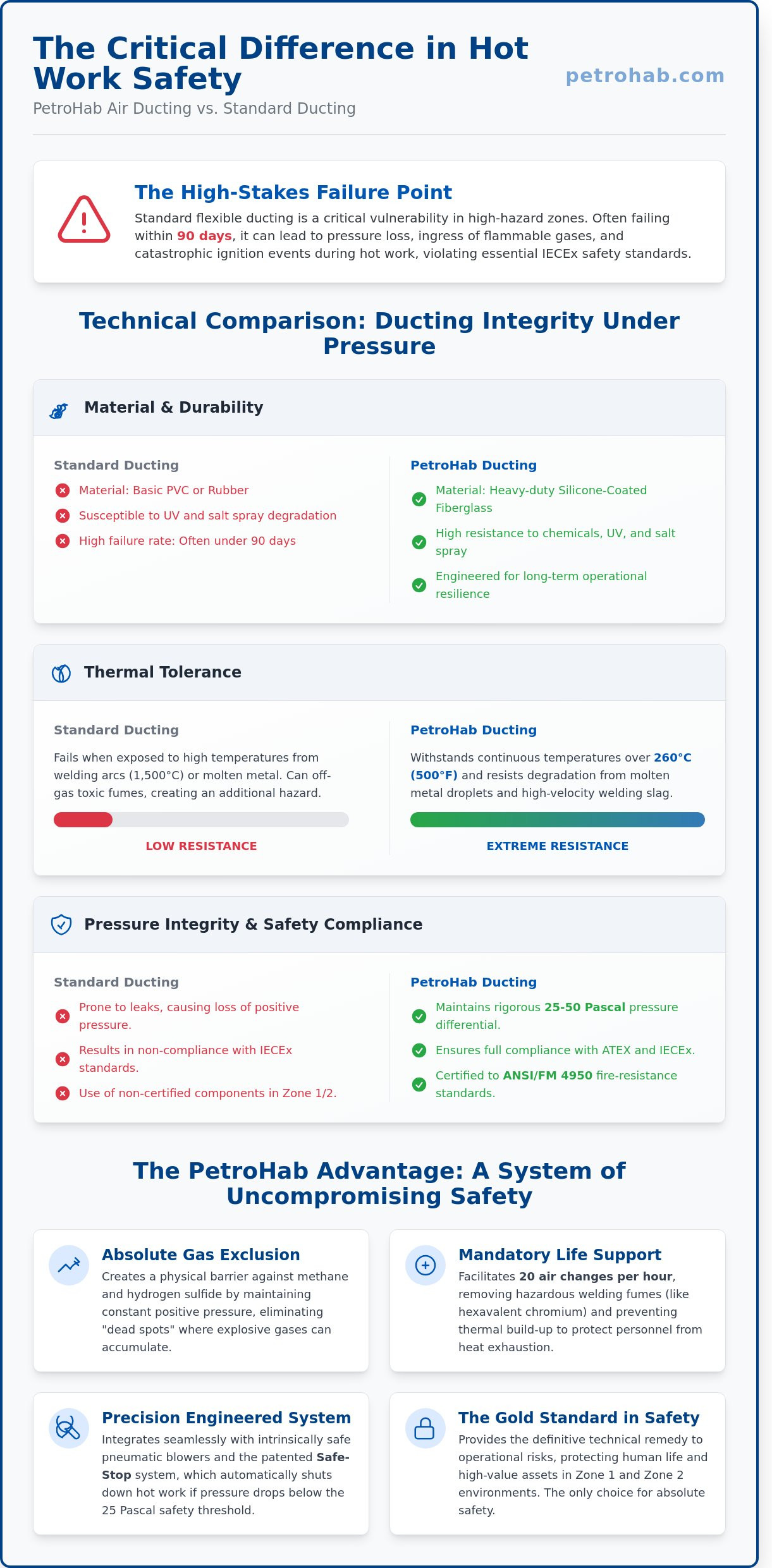
In high-hazard zones, a single millibar of pressure loss is the difference between a controlled environment and a catastrophic ignition event. You recognize that maintaining a pressurized habitat in harsh offshore climates requires more than just a fan; it demands a resilient conduit that resists salt spray and UV degradation. Standard flexible ducting often fails within 90 days of deployment, leading to non-compliance with IECEx standards. PetroHab Air Ducting provides the definitive technical remedy to these operational risks. It’s engineered specifically to maintain the rigorous 50-pascal pressure differential required to exclude flammable gases during hot work operations.
We understand that your primary objective is the absolute protection of human life and high-value assets. This article explains how our precision-engineered ducting maintains the positive pressure and hazardous gas exclusion required for safe operations in Zone 1 and Zone 2 environments. You’ll discover how this technology ensures continuous fresh air intake for personnel while achieving full compliance with ATEX and ISO safety certifications. We’ll examine the specific material properties and modular configurations that make this system the gold standard in hot work safety.
Key Takeaways
- Master the technical principles of maintaining positive pressure to ensure absolute hazardous gas exclusion during high-stakes hot work operations.
- Examine the rigorous ANSI/FM 4950 certification standards and why silicone-coated fiberglass is the essential material for ventilation integrity in volatile zones.
- Identify and mitigate common ventilation failures, such as airflow resistance miscalculations and the use of non-certified components in Zone 1 and Zone 2 areas.
- Discover how PetroHab Air Ducting integrates with patented Safe-Stop technology to provide an unrivaled, precision-engineered solution for offshore and onshore safety.
- Learn professional installation strategies for intake blower placement and ducting security to protect personnel and high-value assets in pressurized habitats.
The Role of Air Ducting in Hot Work Safety Enclosures (HWSE)
PetroHab Air Ducting serves as the critical artery of a pressurized habitat. It is a specialized ventilation component engineered to facilitate continuous fresh air intake from a verified safe zone. The primary function involves maintaining an internal pressure higher than the external atmosphere. This mechanism prevents the ingress of flammable gases such as methane or hydrogen. By controlling the airflow, the system ensures that sparks generated during grinding or welding remain contained within the enclosure. Every ventilation circuit must utilize intrinsically safe pneumatic blowers. These blowers eliminate the risk of ignition in Zone 1 and Zone 2 environments, providing a definitive technological remedy for hazardous work sites.
Maintaining Positive Pressure Integrity
The system works by introducing fresh air at a rate exceeding the extraction rate. This creates a positive pressure enclosure that acts as a physical barrier against external hydrocarbons. PetroHab Air Ducting eliminates “dead spots” where toxic or explosive gases might otherwise accumulate. Proper ducting placement ensures air reaches every corner of the modular layout, ensuring a uniform safety profile. Technicians monitor this integrity in real-time using manometers. These devices typically track a minimum pressure differential of 0.1 inches of water, or 25 Pascals, to ensure the system remains active and safe. If pressure drops below this threshold, the Safe-Stop system triggers an immediate shutdown of all hot work activities.
Ensuring Life Support for Personnel
Ventilation is a mandatory life support requirement for welders operating in confined industrial spaces. PetroHab Air Ducting removes hazardous welding fumes and prevents thermal build-up that can exceed 45 degrees Celsius in tropical offshore environments. The system facilitates the 20 air changes per hour required by many international safety standards. This process ensures compliance with OSHA 1910.146 for permit-required confined spaces and rigorous offshore air quality protocols. By maintaining a steady stream of oxygen-rich air, the ducting protects technicians from respiratory distress and heat exhaustion during 12-hour shifts. This commitment to air quality is a hallmark of the gold standard in hot work safety.
- Risk Mitigation: Prevents gas ingress through constant 25 Pascal pressure.
- Fume Extraction: Removes hexavalent chromium and other welding byproducts.
- Thermal Control: Regulates internal temperatures to prevent heat stroke.
- Compliance: Meets ATEX and IECEx standards for pneumatic blower operation.
Technical Specifications of PetroHab Air Ducting
PetroHab Air Ducting is engineered to withstand the extreme thermal loads found in refineries and offshore platforms. It utilizes heavy-duty silver/grey premium silicone-coated fiberglass, a material choice that prioritized durability over the lower costs of standard polymers. This fabric doesn’t just resist heat; it maintains structural integrity when subjected to molten metal droplets and high-velocity welding slag common in heavy industrial fabrication. Adhering to OSHA hot work safety standards is non-negotiable for high-risk operations, and our ducting provides the necessary barrier to ensure compliance.
- Thermal Tolerance: Continuous protection against temperatures exceeding 500°F (260°C).
- Chemical Inertness: High resistance to hydrocarbons, acidic vapors, and industrial solvents.
- Mechanical Strength: High tensile strength prevents tearing during high-pressure ventilation cycles.
Fire-Resistant Fabrics and Durability
Standard PVC or rubber ducting often fails or off-gasses when exposed to the 1,500°C temperatures of welding arcs. PetroHab’s silicone-coated fiberglass remains stable, resisting degradation from intense UV radiation and corrosive salt spray in marine environments. The ANSI/FM 4950 standard in 2026 classifies fire-resistant materials based on their ability to prevent ignition and maintain structural stability when exposed to molten metal and high-intensity heat sources. This certification ensures that the ventilation system doesn’t become a fuel source during an accidental ignition event. You can view our full technical data sheets to compare these performance metrics against traditional materials.
Specialized Air Duct Escape Panels
Safety within a pressurized habitat requires more than just containment; it demands a clear exit strategy. PetroHab Air Ducting integrates seamlessly with our patented Quadra-Lock panel technology through specialized escape panels. These units feature quick-release mechanisms that allow personnel to exit the habitat in under 8 seconds without the use of tools. The engineering ensures the ducting maintains a consistent 50-pascal pressure differential during normal operations, yet yields immediately when the emergency release is triggered. Meticulous layout planning ensures that ducting runs don’t cross primary exit paths, maintaining the 1.2-meter clearance required for safe, unobstructed evacuation during a site-wide alarm.
Common Pitfalls in Habitat Ventilation Management
Using non-certified ducting in Zone 1 or Zone 2 hazardous areas invites catastrophic failure. Standard industrial hoses lack the antistatic properties required to prevent electrostatic discharge, which can ignite volatile atmospheres. Operators often miscalculate friction loss; for every 50 feet of additional ducting, static pressure can drop by 15% or more. This reduction compromises the positive pressure barrier essential for isolation. Proper adherence to OSHA hot work safety standards requires precise airflow calculations to ensure hazardous vapors remain outside the enclosure at all times.
Improper sealing at intrusion points where the PetroHab Air Ducting enters the Hot Work Safety Enclosure (HWSE) creates localized low-pressure zones. These gaps allow gas ingress if the external atmosphere becomes volatile. Routine inspections must identify internal obstructions or minor tears. Even a small 2-inch tear can bleed enough pressure to trigger an emergency shutdown, halting production and increasing operational costs across the facility.
Pressure Loss and Gas Ingress Risks
Technical data shows that ventilation failures frequently lead to automatic shutdowns via the Safe-Stop system. High external wind speeds, often exceeding 25 knots on offshore platforms, create a venturi effect that pulls air out of the habitat if the ducting isn’t correctly positioned and secured. A single kink in the line acts as a closed valve. This immediate loss of pressure compromises the entire safety barrier, leaving personnel exposed to potential ignition sources within seconds. Maintaining a minimum overpressure of 0.1 inches of water column is non-negotiable for safety.
Material Failure in Extreme Climates
Material integrity varies significantly across global sites. In Arctic environments, standard PVC ducting becomes brittle and cracks at temperatures below -20°C. Conversely, in tropical offshore zones where deck temperatures reach 60°C, inferior materials soften and collapse under suction. PetroHab Air Ducting utilizes advanced polymers engineered for these specific extremes. Standard industrial hoses aren’t good enough for pressurized isolation. They lack the specific tensile strength and thermal resistance required for high-stakes hot work in the oil and gas sector.
Installation and Maintenance Best Practices for Safety Managers
Safety managers must prioritize the strategic deployment of PetroHab Air Ducting to maintain habitat integrity. Effective ventilation starts with placing intake blowers in designated ‘Safe Zones’. These zones must be confirmed gas-free through atmospheric testing and located at least 15 meters from potential hydrocarbon sources. This distance provides a critical buffer, ensuring that only clean, breathable air enters the pressurized enclosure.
Unsecured ducting poses a significant risk. During high-pressure operations, vibration can cause friction, leading to material fatigue or accidental disconnection. Use heavy-duty ratcheting straps to secure ducting runs every 3 meters. This prevents lateral movement and ensures a continuous seal. Integration with the Safe-Stop Automatic Shutdown System is mandatory. This system monitors internal pressure; if the ducting fails or pressure drops below 25 Pascals, Safe-Stop immediately isolates ignition sources to prevent a catastrophic event.
Before every shift, inspectors should use a 12-point checklist to verify ducting integrity. Focus on connection points and potential wear zones where the fabric contacts sharp steel edges. Even a minor tear can compromise the overpressure required for hot work safety.
Optimizing Airflow and Pressure
Calculating blower capacity requires precise data. You must account for the total habitat volume and the cumulative length of the PetroHab Air Ducting. A standard 2,500 CFM blower might suffice for small enclosures, but friction loss increases with every meter of fabric. Use a digital manometer to verify pressure at the furthest point from the intake. Aim for a minimum overpressure of 0.1-inch water gauge. Minimize 90-degree bends; every sharp turn reduces airflow efficiency by approximately 15% due to static pressure loss.
Routine Maintenance and Storage
Post-operational care extends equipment life. Clean the interior of the ducting using a mild detergent to remove soot and industrial particulates that can compromise flame-retardant coatings. When storing, avoid tight folds that create permanent creases. Roll the ducting loosely to prevent coating degradation. By the first quarter of 2026, safety managers should decommission any ducting units that exhibit more than 5% surface abrasion or have been in active service for over 60 months to ensure compliance with updated ISO 9001 quality standards.
The PetroHab Advantage: Precision Ventilation Systems
PetroHab delivers an engineered solution where others offer mere components. The integration of patented Quadra-Lock panel technology and Safe-Stop automatic shutdown systems ensures that ventilation remains a controlled variable rather than a risk factor. By utilizing PetroHab Air Ducting, operators achieve a high-integrity seal that prevents the ingress of flammable hydrocarbons into the work zone. This infrastructure is available across major energy hubs in North America, Europe, and Asia, providing localized support for global operations. It’s a system built for the most demanding environments on earth.
Technical teams design bespoke configurations to navigate complex offshore structural intrusions, such as I-beams or intricate pipe racks, which often compromise standard enclosures. PetroHab provides 24/7 on-site supervision and technician training to ensure every ventilation setup meets rigorous safety benchmarks. This hands-on approach eliminates the variables that lead to atmospheric hazards during hot work operations.
Engineered for the Oil & Gas Industry
Safety managers rely on PetroHab to support the Permit-to-Work (PTW) system by providing verifiable ignition source control. The measurable safety of these systems allows for hot work to proceed in close proximity to live processes. This capability reduces refinery turnaround schedules by an average of 15% to 20% by minimizing the need for total plant shutdowns. Every component complies with ISO 9001:2015 and international standards for hazardous zones, ensuring that your facility remains compliant with the strictest global safety regulations.
Securing Your Facility with PetroHab
Leading energy companies select PetroHab because the cost of a single ignition event far outweighs the investment in premium safety systems. High-integrity components offer long-term ROI through durability and the prevention of catastrophic asset loss. The reliability of PetroHab Air Ducting means fewer equipment failures and more consistent airflow during critical tasks. You should consult with a PetroHab safety expert to optimize your habitat ventilation to ensure your next project meets the gold standard in hot work safety and operational efficiency.
Optimizing Habitat Integrity for High-Stakes Operations
Maintaining positive pressure within a Hot Work Safety Enclosure requires more than standard ventilation. It demands a system engineered for the extreme pressures found in offshore and onshore environments. PetroHab Air Ducting provides this essential link. It integrates our patented Quadra-Lock Technology to eliminate air leakage and ensure 100% atmospheric control. By utilizing ANSI/FM 4950 certified materials, we deliver a thermal barrier that meets the rigorous safety requirements of global energy majors. These specifications aren’t just technical benchmarks; they’re the foundation of industrial risk mitigation. Proper installation and routine maintenance protocols ensure that your pressurized habitat remains a safe zone for critical hot work. Our systems transform hazardous areas into controlled environments where personnel work with absolute confidence. Choosing precision engineering means protecting your high-value assets and your workforce from ignition risks. We’re ready to help you implement a ventilation strategy that exceeds industry standards and secures your site’s operational future.
Request a Technical Consultation for PetroHab Air Ducting Systems
Frequently Asked Questions
How does PetroHab air ducting maintain positive pressure in high-wind offshore environments?
PetroHab air ducting maintains a constant internal pressure of 50 Pascals through its reinforced, airtight construction and integration with high-velocity blowers. This specific pressure threshold prevents the ingress of external hydrocarbons even when wind speeds exceed 60 knots. The system’s heavy-duty PVC-coated fabric resists deformation, ensuring consistent airflow regardless of external atmospheric turbulence. It’s a critical component for maintaining habitat integrity in harsh North Sea or Gulf of Mexico conditions where safety cannot be compromised.
What certifications should I look for in air ducting for hot work safety enclosures?
You must prioritize air ducting that complies with ANSI/FM 4950 standards for welding curtains and enclosures. Our systems meet these rigorous fire-resistance requirements, ensuring the material doesn’t ignite or support combustion during high-heat operations. Additionally, ensure the system is manufactured under ISO 9001:2015 quality management protocols to guarantee material consistency and structural integrity across all components. These certifications provide the necessary 100% assurance for safety managers overseeing hazardous hot work in refinery settings.
Can PetroHab air ducting be used in ATEX Zone 1 and Zone 2 rated areas?
Yes, our specialized air ducting is engineered specifically for deployment in ATEX Zone 1 and Zone 2 hazardous areas. The ducting features anti-static properties with a surface resistance of less than 10 to the power of 9 ohms to prevent electrostatic discharge. This design ensures compliance with the ATEX 2014/34/EU directive, making it a safe choice for environments where explosive atmospheres are likely to occur during routine operations. It provides a reliable barrier against ignition in volatile settings.
How often should air ducting be inspected during a long-term habitat rental?
Technicians must perform a visual inspection of the ducting every 12 hours at the start of each shift. A more comprehensive integrity check, including pressure differential testing, is required every 7 days to identify micro-tears or coupling wear. These scheduled evaluations follow the guidelines established in the PetroHab Safety Manual to maintain the 100% seal required for pressurized habitat operations. Regular maintenance prevents unexpected pressure losses that could halt critical hot work on offshore platforms.
What happens to the air ducting if the Safe-Stop system initiates an emergency shutdown?
The Safe-Stop system triggers the closure of intake dampers and de-energizes blowers within 0.5 seconds of detecting a gas excursion. This action isolates the habitat interior from the external environment. While the ducting remains intact, the cessation of airflow ensures no potentially contaminated air enters the enclosure, neutralizing the ignition source. It’s a fail-safe mechanism that protects personnel and assets the moment a 10% LEL threshold is detected by the system’s internal sensors.
Is PetroHab air ducting compatible with other manufacturers’ welding habitats?
PetroHab air ducting utilizes a universal 12-inch or 24-inch diameter coupling system that interfaces with most industry-standard ventilation ports. While it’s optimized for the Petro-Wall modular system, the heavy-duty industrial zippers and cam-lock connectors allow for secure attachment to other habitats. This flexibility ensures safety managers can upgrade their ventilation integrity without replacing their entire existing habitat inventory. It’s a cost-effective way to implement our gold standard safety technology across diverse fleet assets and project sites worldwide.
What is the maximum recommended length for air ducting runs to maintain pressure?
The maximum recommended length for a single run of our air ducting is 100 feet to ensure internal pressure stays above the 50 Pascal safety limit. Extending runs beyond this distance results in a 15% pressure drop for every additional 25 feet due to internal friction. If your site requires longer distances, you must integrate an inline booster fan to maintain the required 2,000 cubic feet per minute flow rate. This ensures the habitat remains safely pressurized at all times.
How does the Air Duct Escape Panel function during an emergency egress?
The Air Duct Escape Panel features a patented quick-release rip-cord that allows personnel to exit the habitat in less than 3 seconds. This mechanism bypasses standard entry points, providing a secondary path if the main airlock is obstructed. It’s designed to withstand the internal 50 Pascal pressure during normal operations while remaining easy to activate manually during a critical safety event. This feature is a core component of our commitment to risk mitigation and life safety in hazardous zones.