Posts Tagged ‘hot work safety’
LNG Habitat Panel Inspection: A Practical Field Checklist

A panel’s most important warning sign may be the one a rushed walk-around misses. Holes, tears, frayed material, or attached slag can compromise a…
Read MoreFSRU Habitat Rental: A Buying Guide for Offshore Hot Work
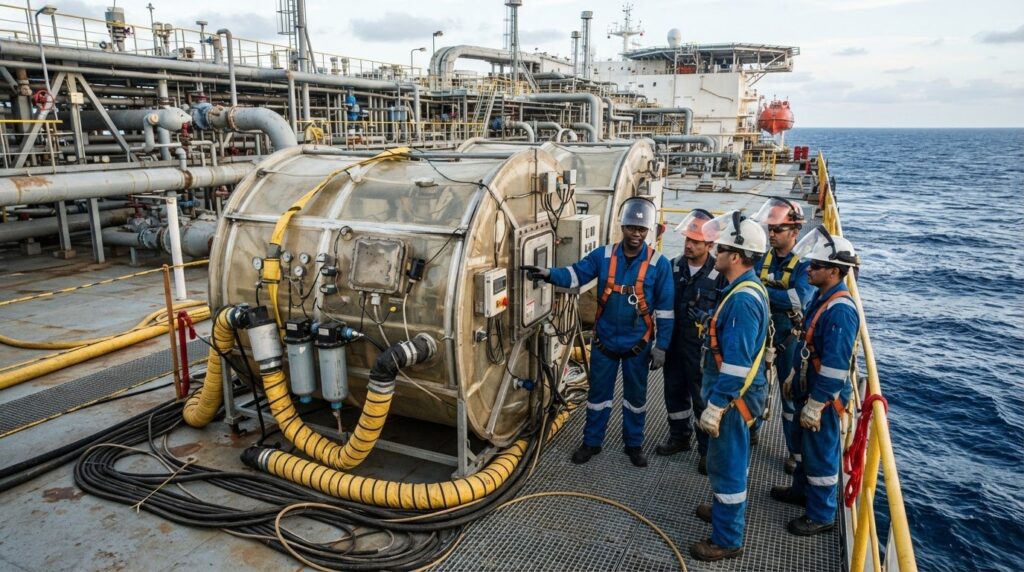
What should an FSRU habitat rental include beyond the enclosure itself? For an offshore hot-work campaign, the scope needs to fit the task and…
Read MoreLNG Vessel Repair Habitat Requirements: A Practical Guide
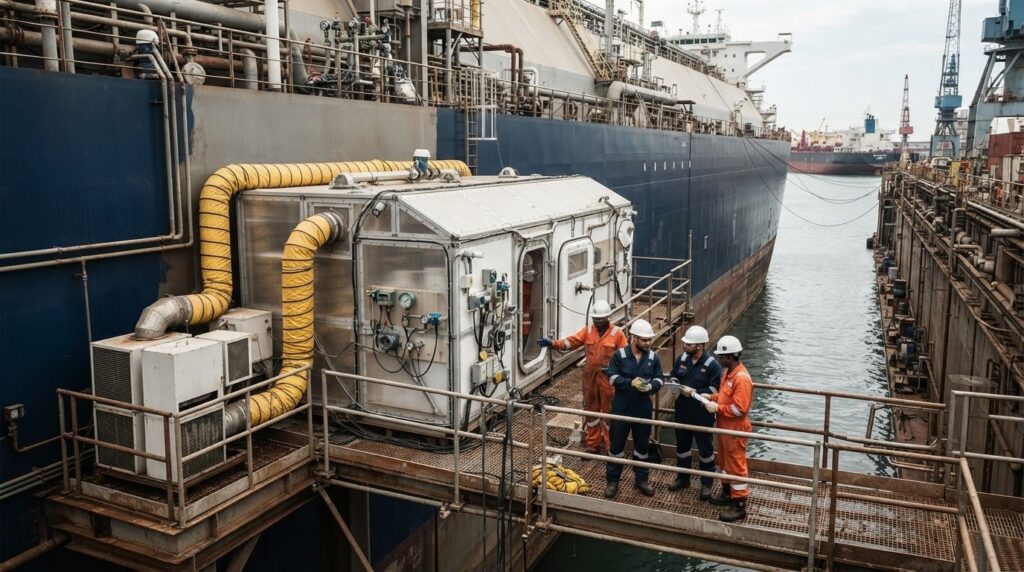
What if the repair itself is only one part of the habitat decision? On an LNG vessel, the work location, surrounding systems, vessel condition, and…
Read MoreFSRU Welding Habitat Layout: Planning Access, Work Space, and Safety
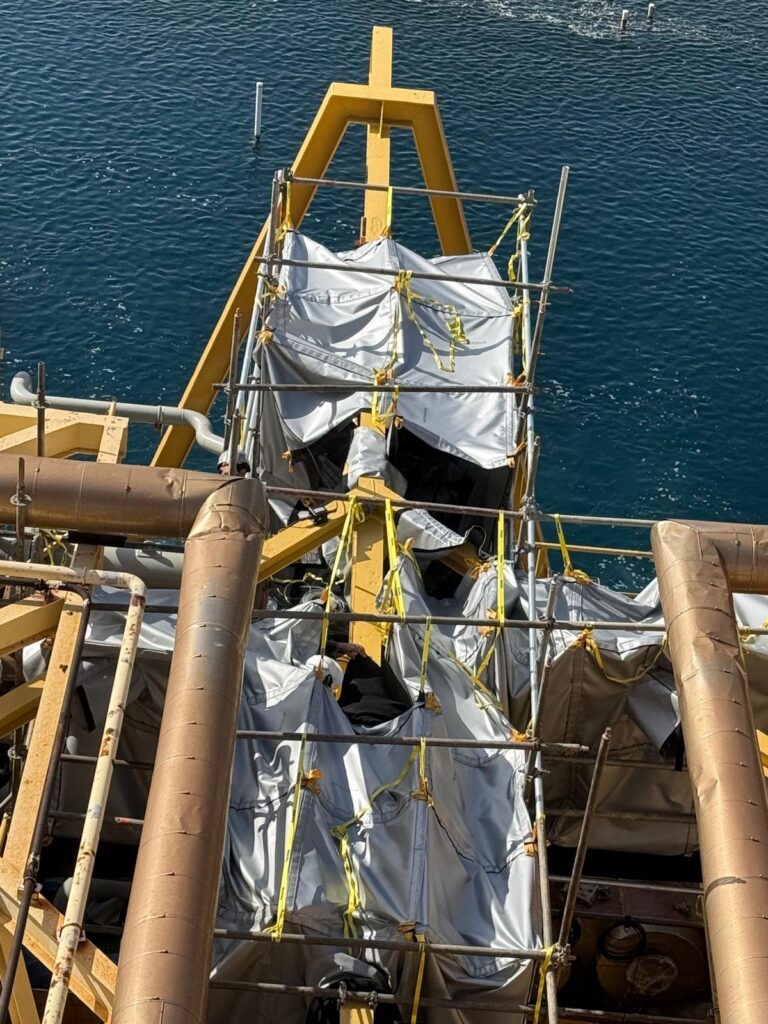
An FSRU welding habitat layout is more than an enclosure footprint. Restricted deck space can make the proposed position, personnel access, escape…
Read MorePressure Differential Monitoring Best Practices for Welding Habitats
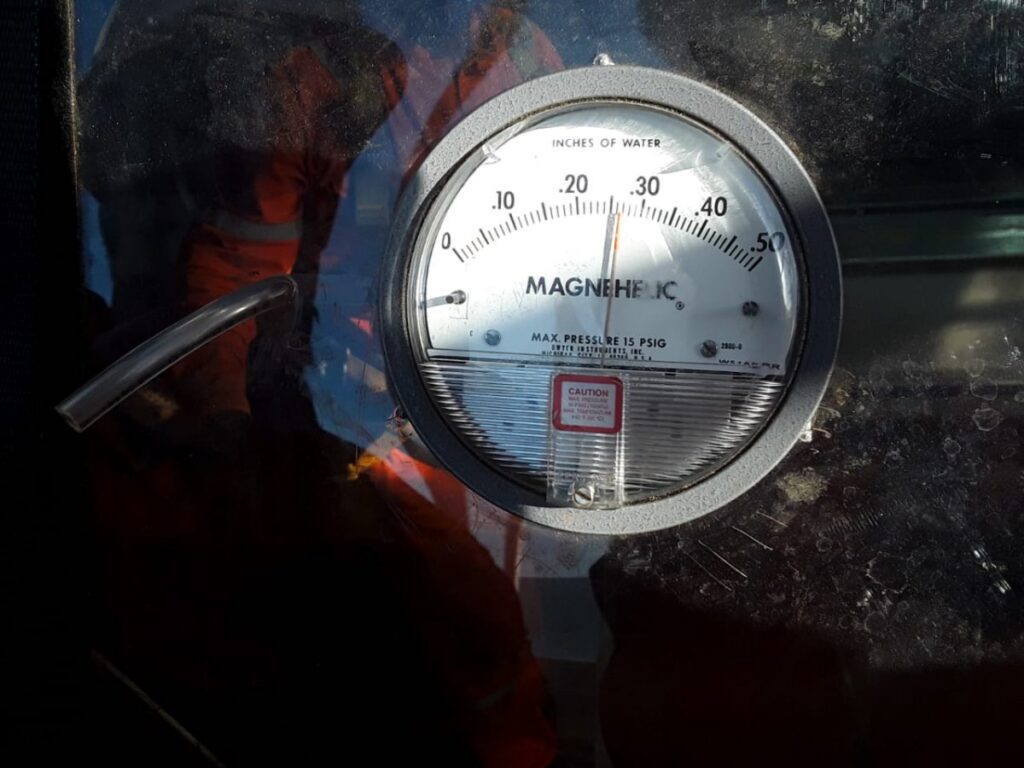
A pressure reading can look acceptable right up to the moment a leak, open access point, or ventilation change alters a habitat’s pressure balance….
Read MoreEffects of Weather on Habitat Stability: A Hot-Work Enclosure Guide
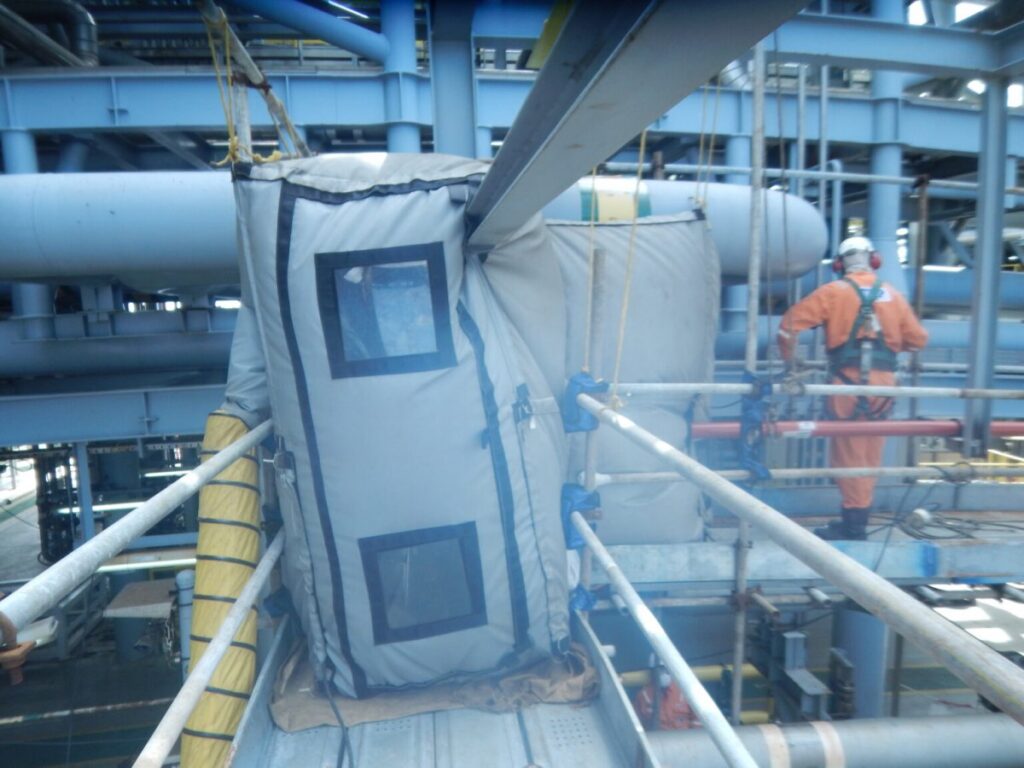
A habitat can remain pressurized while changing weather alters the conditions around it. Wind, rain, temperature, and humidity can affect the…
Read MoreModular Habitat Panels: Materials, Design, and Selection for Hot Work
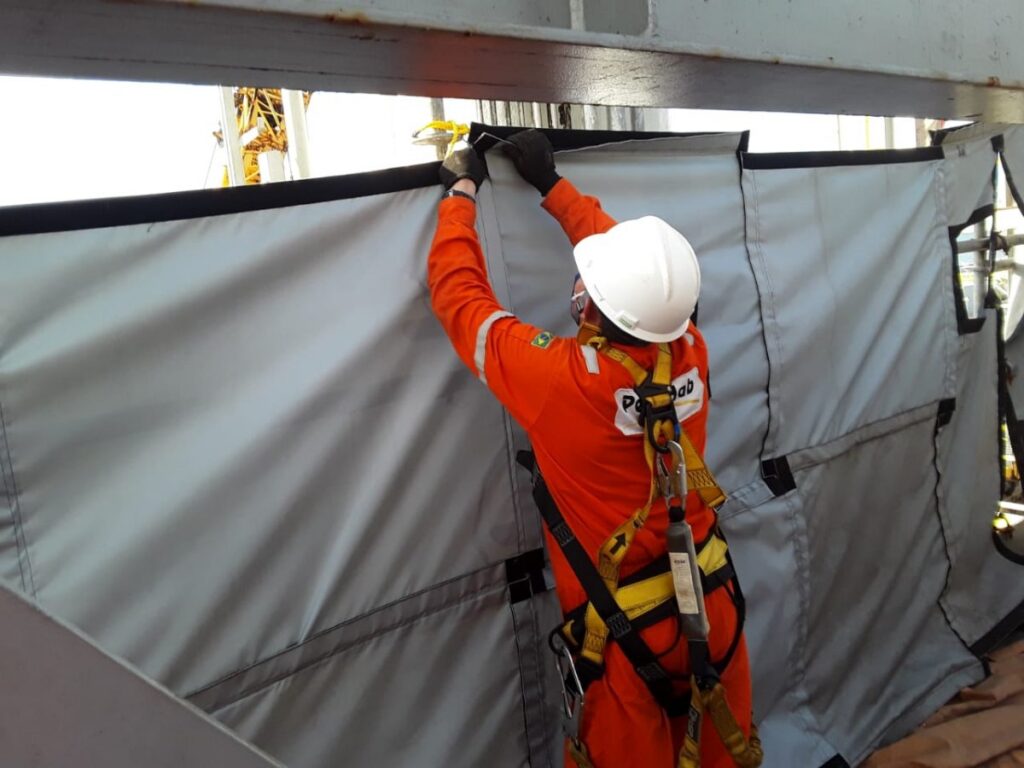
Modular habitat panels are one part of a hot-work enclosure, not a complete protection system on their own. In oil and gas environments, their…
Read MoreCO2 and O2 Level Monitoring in Welding Enclosures
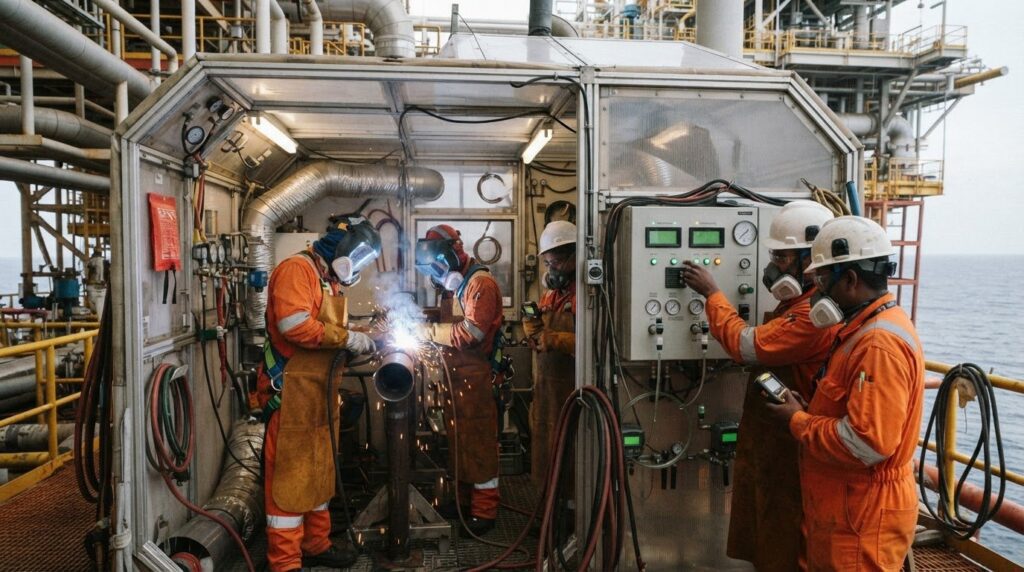
What if an oxygen reading appears acceptable while carbon dioxide is accumulating? CO2 and O2 level monitoring in welding enclosures addresses two…
Read MorePressurized Habitat Ventilation Systems: How Airflow Supports Hot Work Safety
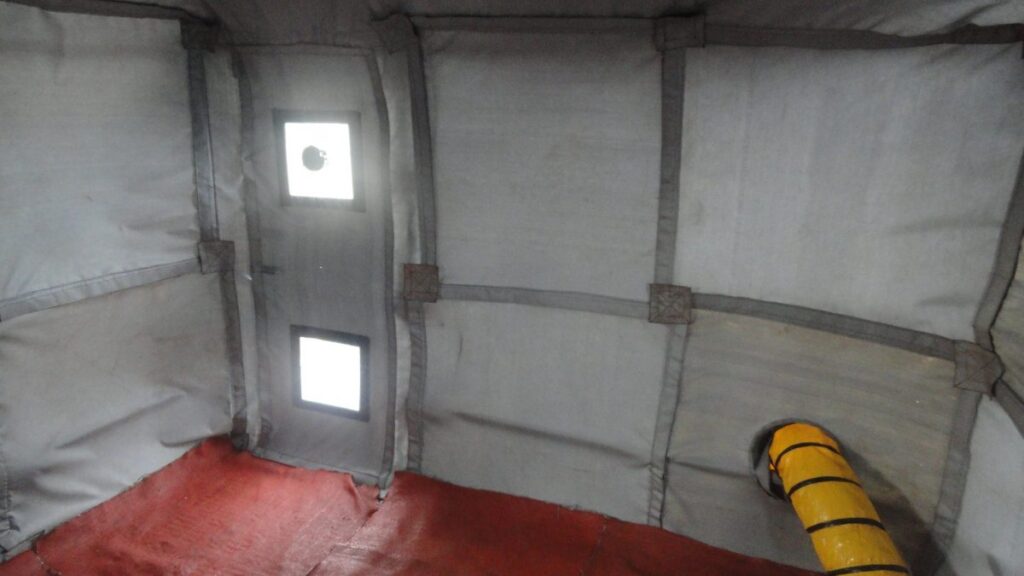
What keeps a pressurized habitat controlled during hot work: the air supply, the enclosure, or the controls that respond when conditions change? A…
Read MoreBusiness Case for Hot Work Safety Enclosures: How to Secure Operations Manager Buy-In
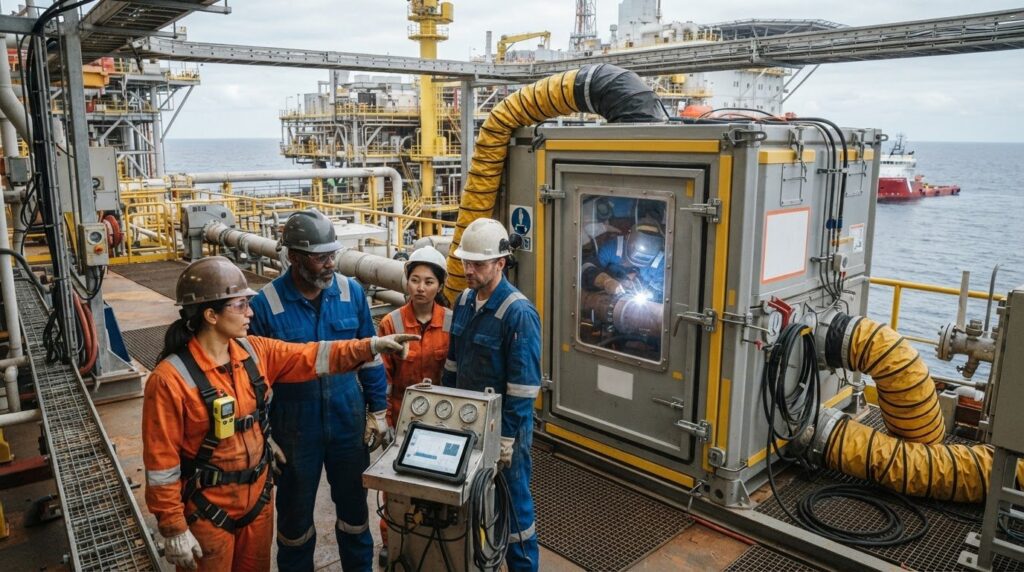
What if the enclosure that strengthens your hot work controls also helps protect the work schedule? Building a business case for hot work safety…
Read More