Blog Posts
Mobile Habitat System: A Technical Guide to Pressurized Hot Work Enclosures
Unplanned production shutdowns on Tier-1 offshore facilities during maintenance can cost upwards of $1.5 million per day. This financial burden often stems from the inability to deploy a mobile habitat system in gas-prone environments without halting operations. You’re familiar with the high-stakes choice between production continuity and the risk of a catastrophic ignition incident. It’s an environment where safety compromises lead to federal OSHA penalties exceeding $161,000 per violation.
This guide details how an integrated mobile habitat system establishes a controlled, pressurized environment for safe hot work in hazardous industrial zones. This analysis outlines the methodologies for maintaining continuous production while ensuring a zero-incident safety record. We’ll examine the technical architecture of Quadra-Lock panels, the maintenance of 25 Pascal differential pressure, and the fail-safe logic of the Safe-Stop automatic shutdown system. These technical foundations are essential for achieving regulatory compliance under IEC 60079-13 and protecting personnel and high-value assets in volatile conditions.
Key Takeaways
- Understand the technical architecture of a mobile habitat system and its role in isolating ignition sources from flammable gases in classified hazardous locations.
- Discover how modular Quadra-Lock panels provide superior fire resistance and structural integrity compared to traditional zippered or hook-and-loop enclosures.
- Learn the mechanics of maintaining a 25 Pascal positive pressure differential to prevent hydrocarbon ingress and ensure compliance with international safety standards.
- Explore the integration of Safe-Stop automatic shutdown systems that de-energize equipment within 0.5 seconds of gas detection or pressure loss.
- Evaluate the operational crossover points between rental and purchase models to optimize maintenance budgets without compromising on-site safety excellence.
Defining the Mobile Habitat System in Hazardous Environments
A mobile habitat system is a specialized Hot Work Safety Enclosure (HWSE) engineered for the energy and petrochemical sectors. It functions as an integrated safety ecosystem rather than a simple barrier. The primary objective is the total isolation of ignition sources from potentially explosive atmospheres. By establishing a pressurized welding habitat, operators can execute hot work without the financial burden of facility-wide shutdowns. These systems are designed for rapid deployment in remote locations where fixed safety infrastructure is unavailable or impractical.
The following technical demonstration illustrates the fundamental operating principles of these systems:
The Core Function of HWSE
The system maintains a constant positive pressure differential. This mechanical barrier ensures that any atmospheric breach results in outward air leakage rather than the ingress of hydrocarbon gases. These positive pressure enclosure systems must maintain a minimum threshold of 25 Pascals (0.1 in. w.g.) to remain compliant with IEC 60079-13 standards. Beyond gas exclusion, the HWSE contains high-velocity sparks, molten slag, and thermal radiation within the work envelope. This containment protects nearby high-value assets and personnel from the hazards of welding and grinding operations. It creates a temporary controlled environment that meets rigorous safety protocols in an active industrial site.
Mobile vs. Fixed Safety Infrastructure
Portability is the defining characteristic of a mobile habitat system. Fixed safety infrastructure is impractical on offshore platforms or complex refineries where maintenance locations shift daily. These systems utilize modular Quadra-Lock panels to navigate obstructions such as structural beams and various pipe diameters. This modularity allows for rapid deployment in remote or restricted spaces where traditional rigid enclosures would fail. It’s an adaptable solution that integrates seamlessly with existing plant layouts. For a deeper analysis of these technologies, consult The Definitive Guide to Hot Work Safety Enclosures (HWSE) in 2026. The ability to assemble and disassemble the habitat quickly ensures that maintenance schedules stay on track without compromising the safety standards required in hazardous environments.
Engineering the System: Modular Panels and Quadra-Lock Technology
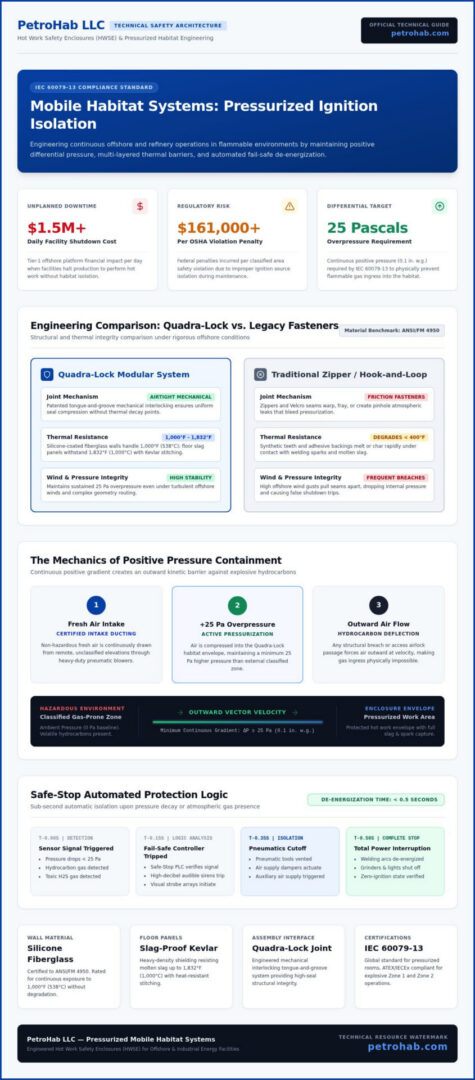
The engineering of a mobile habitat system relies on modularity to address the spatial complexities of industrial sites. Traditional enclosures often fail due to rigid designs or inferior fastening methods like zippers and hook-and-loop. These older methods are susceptible to thermal failure and seal degradation under high-wind conditions typical of offshore assets. A modular approach allows for precise configuration around piping, structural steel, and equipment, ensuring a sealed environment regardless of the work area’s geometry. This flexibility is essential for maintaining operational safety without obstructing plant infrastructure.
High-quality fire-resistant panels are the first line of defense against ignition. High-performance systems use silicone-coated fiberglass wall panels certified to ANSI/FM 4950. These materials are engineered to withstand continuous operational temperatures of 1,000°F (538°C). In areas where molten metal is a factor, high-density floor panels are utilized. These components resist red-hot slag up to 1,832°F (1,000°C) and are sewn with heat-resistant Kevlar thread to maintain structural integrity under extreme thermal stress.
The Quadra-Lock Interlocking Mechanism
The Quadra-Lock interlocking mechanism serves as the industry benchmark for panel interconnection. This proprietary technology creates a mechanical tongue-and-groove seal that ensures uniform compression across the entire enclosure surface. Such precision is vital for maintaining the 25 Pascal pressure differential required for safety. The tool-free assembly permits rapid site mobilization, significantly reducing the time required for setup and breakdown. This mechanical interlocking prevents panel separation under internal pressure, which is a critical failure point in lower-tier systems.
Fire Resistance and Material Standards
Adherence to OSHA hot work safety requirements is mandatory for any HWSE operation. Industrial environments demand more than just fire retardancy; they require durability against UV exposure, chemical corrosion, and extreme tensile stress. These panels are designed for longevity in harsh environments, ranging from the corrosive salt air of the North Sea to the intense UV radiation of desert oil fields. Ensuring your equipment meets these rigorous benchmarks is a fundamental step in risk mitigation. You can evaluate these engineering specifications further by reviewing the PetroHab HWSE technical data. The combination of specialized materials and mechanical sealing provides a robust defense against the unpredictable hazards of heavy industry.
Maintaining Positive Pressure: The Science of Ignition Prevention
A mobile habitat system operates on the principle of pneumatic displacement. High-capacity centrifugal blowers or air intake units (AIUs) draw fresh air from a verified unclassified location and deliver it via heavy-duty ducting into the enclosure. This constant influx of air creates a state of overpressure, effectively turning the habitat into a physical barrier against hydrocarbon ingress. By maintaining an internal pressure higher than the external environment, any breach in the enclosure, such as an open door or a seal compromise, results in a controlled outward flow of air. This mechanism prevents flammable gases from entering the work area where ignition sources like welding arcs or grinding sparks are present.
Positive pressure represents the primary line of defense in explosive atmospheres. It eliminates the risk of gas-to-spark contact by ensuring that the atmosphere inside the Quadra-Lock panels remains separate from the surrounding hazardous zone. To maintain this defense, the system requires precise engineering of the air delivery components. The ducting must be positioned to avoid cross-contamination and must be durable enough to withstand the mechanical stresses of a busy industrial site. This technical approach transforms the workspace into a controlled environment where hot work can proceed without jeopardizing the entire facility.
The Role of Manometers and Pressure Sensors
Real-time monitoring is critical for operational safety. Digital manometers and pressure sensors provide continuous telemetry regarding the habitat’s integrity. These devices are calibrated to trigger alarms if the differential pressure falls toward the mandatory 25 Pascal (Pa) minimum. Positive pressure is the maintenance of an internal atmospheric force that exceeds external ambient levels to ensure hazardous gases cannot enter the workspace. If the pressure drops below the 25 Pa threshold, the system must automatically de-energize all hot work equipment. This fail-safe ensures that the fire triangle is never completed, even during a mechanical failure of the ventilation system.
Ventilation and Air Exchange Rates
Maintaining air quality goes beyond pressure; it requires a high volume of air exchange. To manage heat load and welding fumes, the system must provide between 10 and 20 air changes per hour (ACPH). This volume ensures a breathable atmosphere for personnel while cooling the workspace during intensive welding tasks. Compliance with offshore welding safety regulations requires that this intake air is sourced from a location confirmed to be free of toxic or flammable vapors. Integrating a mobile habitat system into your safety protocol ensures that ventilation is not just about comfort but about survival. For a comprehensive look at the engineering behind these systems, refer to Pressurized Welding Habitats: The Definitive Guide to HWSE Technology. Proper ventilation ensures the environment remains within the safe oxygen band of 19.5% to 23.5% by volume.
Safety Integration: Automatic Shutdown Systems and Gas Detection
A physical enclosure alone cannot guarantee safety in high-risk industrial zones. While Quadra-Lock panels establish a robust thermal and pressure barrier, electronic monitoring provides the critical fail-safe needed to protect personnel. A mobile habitat system must integrate continuous atmospheric sampling with automated logic to address the unpredictable nature of hazardous vapors. This synthesis of hardware and software ensures that any compromise in the environment leads to an immediate cessation of hot work, effectively removing the ignition source from the fire triangle.
The Safe-Stop Automatic Shutdown System serves as the central control unit for this safety ecosystem. It monitors real-time data from gas detectors and pressure sensors to maintain the integrity of the work zone. By automating the response to hazardous conditions, the system eliminates the delays inherent in manual fire watches. This technology isn’t just an accessory; it’s a mandatory component for operations in refineries and offshore platforms where gas ingress can occur in seconds.
Automatic Ignition Control Mechanisms
The system’s primary function is the instantaneous isolation of power. If internal differential pressure falls below the mandatory 25 Pascal threshold, the Safe-Stop system de-energizes all welding machines, grinders, and torches within 0.5 seconds. This rapid response prevents ignition even if the positive pressure barrier is breached. Furthermore, the system integrates continuous Lower Explosive Limit (LEL) monitoring. An audible and visual warning triggers at 5% LEL, while a full automatic shutdown occurs at 10% LEL. These automated interlocks significantly reduce the risk of human error during high-stress maintenance tasks.
Compliance with Hazardous Environment Standards
Operating in Zone 1 and Zone 2 environments requires specialized electronic components that don’t become ignition sources themselves. All sensors, blowers, and control units must carry ATEX or IECEx certifications to ensure they meet international explosive atmosphere standards. Third-party system-level certification under ATEX Directive 2014/34/EU is the benchmark for operational excellence. For a detailed analysis of these regulatory requirements, consult A Comprehensive Guide to Advanced Hot Work Safety Systems in 2026. These standards provide the linguistic and technical anchors for quality that safety managers rely on to protect high-value assets. To implement these rigorous safety controls on your next project, contact PetroHab for a technical consultation. Ensuring your mobile habitat system meets these benchmarks is a fundamental requirement for modern industrial risk mitigation.
Selecting the Right Mobile Habitat: Rental vs. Purchase Considerations
Procurement strategies for a mobile habitat system require a calculated assessment of project duration and internal asset management capabilities. Safety managers must balance the immediate need for a pressurized enclosure with the long-term costs of technical compliance. Choosing the right acquisition model ensures that risk mitigation remains the priority while optimizing maintenance budgets. PetroHab supports these requirements through global operations in the US, Brazil, and the UK, providing technical expertise regardless of the chosen procurement path. Each model offers distinct advantages based on the frequency of hot work and the availability of trained personnel.
The decision to rent or buy often centers on the total cost of ownership versus operational flexibility. Industrial financial models suggest that the crossover point for equipment ownership occurs at approximately 180 cumulative operating days. Beyond this threshold, the capital investment of a mobile habitat system begins to provide a higher return on investment. However, for many facility managers, the technical overhead of maintaining a certified fleet makes leasing a more practical solution for specific maintenance windows.
When to Opt for Equipment Leasing
Leasing is the preferred remedy for short-term maintenance shutdowns and complex turnaround projects. This model allows facilities to access the latest Safe-Stop technology and Quadra-Lock panels without significant upfront capital expenditure. A primary benefit of the rental package is the inclusion of certified habitat technicians. These experts manage daily seal verification logs and sensor recalibrations, ensuring the system operates at peak performance. Leasing also eliminates the burden of six-month recertification audits and the need for UV-controlled storage, which are essential for maintaining the integrity of fire-resistant materials.
The Case for Direct Equipment Sales
Direct equipment sales are advantageous for facilities with frequent hot work requirements or ongoing maintenance schedules. Ownership allows a company to build internal safety capacity through comprehensive staff training provided by PetroHab. This approach is ideal for large-scale refineries or offshore assets where the mobile habitat system is in near-constant use. Owners must account for the full lifecycle of the asset, including periodic maintenance and the replacement of sensors. For a detailed analysis of vendor selection and technical specifications, review Choosing the Right Hot Work Safety Enclosure Suppliers: A 2026 Procurement Guide. Whether you choose to rent or buy, the objective remains the protection of personnel and high-value assets through uncompromising safety engineering.
Securing Operational Excellence Through Integrated Safety Systems
Implementing a robust mobile habitat system is a strategic requirement for maintaining production continuity in hazardous environments. The synthesis of patented Quadra-Lock panel technology and the Safe-Stop Automatic Shutdown System establishes a controlled environment that meets the most rigorous international safety standards. By isolating ignition sources and maintaining a constant positive pressure differential, operators can eliminate the risk of catastrophic incidents while avoiding the extreme costs of unplanned facility downtime. This technical approach transforms volatile work zones into manageable, regulated spaces where hot work proceeds with absolute precision.
PetroHab provides the engineering expertise and global technical support necessary to secure your high-value assets and personnel. Whether your project requires short-term leasing or a capital equipment purchase, our systems are designed for reliability in the most demanding offshore and onshore settings. We invite you to request a quote for PetroHab’s modular mobile habitat systems to enhance your facility’s risk mitigation strategy. Protecting your workforce is our primary mission; we look forward to partnering with you on your next maintenance project.
Frequently Asked Questions
What is a mobile habitat system used for in oil and gas?
A mobile habitat system is primarily used to isolate ignition sources, such as welding arcs or grinding sparks, from potentially explosive atmospheres in oil and gas facilities. These systems allow for hot work to be performed on live assets without the need for costly production shutdowns. By establishing a pressurized, controlled environment, operators can maintain continuous production while ensuring the safety of personnel and high-value assets in gas-prone industrial zones.
How does a pressurized welding habitat prevent explosions?
A pressurized welding habitat prevents explosions by maintaining an internal atmospheric pressure higher than the external ambient environment. This positive pressure differential, typically set at a minimum of 25 Pascals, ensures that any breach results in clean air leaking out rather than hazardous hydrocarbon gases leaking in. By physically separating the ignition source from flammable vapors, the system effectively breaks the fire triangle and eliminates the risk of an accidental explosion.
Are mobile habitat systems ATEX certified?
Yes, components within high-quality mobile habitat systems, including blowers, gas detectors, and control units, must carry ATEX or IECEx certifications for use in Zone 1 and Zone 2 hazardous areas. PetroHab ensures that its electronic safety components, such as the Safe-Stop Automatic Shutdown System, comply with international explosive atmosphere standards. These certifications provide the technical assurance that the equipment itself won’t become an ignition source during operation in volatile environments.
What happens if the habitat loses pressure during welding?
If the enclosure loses the mandatory positive pressure differential, the integrated Safe-Stop Automatic Shutdown System immediately de-energizes all hot work equipment. This fail-safe response occurs within 0.5 seconds of detecting a pressure drop below the 25 Pascal threshold. By instantaneously isolating power to welding machines and grinders, the system ensures that no ignition source is present if the atmospheric barrier is compromised, thereby maintaining the integrity of the hazardous location.
Can a mobile habitat system be used for grinding and cutting?
Yes, a mobile habitat system is designed to facilitate all types of hot work, including grinding, cutting, and welding. The modular Quadra-Lock panels are engineered from fire-resistant materials capable of withstanding molten metal splashes and high-velocity sparks up to 1,832°F (1,000°C). The system not only prevents gas ingress but also contains all heat and debris generated by the work, protecting the surrounding industrial infrastructure from thermal damage or accidental ignition.
How long does it take to set up a modular HWSE?
The setup time for a modular Hot Work Safety Enclosure (HWSE) depends on the complexity of the site, but the tool-free Quadra-Lock technology allows for rapid mobilization. A standard enclosure can often be assembled in just a few hours by a trained team. This modularity is essential for navigating pipe diameters and structural obstructions in offshore platforms or refineries, ensuring that maintenance schedules are met without the delays associated with traditional rigid containment structures.
Do I need a certified technician to operate a mobile habitat system?
Yes, utilizing a certified technician is highly recommended to ensure the mobile habitat system is correctly installed, monitored, and maintained according to international safety standards. PetroHab provides on-site supervision and training services to oversee the setup and operation of its pressurized habitats. These technicians manage daily safety logs, verify seal integrity, and ensure the Safe-Stop system is properly calibrated, which is critical for maintaining regulatory compliance and operational safety during hot work.
What is the difference between a welding habitat and a standard fire blanket?
A standard fire blanket is a passive, flame-retardant barrier that only provides basic spark protection and does not prevent gas ingress. In contrast, a pressurized welding habitat is an active safety ecosystem that utilizes positive pressure, continuous gas monitoring, and automatic shutdown logic. While a blanket might stop a spark, it cannot isolate an ignition source from flammable vapors; only a pressurized mobile habitat system provides the atmospheric control necessary for safe operation in hazardous industrial zones.