
Blog Posts
Emergency Response Plan for Habitat Failure: A Technical Guide for 2026
A single spark in a volatile atmosphere can transform a routine maintenance task into a billion-dollar liability. You understand that the integrity of a pressurized enclosure is the only barrier between a controlled hot work site and a catastrophic ignition. When internal pressure drops or gas is detected, the window for human error must be closed completely. Establishing a definitive emergency response plan for habitat failure isn’t just a matter of best practice. It’s a critical regulatory mandate for the 11,500 facilities currently under the EPA’s Risk Management Program oversight as of June 2026.
This guide delivers a technical protocol designed to mitigate risks and execute immediate intervention during a loss of containment. You’ll learn how to implement a foolproof strategy that minimizes downtime while ensuring total compliance with OSHA 29 CFR 1910.38 and the latest chemical accident prevention standards. We’ll detail the deployment of the Safe-Stop Automatic Shutdown System, the mechanical advantages of Quadra-Lock Panels, and the exact chain of command necessary to maintain control during a breach. This technical roadmap ensures your PetroHab Hot Work Safety Enclosure remains a fortress of operational safety.
- Differentiate between structural panel breaches and mechanical system failures to ensure sensors are positioned for maximum detection accuracy.
- Execute a definitive emergency response plan for habitat failure by integrating the Safe-Stop Automatic Shutdown System for immediate power isolation.
- Define manual intervention protocols that prioritize the isolation of fuel gas and oxygen cylinders following an automated shutdown.
- Maintain clear egress routes and comprehensive isolation of all ignition sources, including grinders and heat-treat units, to ensure personnel safety.
- Utilize the structural integrity of Quadra-Lock panels and PetroHab HWSE to provide an engineered barrier against pressurized integrity loss.
Defining Industrial Habitat Failure in Hazardous Zones
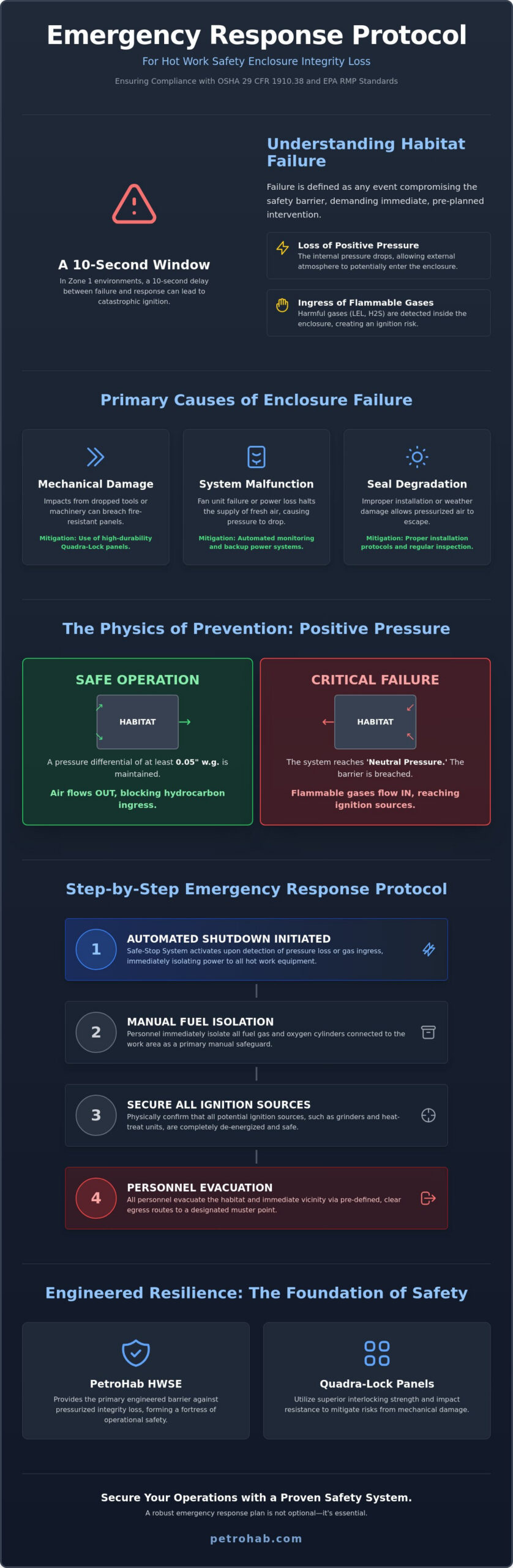
In high-stakes industrial environments, habitat failure isn’t a mere technical glitch; it’s a critical breach of the primary safety barrier. We define this failure as any loss of positive pressure or the ingress of flammable gases into a hot work safety enclosure. In Zone 1 environments, where explosive atmospheres are likely to exist, the window for intervention is exceptionally narrow. A 10-second delay can mean the difference between a controlled shutdown and a catastrophic ignition. This tight timeline is why a pre-verified emergency response plan for habitat failure is mandatory for operational continuity.
To better understand the foundational principles of risk mitigation, watch this technical overview:
Beyond the immediate physical danger, habitat failure triggers the immediate revocation of hot work permits under most international safety standards. Safety managers must distinguish between structural failure, such as a breach in the enclosure wall, and system failure, typically characterized by a loss of air flow from the fan unit. Both scenarios demand a rapid transition into an established emergency management framework to protect personnel and high-value assets. This structured approach ensures that every technician understands their role the moment a pressure alarm sounds.
Primary Causes of Pressurized Enclosure Failure
Enclosure integrity often fails due to three primary vectors. First, mechanical damage to fire-resistant panels from external impacts, such as dropped tools or moving heavy machinery, can compromise the seal. Utilizing high-durability Quadra-Lock panels mitigates this risk through superior interlocking strength and impact resistance. Second, fan unit malfunctions or power losses to the air intake system immediately halt the supply of fresh air. Finally, seal degradation caused by improper installation or extreme weather conditions allows pressurized air to escape, lowering the internal differential below safe thresholds. Each of these triggers must be addressed within your emergency response plan for habitat failure to ensure zero ignition incidents.
The Physics of Ignition Prevention
The engineering behind a pressurized habitat relies on maintaining a minimum 0.05-inch water gauge (w.g.) pressure differential. This positive pressure ensures that air only flows from the inside of the enclosure to the outside, effectively blocking hydrocarbon ingress. If the system reaches ‘neutral pressure,’ the enclosure no longer acts as a barrier. At this point, any external flammable gas can enter the workspace and reach an ignition source. Overpressure maintenance serves as the primary barrier against hydrocarbon ignition. Without this constant pressure, the safety of the entire hot work operation is compromised, turning a contained environment into a potential hazard site.
Critical Components of a Habitat Failure Response Plan
A robust emergency response plan for habitat failure relies on the seamless integration of automated hardware and rigorous human protocols. It’s not enough to simply have a pressurized enclosure; the system must be capable of autonomous intervention when sensors detect an atmosphere breach. This level of technical protection aligns with HAZWOPER standards, which demand structured responses to hazardous material releases. The core of this integration is the automatic shutdown system, such as Safe-Stop, which acts as the primary fail-safe for all hot work activities.
Gas detection arrays must be strategically positioned to monitor both Lower Explosive Limits (LEL) and Hydrogen Sulfide (H2S) levels. These sensors provide the data necessary to differentiate between a ‘Warning’ state and an ‘Immediate Shutdown’ event. While a warning might indicate a minor pressure fluctuation, an immediate shutdown occurs the moment flammable gas is detected or pressure drops below the 0.05-inch w.g. threshold. Redundancy is equally vital. Secondary manometers allow for manual verification, ensuring that safety managers don’t rely solely on a single point of data during a crisis.
Automated vs. Manual Detection Systems
The Safe-Stop system is designed to cut power to welding machines and other ignition sources instantly when a breach occurs. This automation removes the latency of human reaction times in high-risk Zone 1 areas. However, manual override protocols remain a necessary component of an emergency response plan for habitat failure to address potential sensor false positives during non-critical maintenance. Reliability is maintained through strict calibration schedules, ensuring gas detectors remain accurate under the harsh conditions of offshore or refinery environments.
Emergency Communication Chains
When the system triggers, the communication chain must be immediate and unambiguous. The Control Room and the Offshore Installation Manager (OIM) require instant notification to coordinate site-wide safety measures. During these critical shutdown phases, radio silence protocols are enforced to keep channels clear for emergency instructions. Every technician on-site holds ‘Stop Work Authority,’ a fundamental right to halt operations if they perceive a risk that the automated systems haven’t yet registered. Maintaining this level of vigilance is easier when utilizing high-performance equipment like PetroHab’s pressurized enclosures.
Manual Intervention Protocols and Personnel Evacuation
Manual intervention protocols bridge the gap between automated shutdown and full site evacuation. While the Safe-Stop system isolates the primary power supply, the human element remains the final safeguard in preventing ignition. Exiting a pressurized welding habitat requires navigating confined or elevated industrial structures, making clear egress routes a non-negotiable requirement. Technicians must immediately isolate all ignition sources, including grinders, heat-treat units, and any non-intrinsically safe equipment. This comprehensive isolation is a core requirement of any robust emergency response plan for habitat failure.
During hazardous materials incidents, the ‘Seal and Secure’ phase becomes vital. This protocol involves closing the habitat’s ingress points as technicians exit. This action prevents external flammable gases from filling the enclosure, even after positive pressure is lost. Maintaining structural integrity during this phase is essential. Utilizing the mechanical strength of Quadra-Lock panels ensures the enclosure remains a stable barrier throughout the evacuation process. This calculated approach protects personnel while securing the asset against the surrounding environment.
The Technician’s Role in a Failure Event
Technicians must execute immediate muscle-memory responses when a pressure alarm triggers. The welder’s first action is to drop the electrode and shut off all fuel gas and oxygen cylinders at the source. Once ignition sources are neutralized, the team must exit through the designated airlock without delay. After reaching the muster point, a post-evacuation debriefing is mandatory to document the event in safety logs. PPE requirements, including flame-resistant clothing and respiratory protection, must be maintained during egress to protect against potential gas-rich environments outside the enclosure.
Structural Integrity and Quadra-Lock Resilience
The structural design of the habitat plays a silent but critical role during a breach. Standard panels might buckle or separate when internal pressure is lost, but the Quadra-Lock interlocking system provides a rigid, mechanical bond. These panels are engineered to resist high-velocity winds and internal pressure surges common in offshore environments. Quadra-Lock technology minimizes the risk of panel separation during a pressure drop by utilizing a recessed, four-way interlocking mechanism. This physical resilience is a cornerstone of an effective emergency response plan for habitat failure, ensuring the enclosure doesn’t collapse during technician egress.
Step-by-Step Emergency Response for Loss of Integrity
A structured sequence of actions is the only way to eliminate ambiguity during a pressure breach. Your emergency response plan for habitat failure must follow a rigid five-phase protocol to ensure personnel safety and asset protection. This process begins with the technology and ends with a rigorous investigation before operations can safely resume. Each phase is designed to neutralize hazards in a logical, problem-solution architecture.
- Phase 1: Detection. Automated sensors within the enclosure detect gas ingress or a pressure drop below 0.05 inches w.g. The Safe-Stop system triggers instantly, cutting power to all ignition sources.
- Phase 2: Isolation. Technicians perform a manual shut-off of all fuel gas and oxygen cylinders. This secondary barrier prevents fuel from feeding a potential ignition point if the habitat’s integrity is compromised.
- Phase 3: Evacuation. All personnel exit the PetroHab HWSE immediately. Movement follows established egress routes to a designated muster point for an immediate head count.
- Phase 4: Assessment. Safety officers conduct atmospheric gas testing outside the habitat. This determines if the breach has allowed flammable gases to accumulate in the immediate vicinity.
- Phase 5: Investigation. A full root cause analysis is performed. Re-entry is strictly prohibited until the cause of the failure is identified, documented, and rectified.
Immediate Post-Event Actions
Once the enclosure is evacuated, safety managers must establish a 15-meter exclusion zone around the habitat to prevent unauthorized entry. This perimeter remains active until gas testing confirms the area is clear of hydrocarbons. Simultaneously, data logs are extracted from the Safe-Stop system. These logs provide a timestamped record of the failure event, which is essential for reporting to hazardous environment standards compliance bodies. Proper documentation ensures that your facility remains aligned with international safety regulations and internal audit requirements.
Recovery and Re-Pressurization
Returning to operational status requires more than just restarting the fan units. Safety engineers must inspect the Quadra-Lock panels for any signs of thermal or mechanical damage sustained during the event. The enclosure must then be recertified for positive pressure retention through a controlled test. Before any hot work resumes, the team must conduct a comprehensive ‘Pre-Start Safety Review’ (PSSR). This final check confirms that all safety systems are fully functional and that the risk of a repeat failure has been mitigated. To ensure your site is equipped with the most resilient containment technology, contact PetroHab for a technical consultation regarding your habitat needs.
Engineering Resilience into Your Emergency Response Plan
Proactive engineering serves as the superior form of risk mitigation in heavy industry. A resilient emergency response plan for habitat failure doesn’t start with an alarm; it begins with the selection of the containment hardware. By integrating high-performance materials and automated fail-safes, safety managers shift the operational focus from reactive crisis management to proactive hazard prevention. This engineering-first approach ensures that the habitat remains a definitive barrier, even when external conditions fluctuate. Resilience is built into the system’s DNA, providing a level of protection that manual protocols alone cannot match.
The PetroHab Advantage in High-Stakes Scenarios
Traditional enclosures often rely on zippers or hook-and-loop fasteners, which represent potential points of mechanical failure under pressure. In contrast, our patented Quadra-Lock technology utilizes a mechanical interlocking system that provides a robust, airtight seal. These panels withstand internal pressure differentials without the risk of seam separation, ensuring the enclosure stays intact during a surge. This structural superiority is matched by the Safe-Stop Automatic Shutdown System, which maintains operational reliability in the most corrosive offshore environments. The system’s sensors are calibrated to detect minute fluctuations long before they reach critical thresholds. Beyond the hardware, on-site supervision by certified technicians provides the critical human oversight necessary to reduce failure rates. These experts ensure every component is installed to exact technical specifications, leaving no room for the installation errors that often plague generic enclosures.
Moving toward zero-incident hot work requires the total integration of these safety systems into a single, cohesive unit. When the physical enclosure, the automated sensors, and the human response protocols function as a synchronized defense, the risk of a catastrophic event is effectively neutralized. This synergy isn’t accidental; it’s the result of meticulous engineering and a commitment to safety excellence. It provides the stoic reliability required when high-value assets and human lives are at stake, ensuring that hot work remains a controlled, predictable process regardless of the external atmosphere.
Next Steps for Safety Managers
To strengthen your site’s safety posture, begin by reviewing your current emergency response plan for habitat failure against PetroHab’s technical benchmarks. Evaluate whether your existing equipment meets the durability standards required for 2026’s regulatory landscape. We recommend scheduling a comprehensive site audit to assess habitat integrity and identify potential vulnerabilities in your current setup. Contact PetroHab directly to arrange specialized training for your personnel, ensuring they’re fully prepared to execute pressurized habitat response protocols with precision. Investing in these proactive steps reinforces your role as an active guardian of industrial safety and operational excellence.
Strengthening Your Industrial Safety Posture
Managing hot work in hazardous zones requires a fundamental shift from reactive management to engineered safety. A successful emergency response plan for habitat failure depends on the immediate detection of pressure loss and the mechanical resilience of your containment system. Throughout this guide, we’ve detailed how the five-phase response protocol and automated shutdown hardware eliminate the ambiguity of human reaction times during a breach. This technical synergy ensures that your facility remains compliant with evolving global standards while maintaining operational continuity under the most demanding conditions.
Reliability is grounded in the deployment of our patented Quadra-Lock technology and the certified Safe-Stop Automatic Shutdown System. These components work together to provide a definitive, mechanical barrier against hydrocarbon ingress. With our global technical support and specialized on-site supervision, your team gains a partner dedicated to the granular details of risk mitigation and personnel safety. Ensure your site is protected with PetroHab’s industry-leading HWSE and Safe-Stop systems. Your commitment to technical precision today ensures the protection of your most valuable personnel and high-value assets tomorrow.
Frequently Asked Questions
What is the most common cause of hot work habitat failure?
Mechanical impact from heavy equipment and fan unit power failure are the primary causes of enclosure breaches. These events compromise the internal atmosphere by either physically breaching the panels or halting the supply of fresh air. Regular inspections are necessary to identify seal degradation and structural wear before they lead to a total loss of containment.
How quickly should an automatic shutdown system engage upon gas detection?
An automatic shutdown system must engage in less than one second upon detecting flammable gas at the intake. This near-instantaneous response is critical in Zone 1 environments to prevent the ignition of external hydrocarbons. The Safe-Stop system is engineered to isolate power to welding equipment immediately, removing the risk of human latency during a crisis.
Can hot work continue if positive pressure is lost but no gas is detected?
Hot work must cease immediately if positive pressure falls below the 0.05-inch w.g. threshold. Even if sensors haven’t detected gas yet, the enclosure is no longer a definitive barrier against hydrocarbon ingress. Continuing work without this pressure differential violates safety permits and your emergency response plan for habitat failure.
What are the ATEX requirements for emergency lighting inside a habitat?
Emergency lighting must meet ATEX Category 2 or 3 standards to ensure it’s intrinsically safe for the specific zone classification. These units must provide sufficient illumination for technicians to navigate egress routes safely during a total power failure or gas event. Proper lighting is a mandatory component of a compliant emergency response plan.
How often should an emergency response plan for habitat failure be drilled?
Safety teams should conduct drills for their emergency response plan for habitat failure at least quarterly. Additionally, a full walkthrough of the plan is mandatory before the start of any new hot work project or when new personnel join the site. Frequent practice ensures that response protocols become muscle memory for all technicians.
What is the difference between a warning alarm and a critical shutdown?
A warning alarm signals that internal pressure is approaching the lower limit, allowing for minor mechanical adjustments. A critical shutdown is an automated event triggered by the presence of gas at 10% LEL or a complete loss of air pressure. This event requires immediate evacuation and the total isolation of all ignition sources.
Is it possible to repair a damaged Quadra-Lock panel on-site?
Damaged Quadra-Lock panels are designed for rapid on-site replacement rather than temporary patch repairs. Because the panels utilize a mechanical interlocking system, a single damaged unit can be swapped for a new one without compromising the structural integrity of the entire enclosure. This modular design minimizes operational downtime during safety breaches.
What documentation is required following a habitat failure event?
Post-event documentation must include a detailed root cause analysis, atmospheric monitoring logs, and Safe-Stop event data. These records are essential for recertifying the habitat for use and proving compliance with international safety regulations. All findings must be formally reviewed and signed off by the OIM before hot work operations resume.