
Blog Posts

Habitat air quality monitoring costs and equipment needs
Louisiana enacted the Community Air Monitoring Reliability Act in 2024; it requires the most current EPA-approved techniques and analysis by…

Role of the Fire Watch in Habitat Operations and Key Duties
The role of the fire watch in habitat operations is to patrol hot-work areas, detect fire or abnormal conditions, and alert workers so they can…
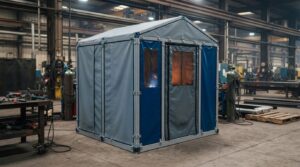
Interlocking Habitat Panels for Industrial Facilities
Interlocking habitat panels are not generally trimmed to change their module width. They may be cut to length, but walls are assembled from whole…

Hot Work Habitat Safety: Fire Risks and Gas Exclusion
A spark can ignite an unnoticed flammable atmosphere, causing a fire or explosion. Effective hot work habitat safety protocols combine hazard…

How Relocatable Modular Habitats Support Efficient Turnarounds
Turnaround time is often lost before hot work begins, while crews wait for facilities to be assembled on site. Improving turnaround efficiency with…

Safety Enclosures for Safer Vessel and Tank Entry
A safety enclosure for vessel and tank entry helps control the work area around an opening and supports air-quality management, communication,…
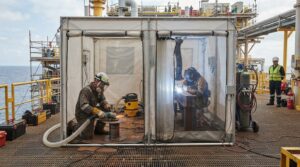
Risk Assessment for Grinding vs. Welding: A Practical Comparison
A grinding job and a welding job may both create sparks, but they do not have the same exposure profile. A useful risk assessment for grinding vs…

Understanding Hazardous Area Classification Drawings and Pressurized Habitat Ratings
What does a pressurized habitat zone rating actually tell you when hot work is planned inside a classified area? The drawing maps the hazard around…

IEC 60079 Pressurized Enclosures: Practical Guide
A certificate can cite the right IEC 60079 standard and still leave the scope of a complete hot-work enclosure unclear. That distinction is central…

Zone 1 Hot Work Habitat: A 2026 Buying Guide
Choosing a Zone 1 hot work habitat starts with the worksite and the task, not the zone label alone. Before comparing configurations, define the…