
Posts Tagged ‘NFPA 51B’
Reducing Hot Work Incidents: A Strategic Guide to Engineered Containment
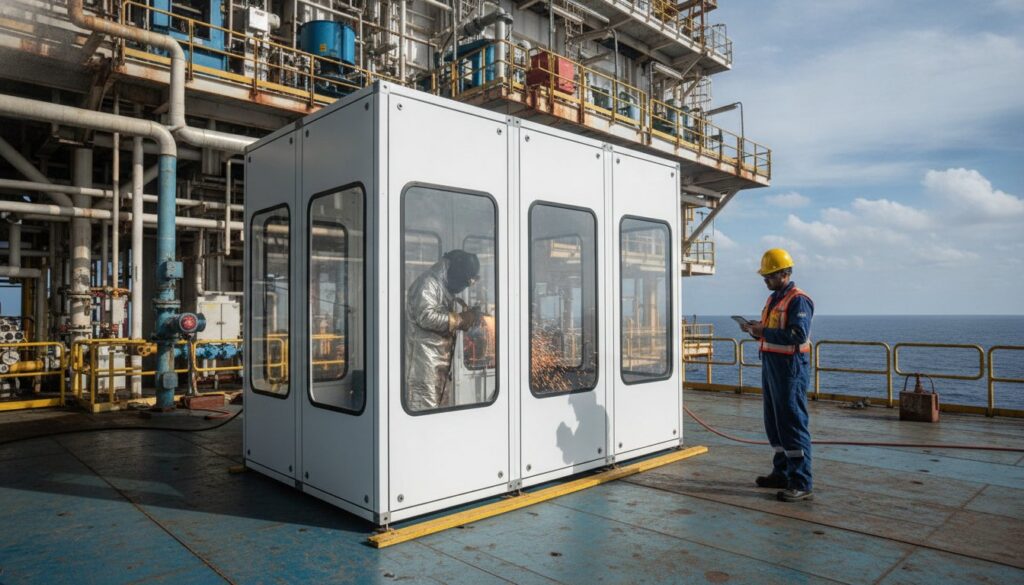
Between 2017 and 2021, an annual average of 3,396 structure fires involving hot work occurred in the United States, resulting in $292 million in…
Read MoreHot Work Near Sensitive Electronic Equipment: A Technical Guide to Risk Mitigation

Deploying a standard fire blanket to protect a multi-million dollar SCADA system during welding operations isn’t a safety strategy; it’s a calculated…
Read MorePre-Job Safety Analysis for Hot Work: A Technical Guide to Industrial Risk Mitigation
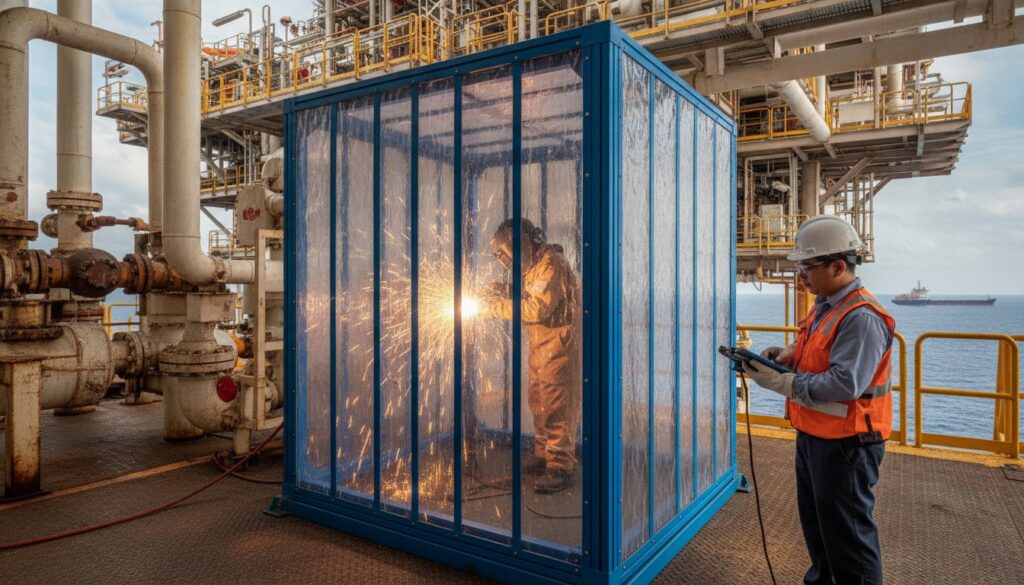
Relying on a paper checklist for high-stakes ignition control is a critical vulnerability that risks catastrophic asset loss and human life. You…
Read MoreHot Work Safety Audit Checklist: A 2026 Technical Guide for Hazardous Zones
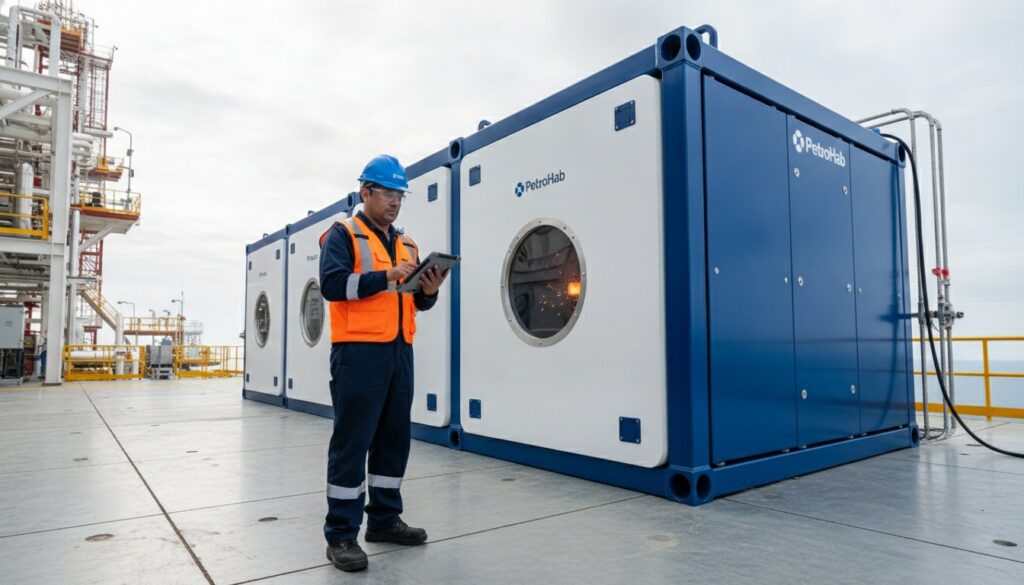
Industrial ignition events cause more than 90 fatalities annually, a statistic that underscores the lethal stakes of inadequate site oversight. In…
Read MoreManaging Air Supply for Pressurized Habitats: A Technical Guide for 2026
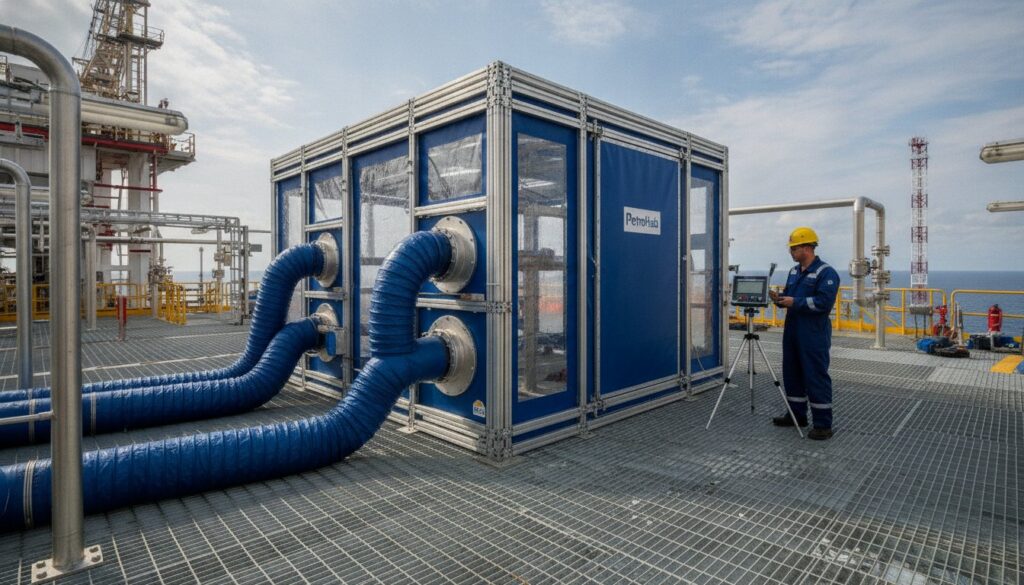
In 2024, explosions and fires caused 41% of fatalities in the oil and gas exploration sector, a statistic that underscores why “near enough” isn’t an…
Read MoreGas Turbine Maintenance Enclosure: A Technical Guide to Pressurized HWSE Solutions
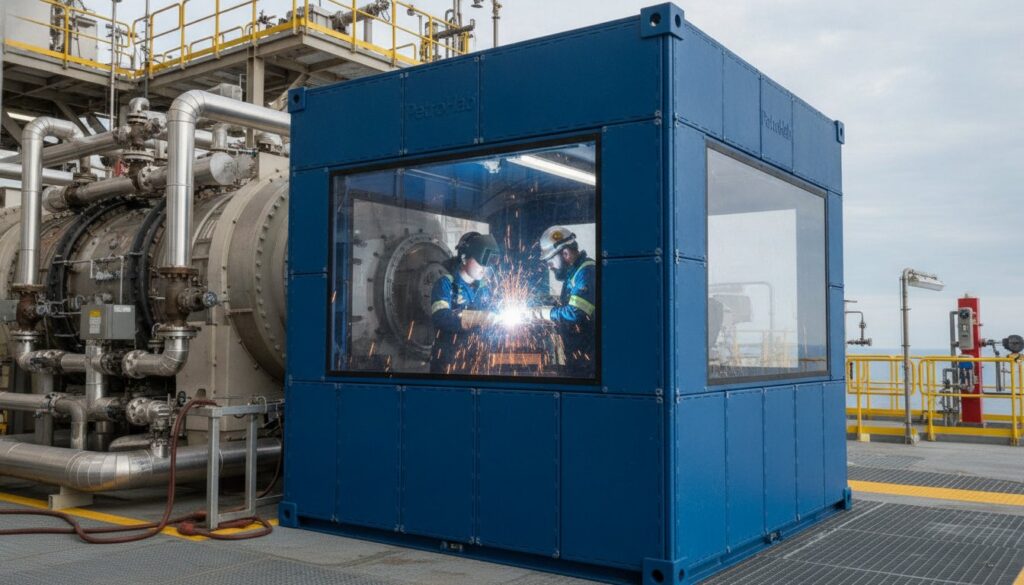
Can your facility afford to lose $600/kW in asset value to a preventable maintenance shutdown? With gas turbine prices projected to rise nearly 200%…
Read MoreHot Work Safety in Marine and Shipbuilding: Engineered Containment Strategies for 2026
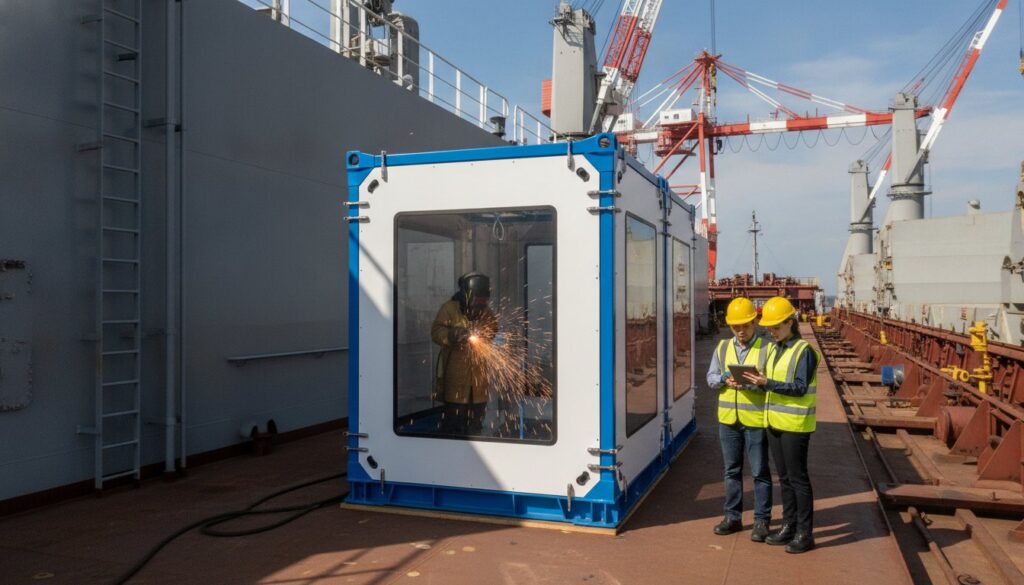
The water transportation industry faces a fatality rate 4.7 times higher than the general workforce, a statistic driven largely by the volatile…
Read MoreThe Critical Limitations of Fire Blankets for Pipeline Welding in 2026
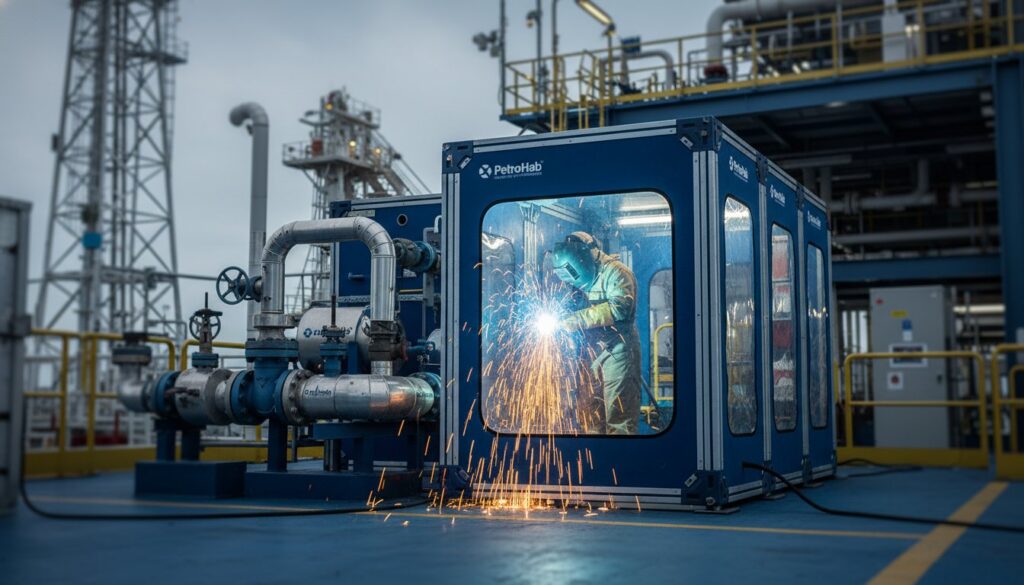
With a pipeline fire occurring on average every 4.2 days in the United States, relying on basic spark deflection is no longer a viable risk…
Read MoreEngineered Habitat vs. Traditional Scaffold and Tarp: A Technical Safety Comparison
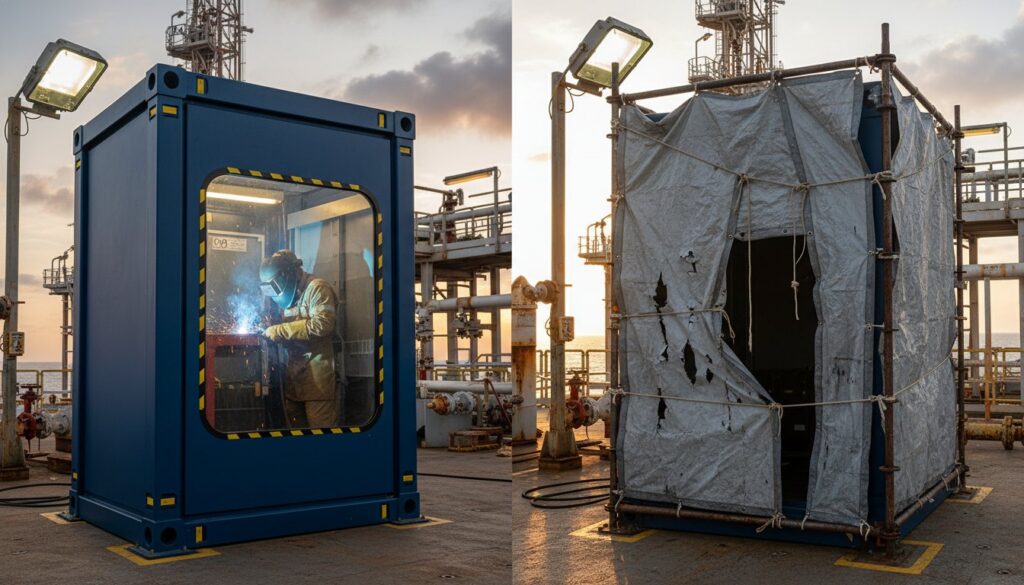
Is a traditional scaffold and tarp enclosure sufficient for hot work in a Zone 1 or Zone 2 environment? Most safety engineers rely on these passive…
Read MoreDemonstrating Due Diligence in Hot Work Safety: A 2026 Regulatory Guide
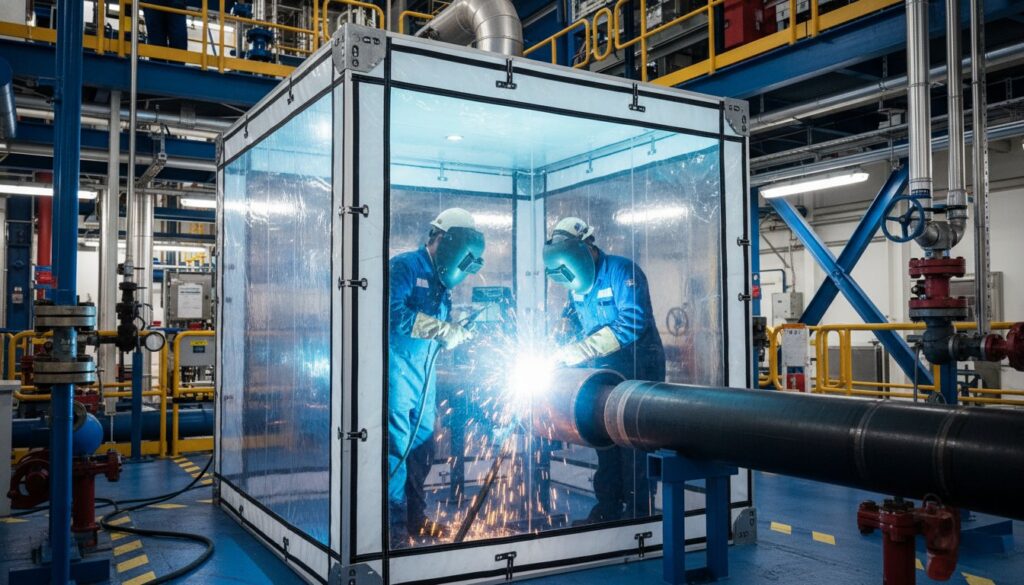
In 2026, a signed hot work permit is no longer a legal shield. It’s merely a piece of paper if it isn’t backed by verifiable engineering containment…
Read More